Frequently Asked Questions
How do you write "family" in Arabic for a tattoo?
+
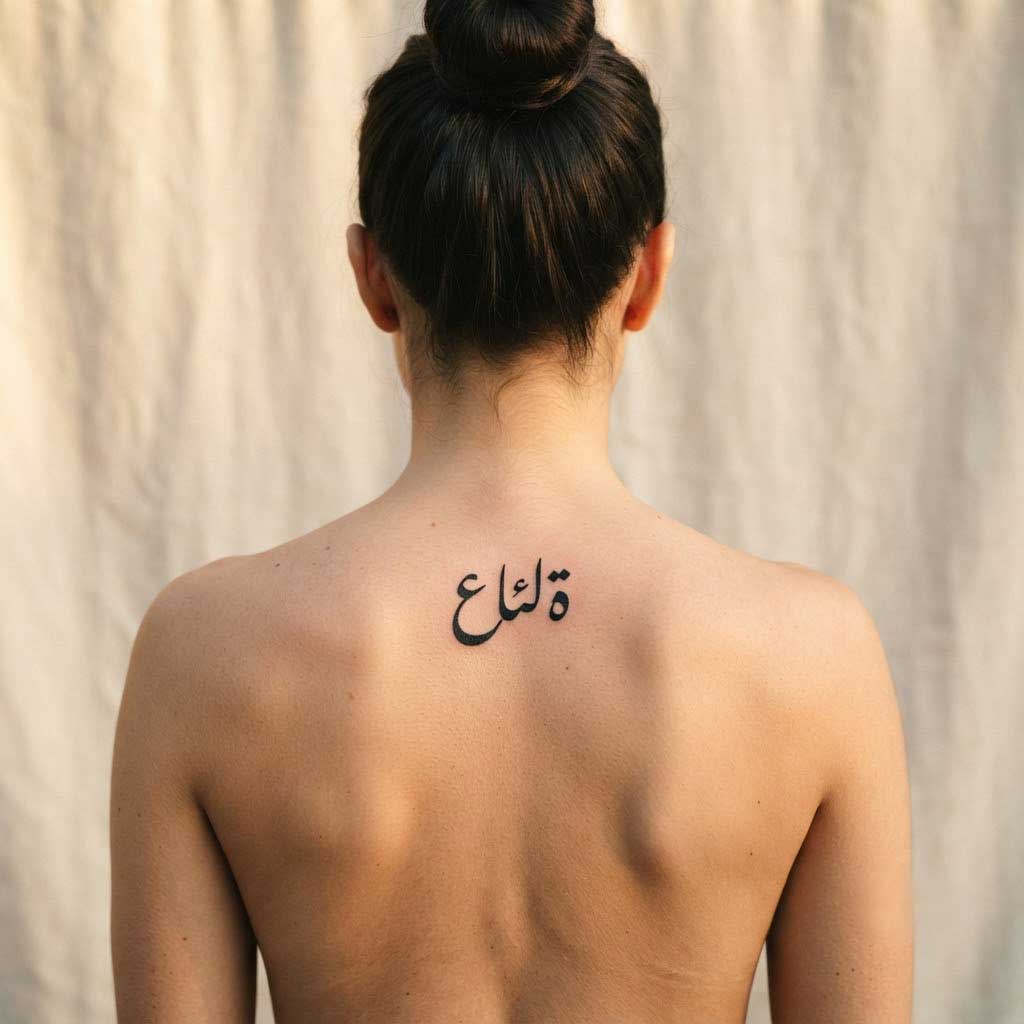
عائلة (Aila) is the standard modern Arabic word for family — four letters, universally recognized. For a personal possessive, use عائلتي (Aailati — my family). For an older, more poetic register, use أهل (Ahl — kin, people, family). All three are native-speaker verified and available in the generator above.
What are the shortest Arabic family words for a tattoo?
+
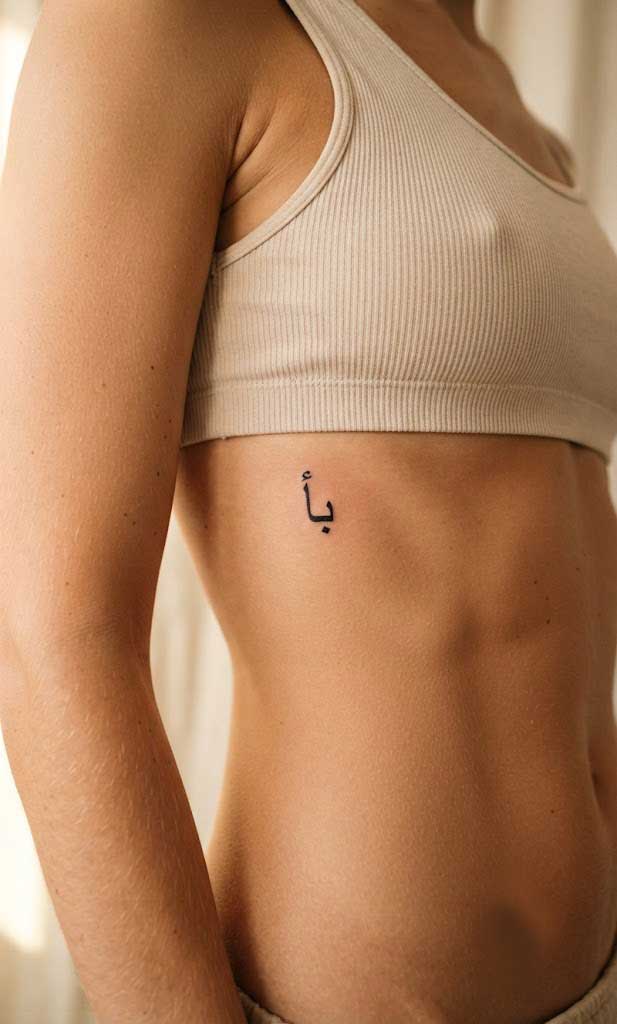
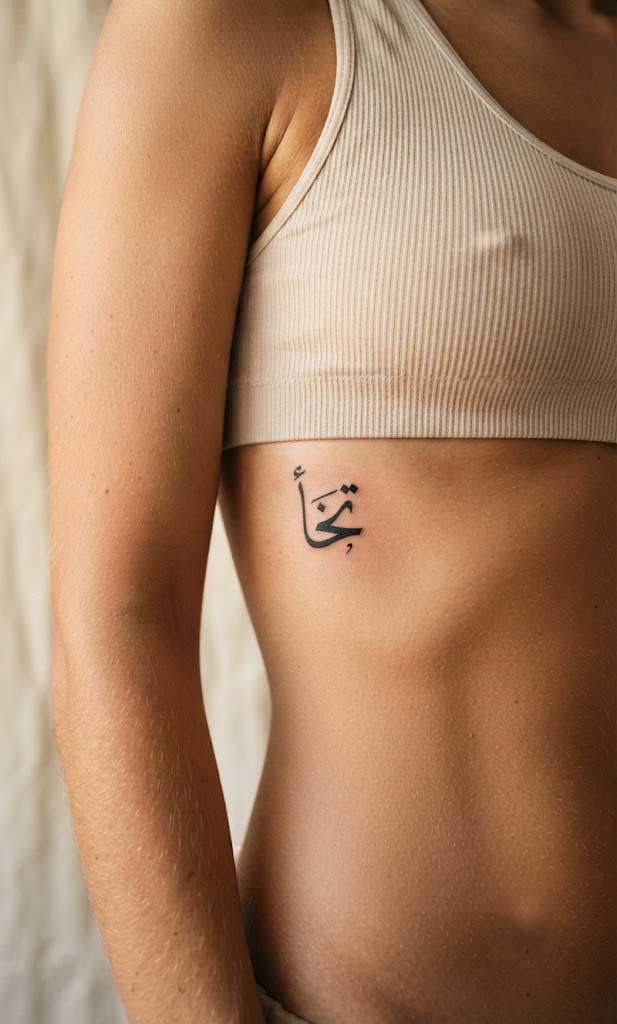
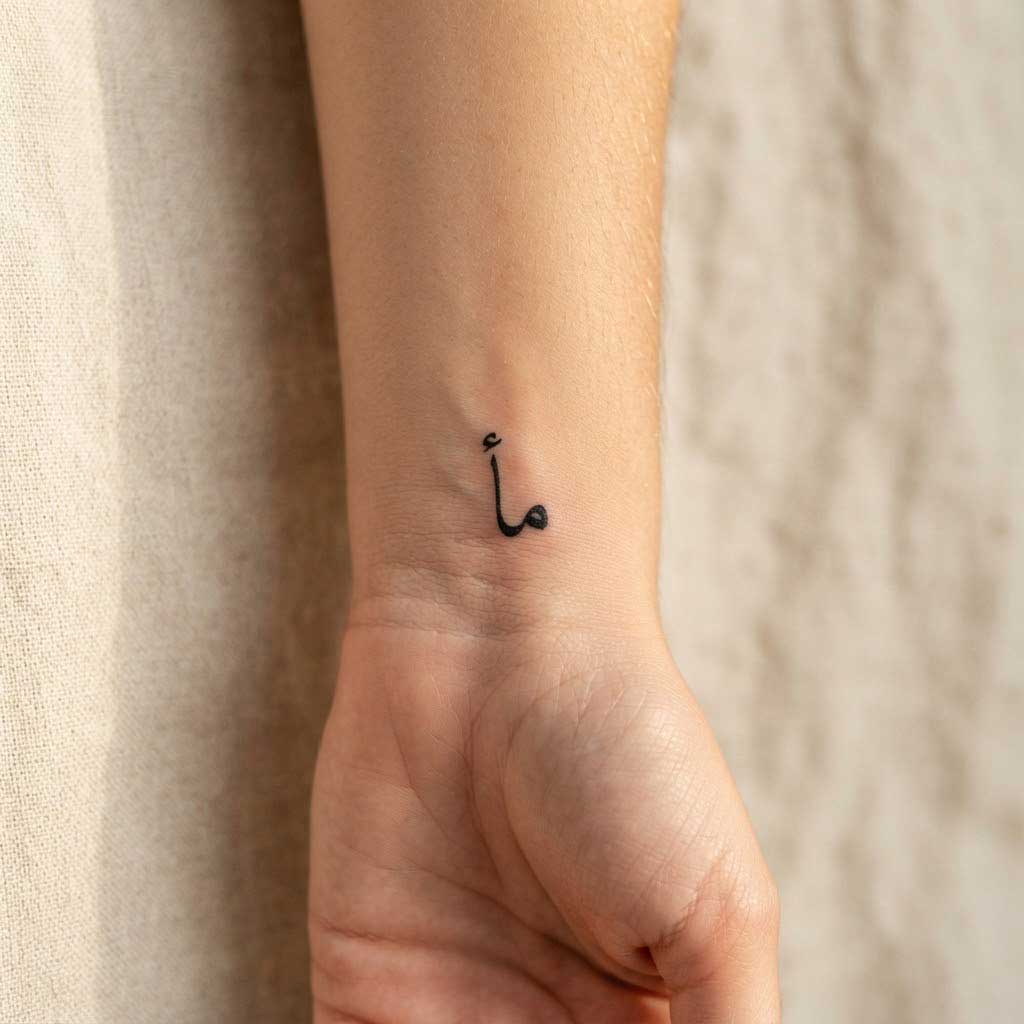
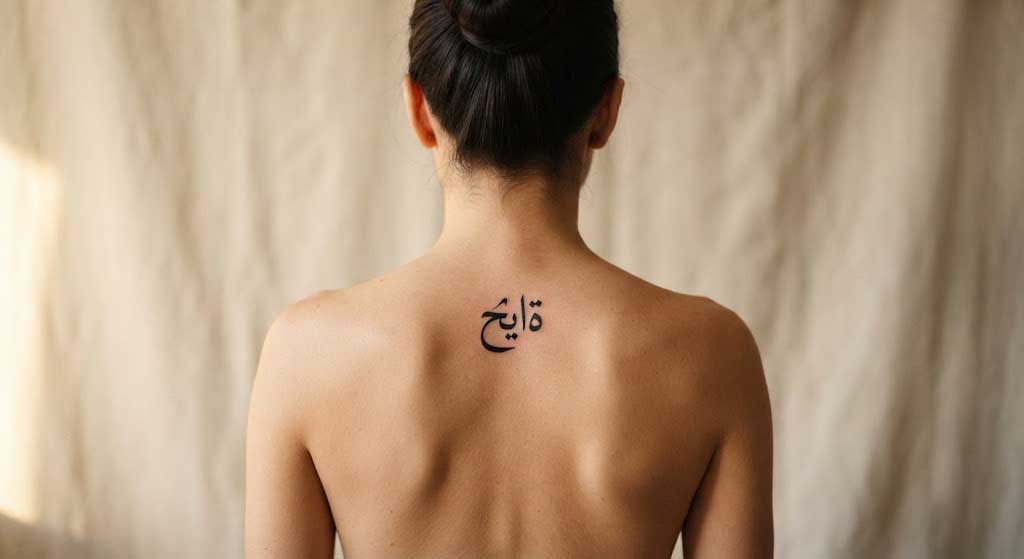
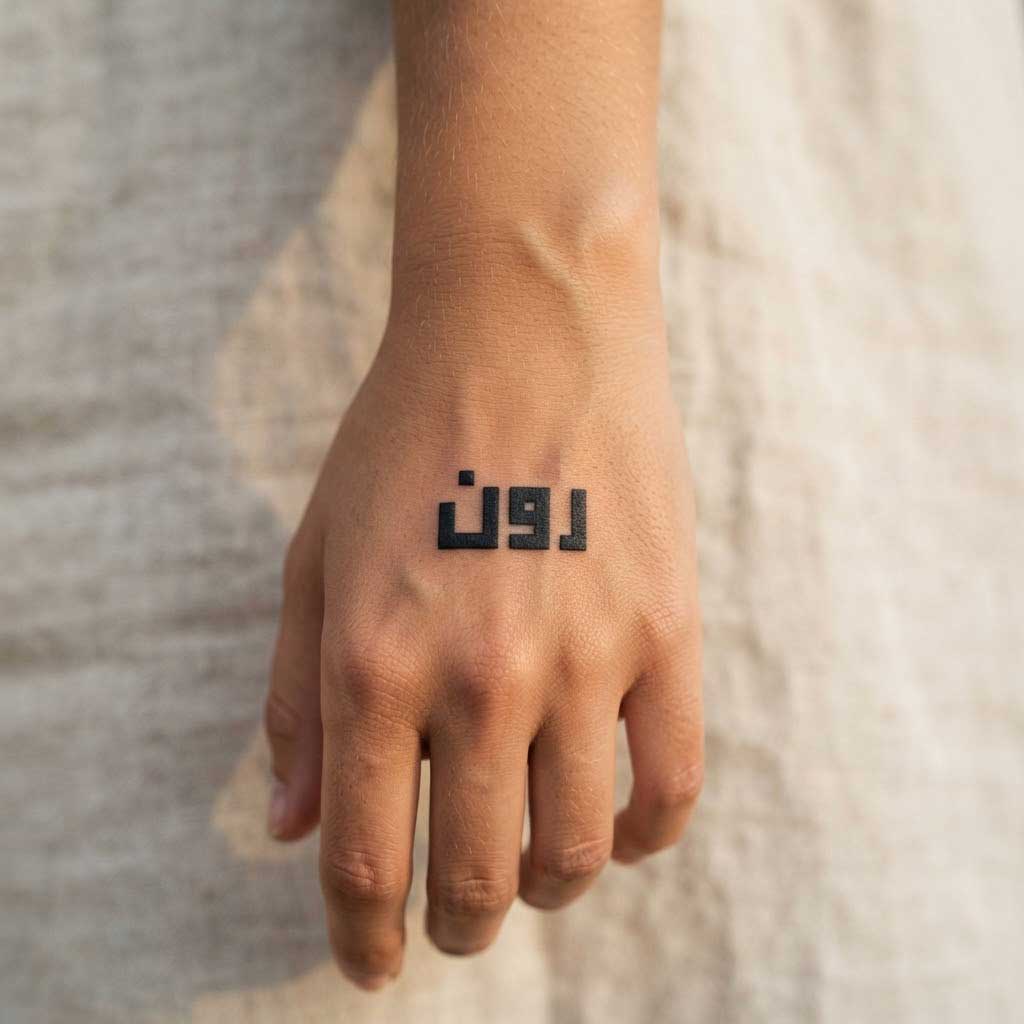
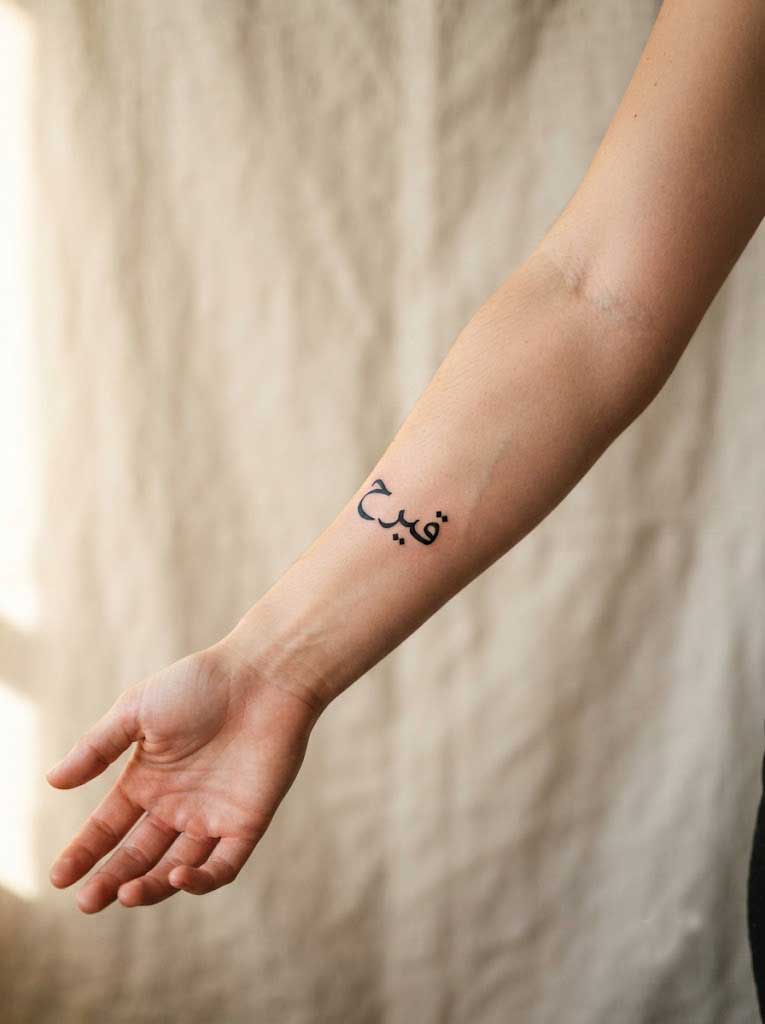
The four two-letter family words are the smallest Arabic tattoos of any category: أم (Umm — mother), أب (Ab — father), أخ (Akh — brother). Three-letter siblings include أخت (Ukht — sister), أهل (Ahl — kin), جدة (Jidda — grandmother). These fit any placement — behind the ear, inner finger, ankle, or as a single mark on the wrist.
What Arabic phrase means "family first" for a tattoo?
+
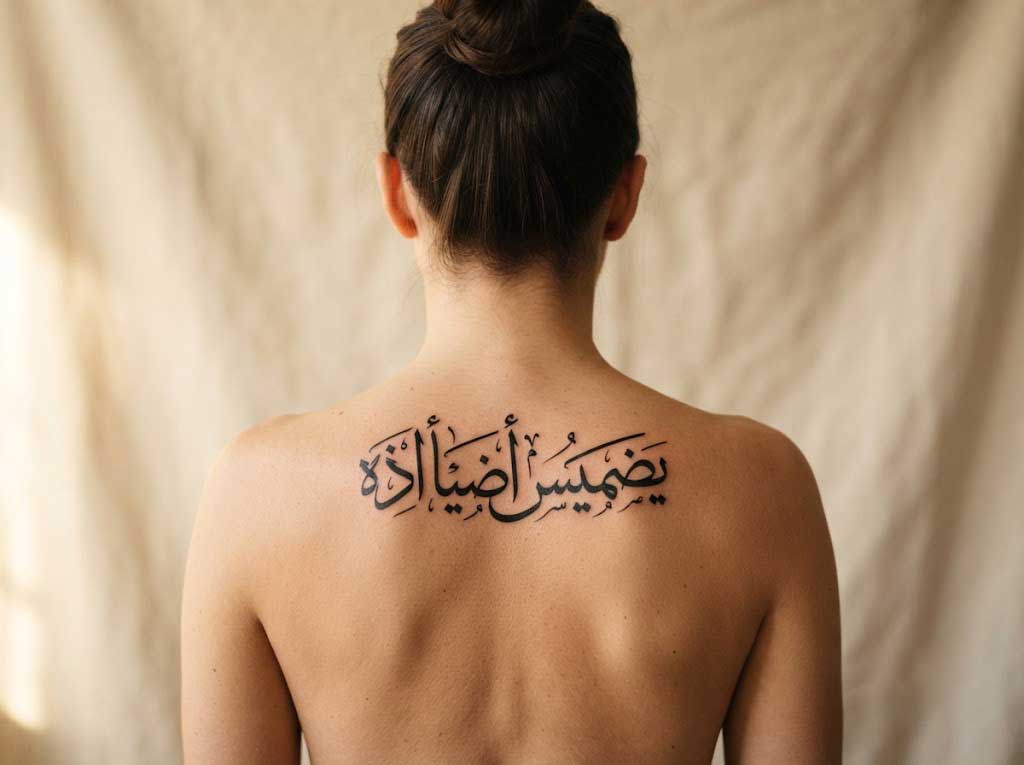
العائلة أولاً (Al-aila awwalan) — three words meaning "family first." Word breakdown: العائلة (the family) + أولاً (first). It's the standard, universally-accepted rendering. Related value phrases: العائلة كل شيء (Family is everything), العائلة إلى الأبد (Family is forever). Best rendered in Thuluth for weight or Nastaliq for a softer feel.
Should I get "mom" and "dad" as separate Arabic tattoos or together?
+
Both work. Separate: أم (Umm) on one wrist and أب (Ab) on the other creates a symmetric two-piece parent tribute — one of the most-tattooed Arabic family designs. Together: أم وأب (Umm wa Ab — Mom and Dad) sits as a compact two-word line on the forearm, ribcage, or ankle. For an informal warm version, use ماما وبابا (Mama wa Baba).
What Arabic word means "sister" for a tattoo?
+
أخت (Ukht) is the standard three-letter word for sister. أختي (Ukhti — my sister) adds the personal possessive. For matching-sister tattoo designs, both siblings can get the same word (أختي), or split it into الأخت الكبرى (the older sister) and الأخت الصغرى (the younger sister). The plural أخوات (Akhawat — sisters) also works for a group of three or more.
Are family Arabic tattoos better in Thuluth or Nastaliq?
+
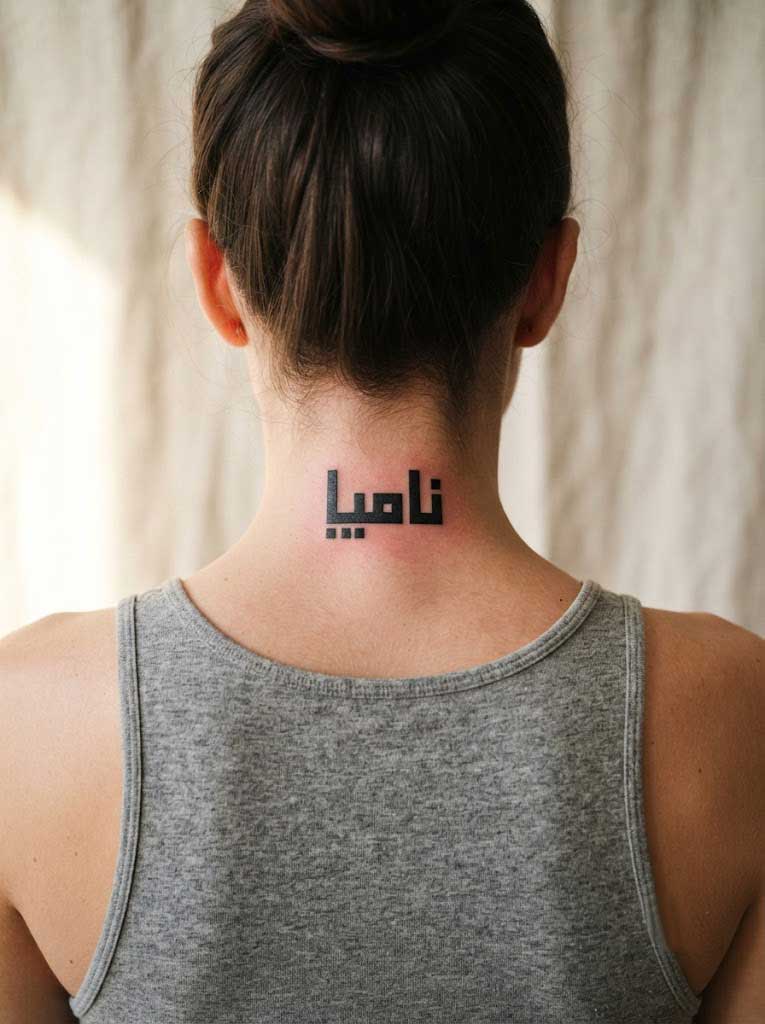
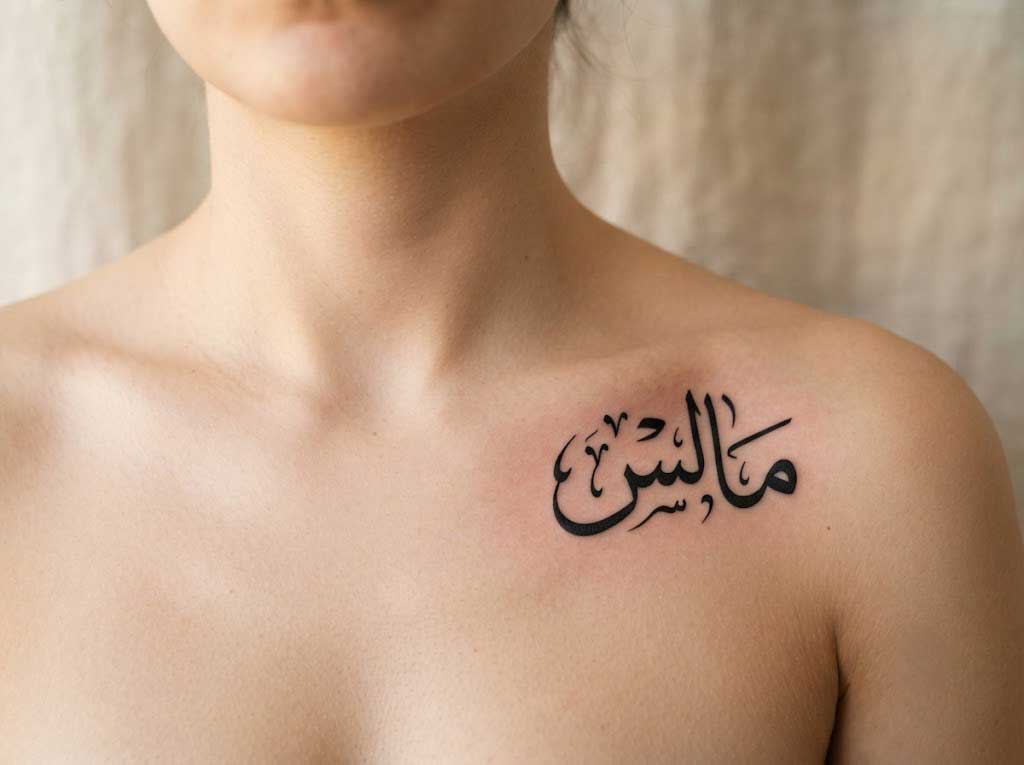
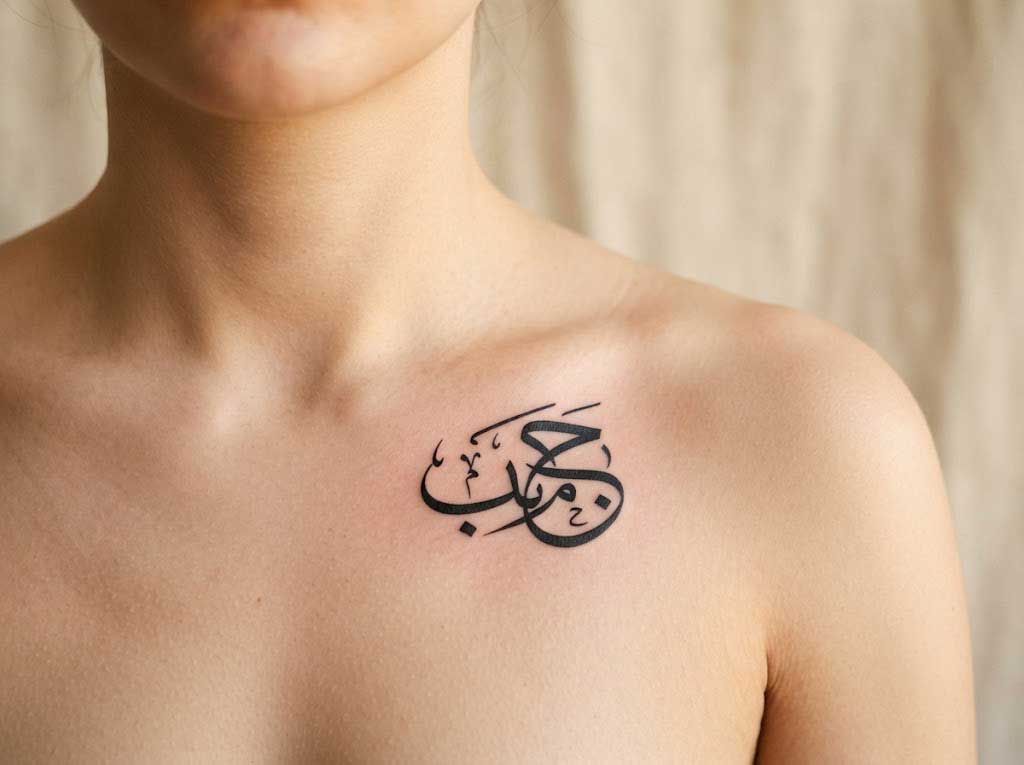
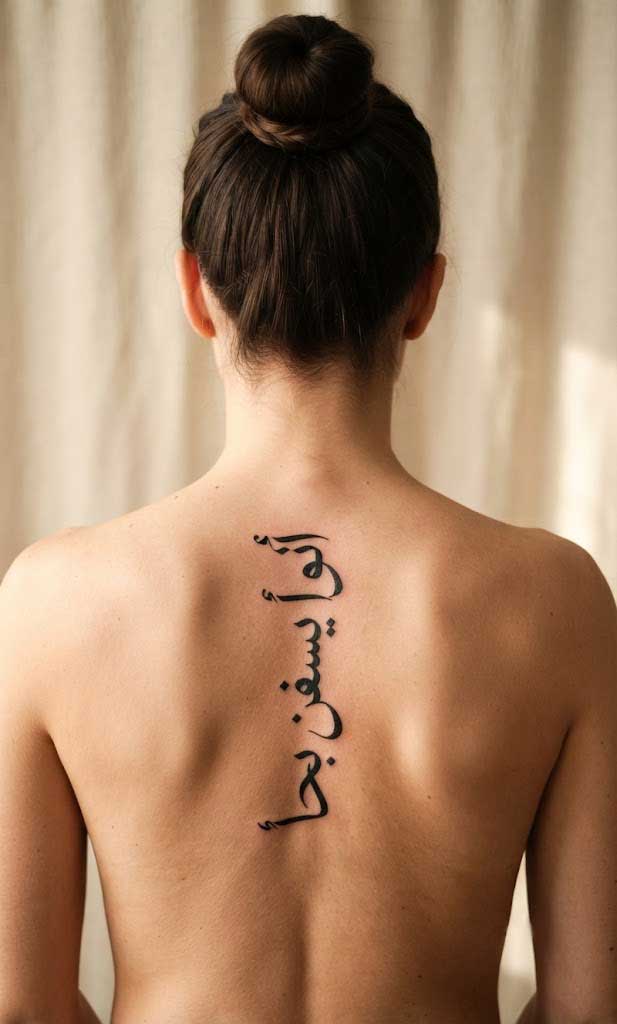
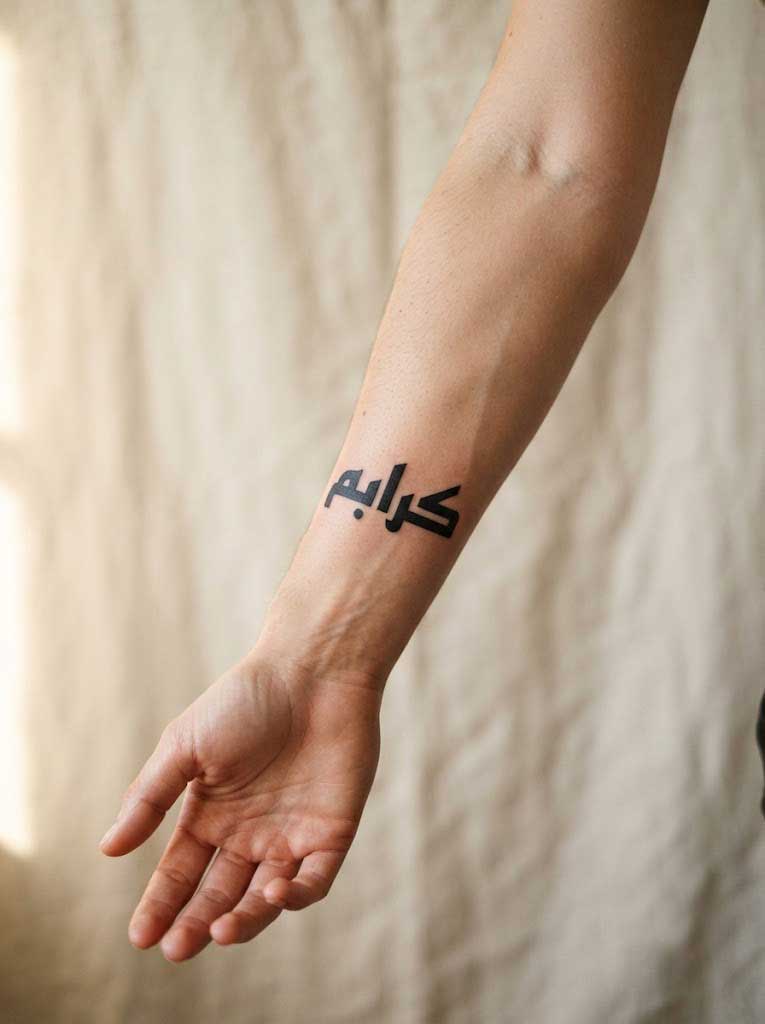
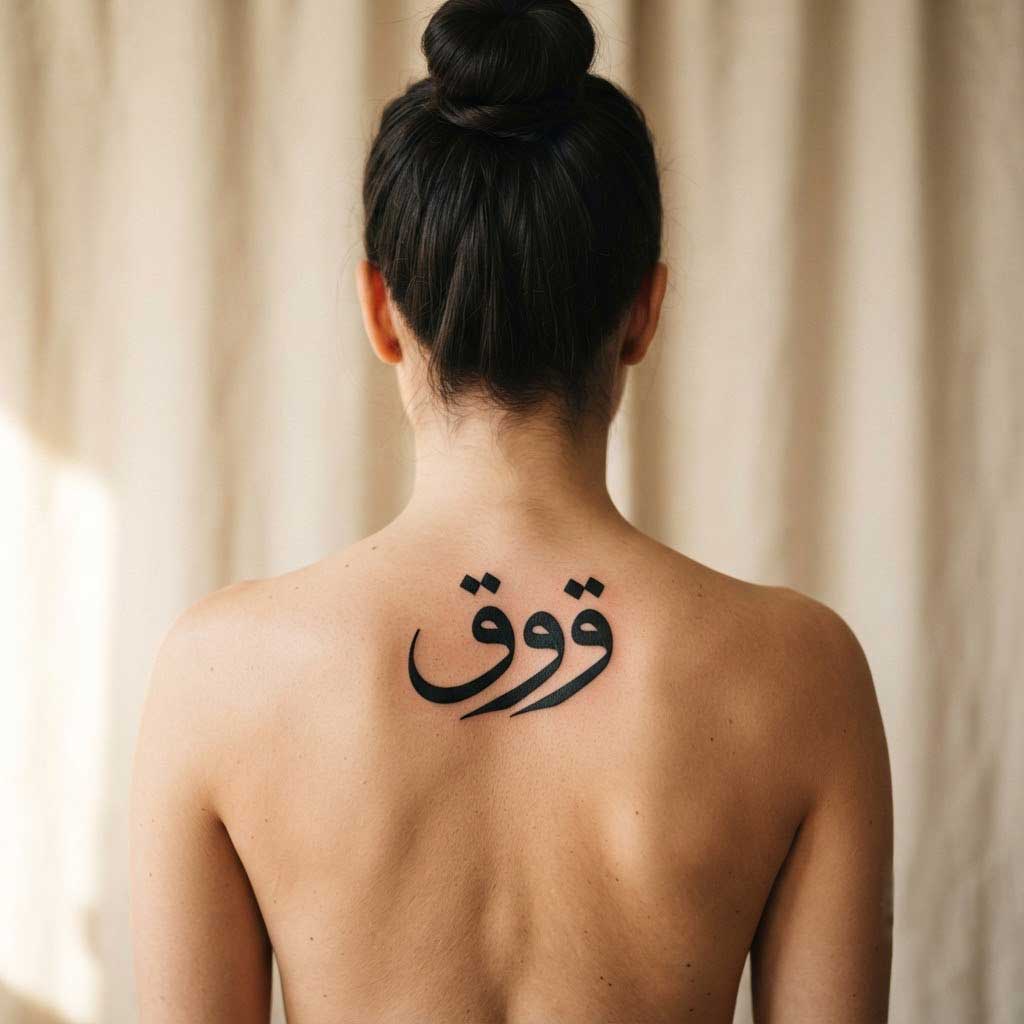
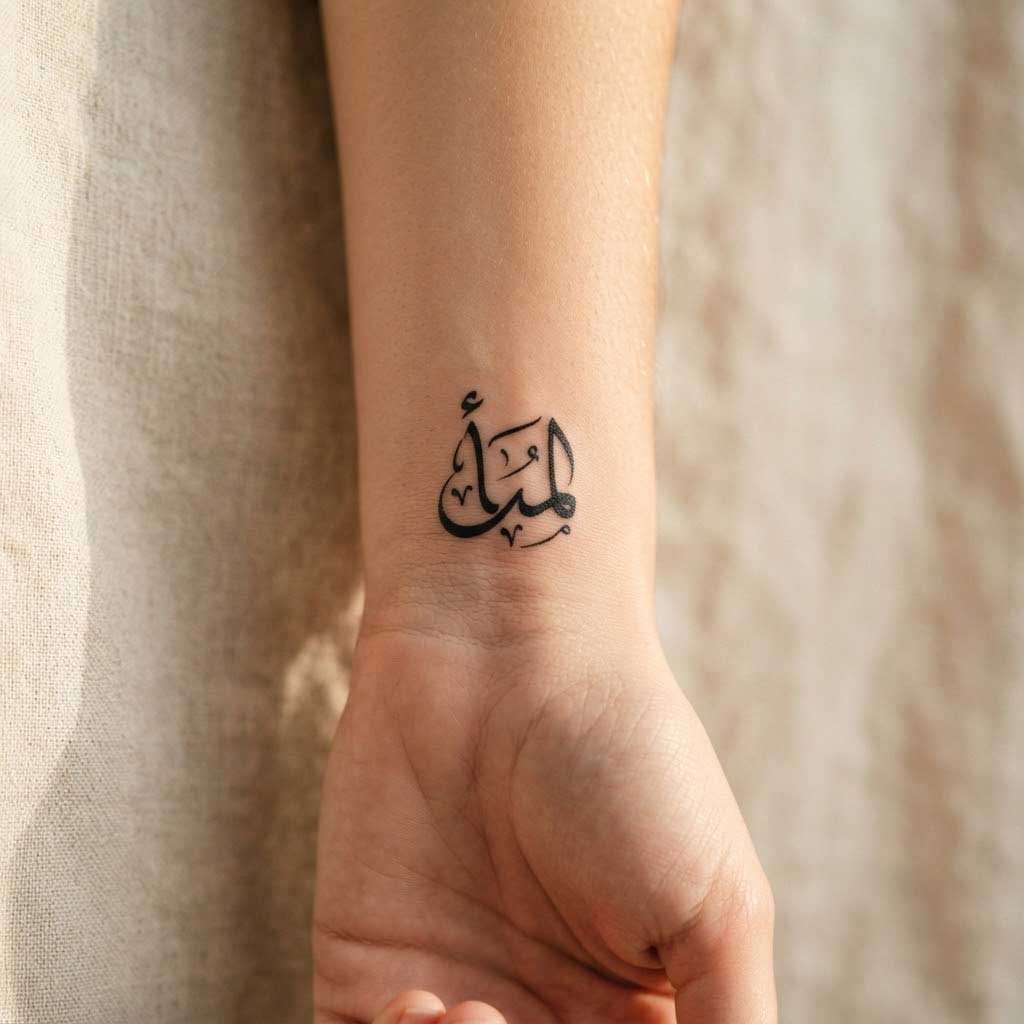
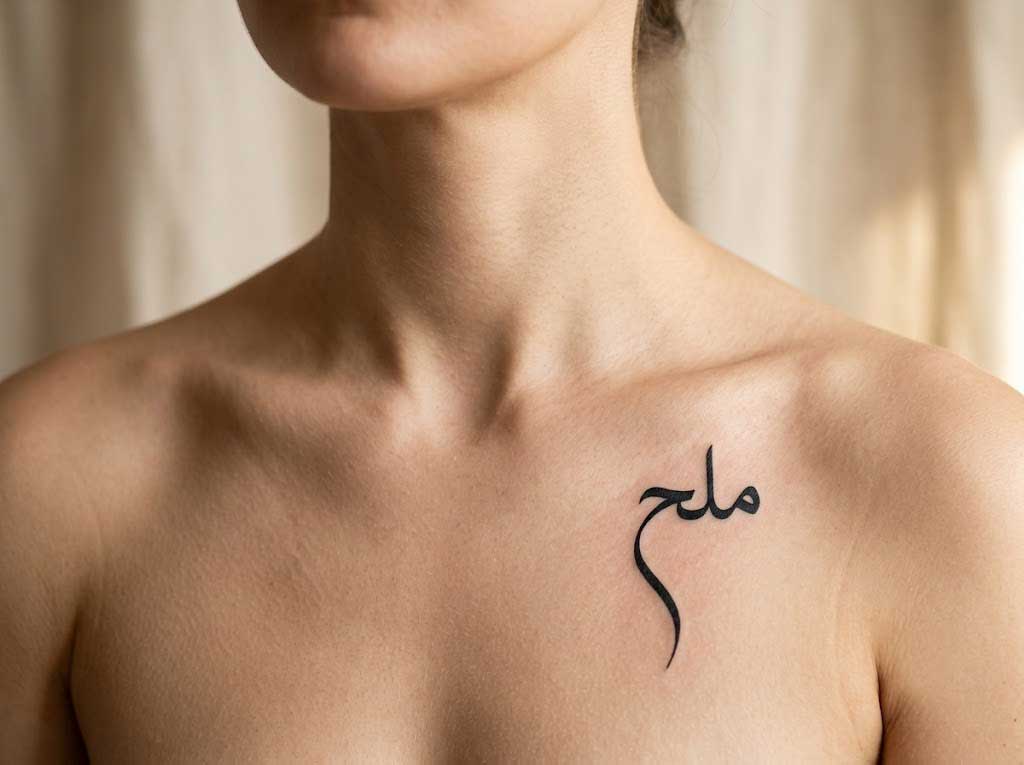
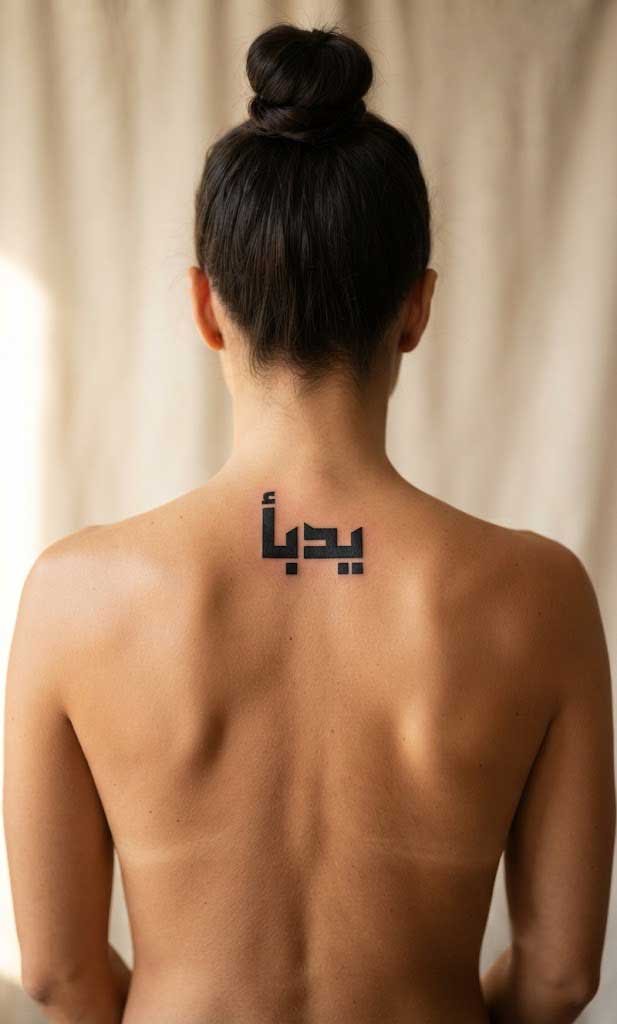
Both work; the choice depends on tone. Thuluth gives family words ceremonial weight — best for reverent single-word tributes (أم, أب, عائلة) and religious-adjacent value phrases. Nastaliq gives family words a softer, more personal feel — best for the possessive forms (أمي, عائلتي) and longer phrases like العائلة إلى الأبد (Family is forever). Naskh is the safest choice when maximum legibility matters.