Arabic Tattoo Designs: Generate & Explore 20+ Ideas with Meanings
Browse 20+ Arabic tattoo designs across five calligraphy styles, six themes, and eight body placements — every design ships with its Arabic word, transliteration, and meaning. Use the free generator to preview any of them on your own skin and download a high-resolution PNG for your tattoo artist.
✓ 20+ designs with meanings
✓ 5 calligraphy styles
✓ Preview on body
✓ Native-speaker verified
Arabic Tattoo Designs by Theme: Allah, Love, Words & Calligraphy
The strongest Arabic tattoo designs cluster around six visual and emotional themes. Pick the theme that matches the meaning you want to carry, then use the generator above to render the specific word or phrase in the calligraphy style that suits it best.
Allah & Faith Designs
The word الله (Allah) is the single most requested religious tattoo design in Arabic. Thuluth or Kufic render it with maximum reverence; Naskh keeps it legible at small sizes. Related faith designs include إيمان (Iman, faith), مبارك (Mubarak, blessed), and short Quranic phrases. Explore faith-themed Arabic tattoo designs →
Love Designs (حب / أحبك)
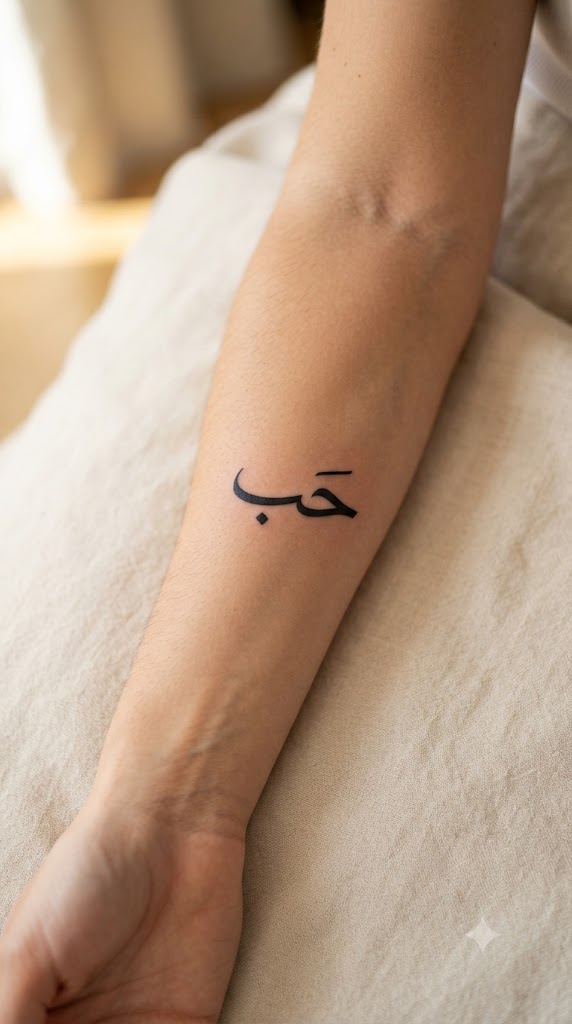
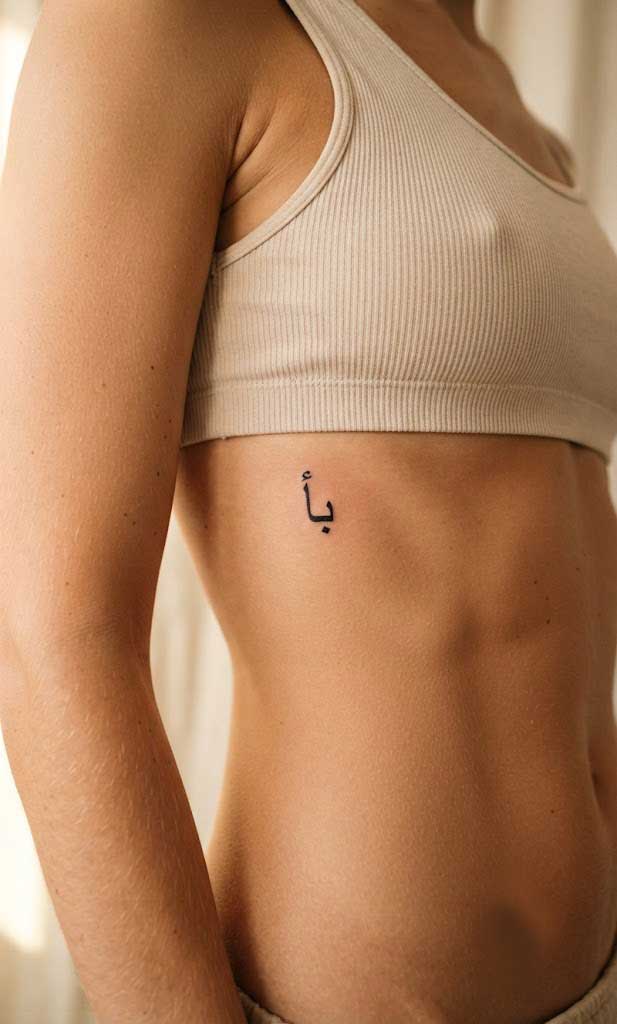
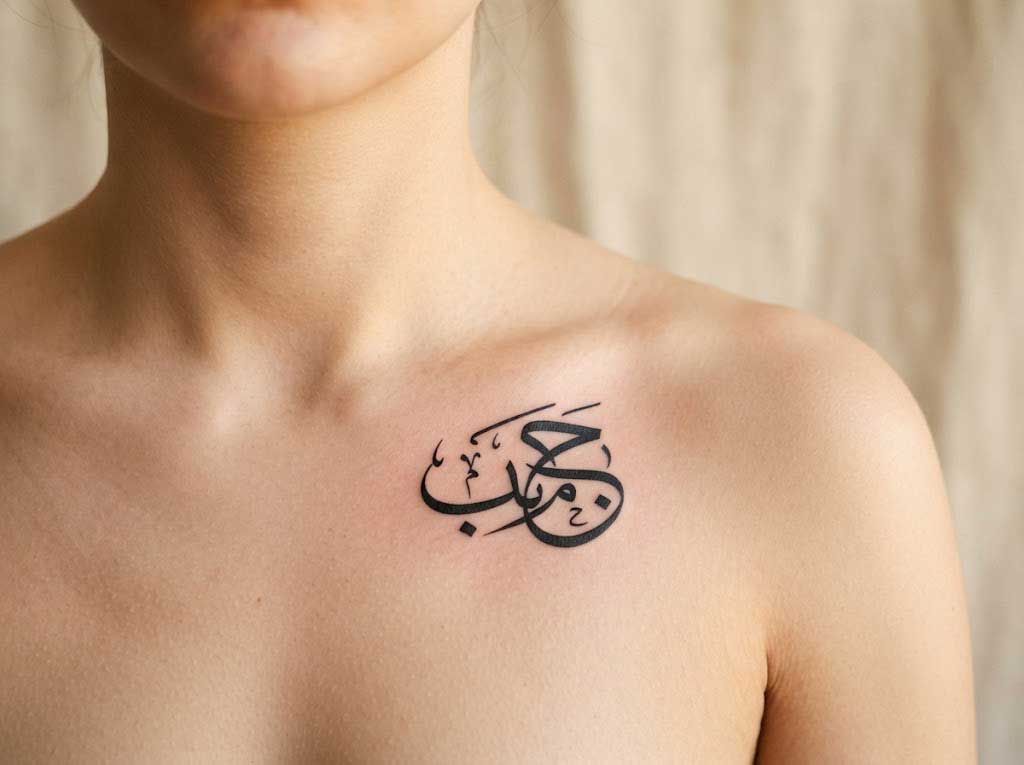
Love is the largest secular theme in Arabic tattoo designs. حب (Hubb, love) is the most tattooed Arabic word worldwide — compact enough for a wrist or nape placement. أحبك (I love you) suits a forearm or ribcage. See love-themed Arabic tattoo designs →
Word Designs (Single Meaningful Words)
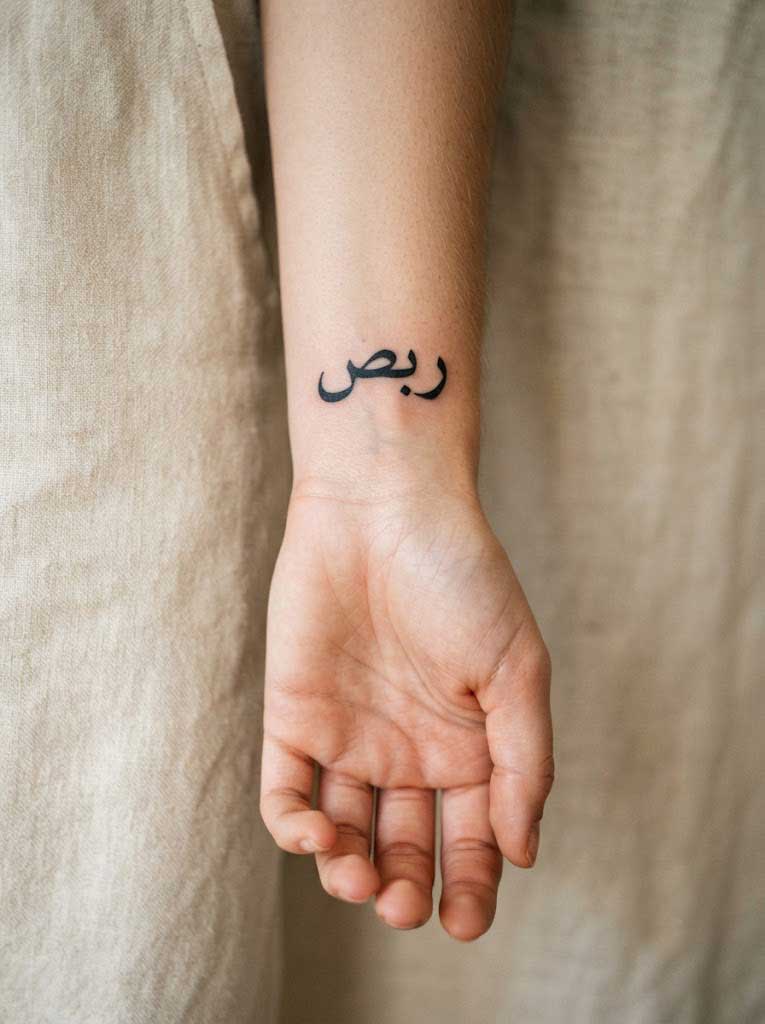
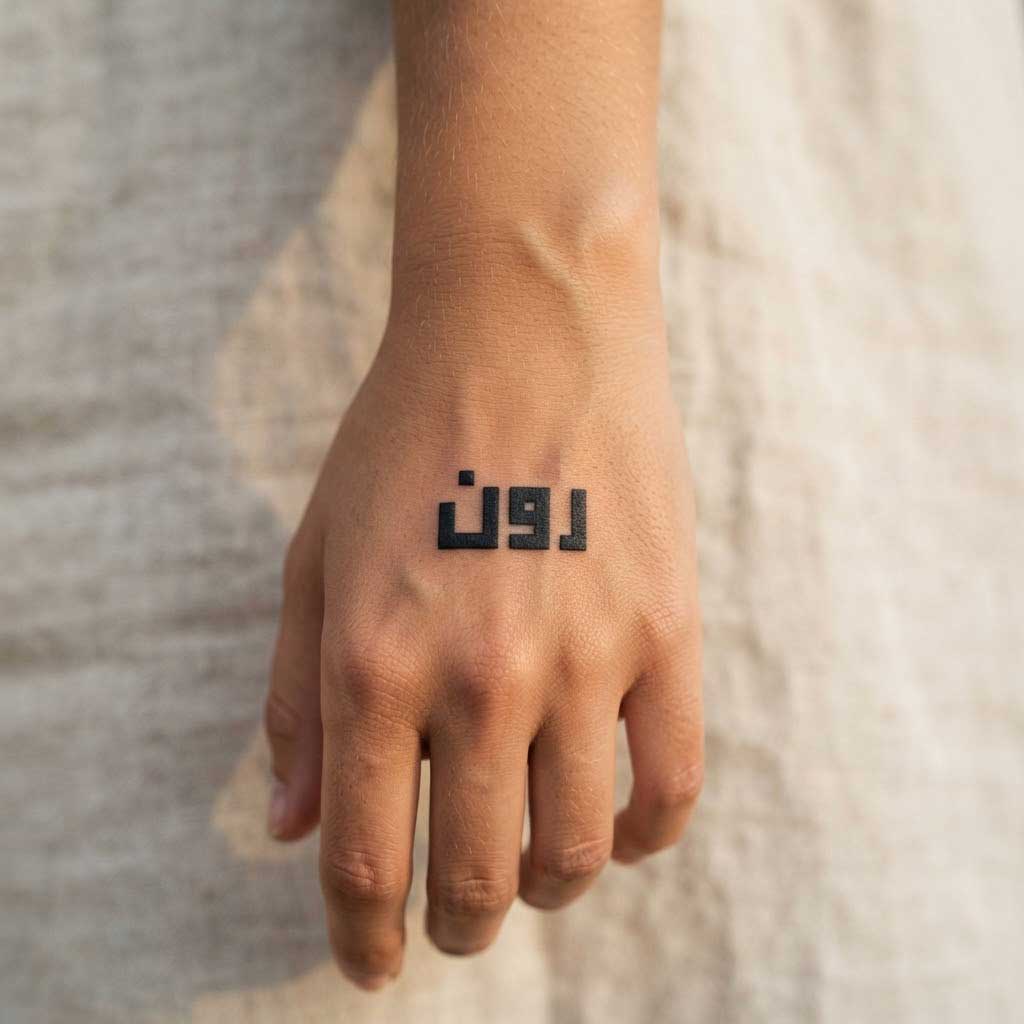
Single Arabic words make the most versatile tattoo designs — صبر (patience), سلام (peace), نور (light), حياة (life). They stay legible at small sizes, age well as ink settles, and give you one clean visual to build the rest of your composition around. Full list of Arabic words for tattoos →
Calligraphy Designs (Script-Forward)
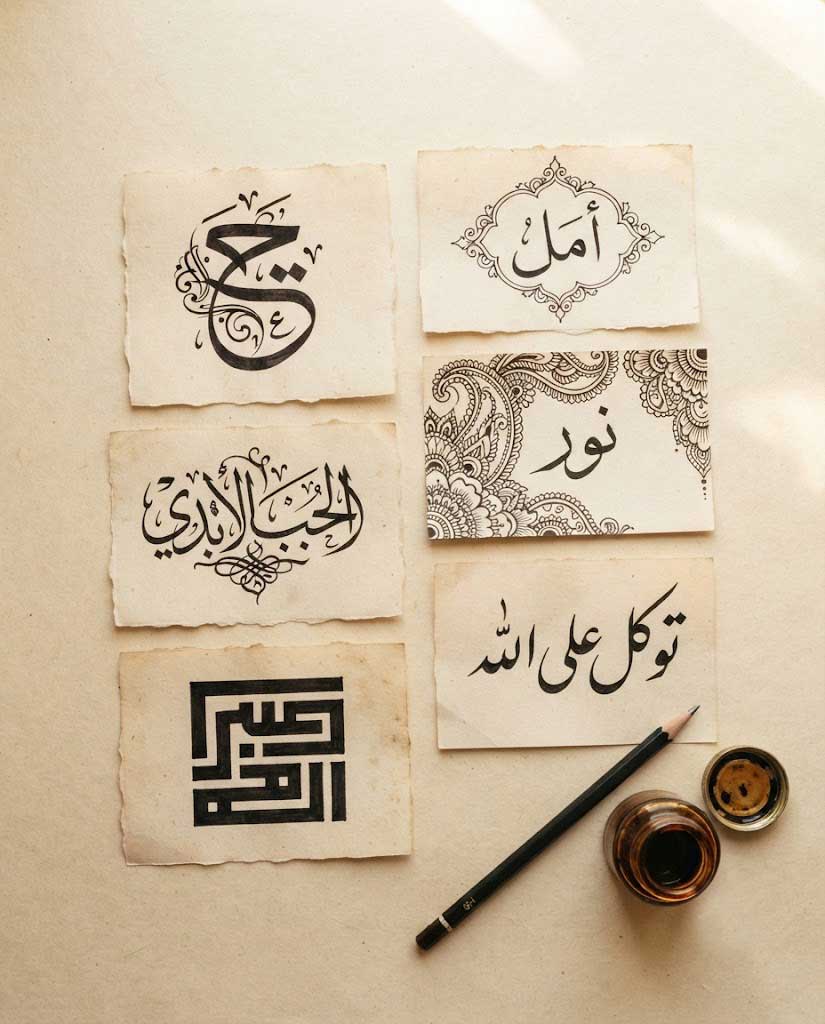
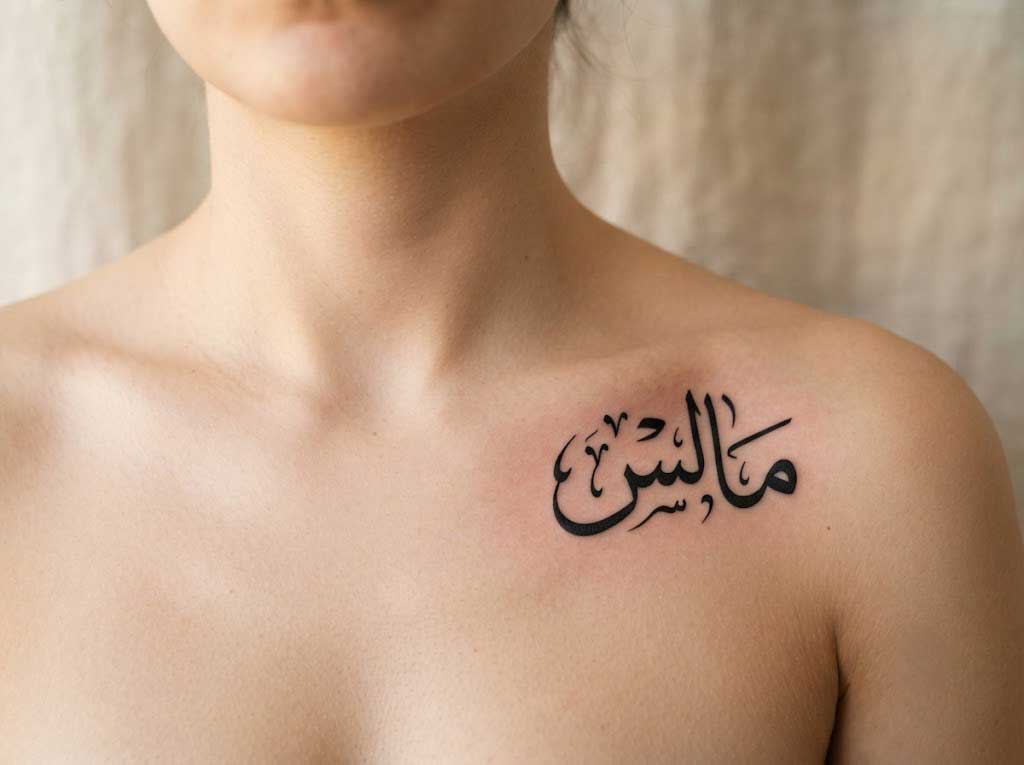
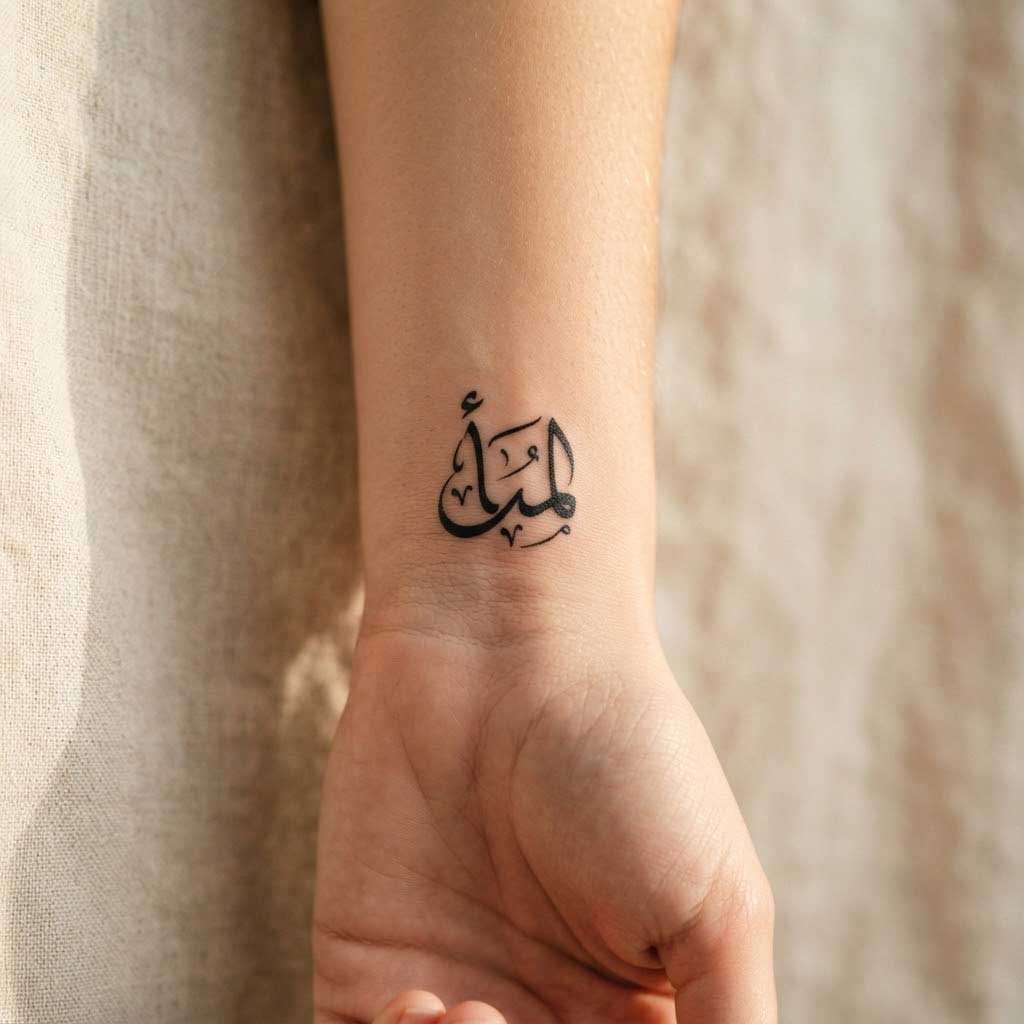
Some Arabic tattoo designs treat the calligraphy itself as the subject — the visual weight of Thuluth's long descending curves, the geometric squareness of Kufic, the ornate flourishes of Diwani. Pick the script first, then choose a word that lets the letterforms breathe.
Tribal & Ornamental Arabic Tattoo Designs
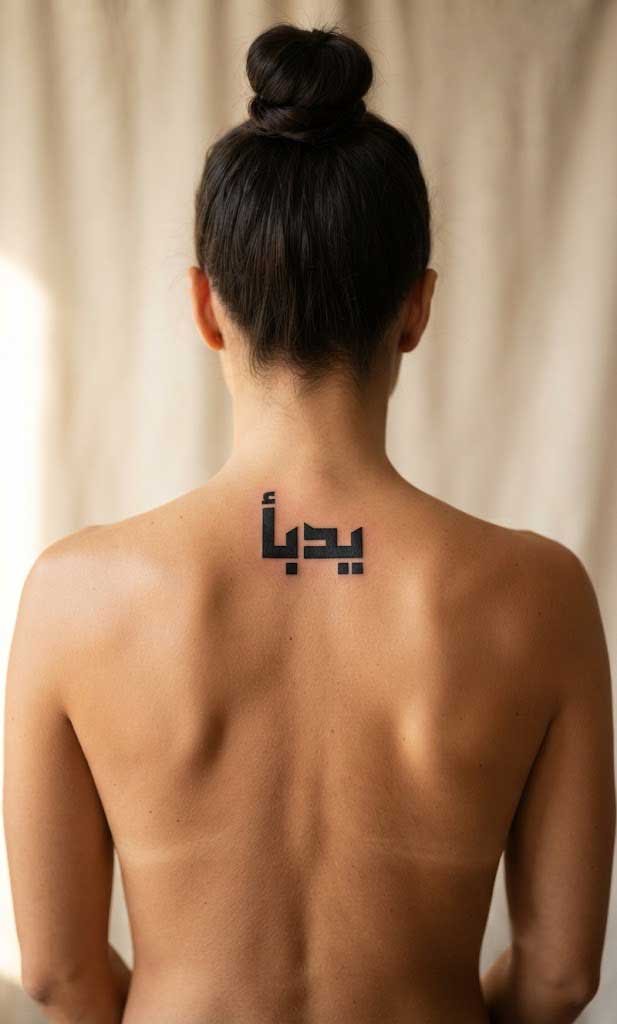
Tribal-style Arabic tattoo designs combine calligraphy with symmetric ornamental frames, arabesque patterns, or geometric borders inspired by Islamic tile art. These read as larger statement pieces and work best on the upper back, chest, or full sleeve — placements with enough canvas for the ornament to breathe around the script.
Henna-Style Arabic Tattoo Designs
Henna-inspired Arabic tattoo designs weave the calligraphy into flowing floral and paisley patterns, often on the hand, wrist, or foot. Because henna traditions vary across the Arab world (Moroccan, Emirati, Sudanese styles all differ), this is a design category where reference photos from your specific tradition matter most.
Arabic Tattoo Designs for Men and Women
Arabic script itself is not gendered — the same word reads the same way on any body. But the design decisions around a tattoo (size, weight, placement, ornament) tend to differ, and search demand shows two distinct visual vocabularies for masculine and feminine Arabic tattoo designs. Below is what people actually search for and get inked.
Arabic Tattoo Designs for Men
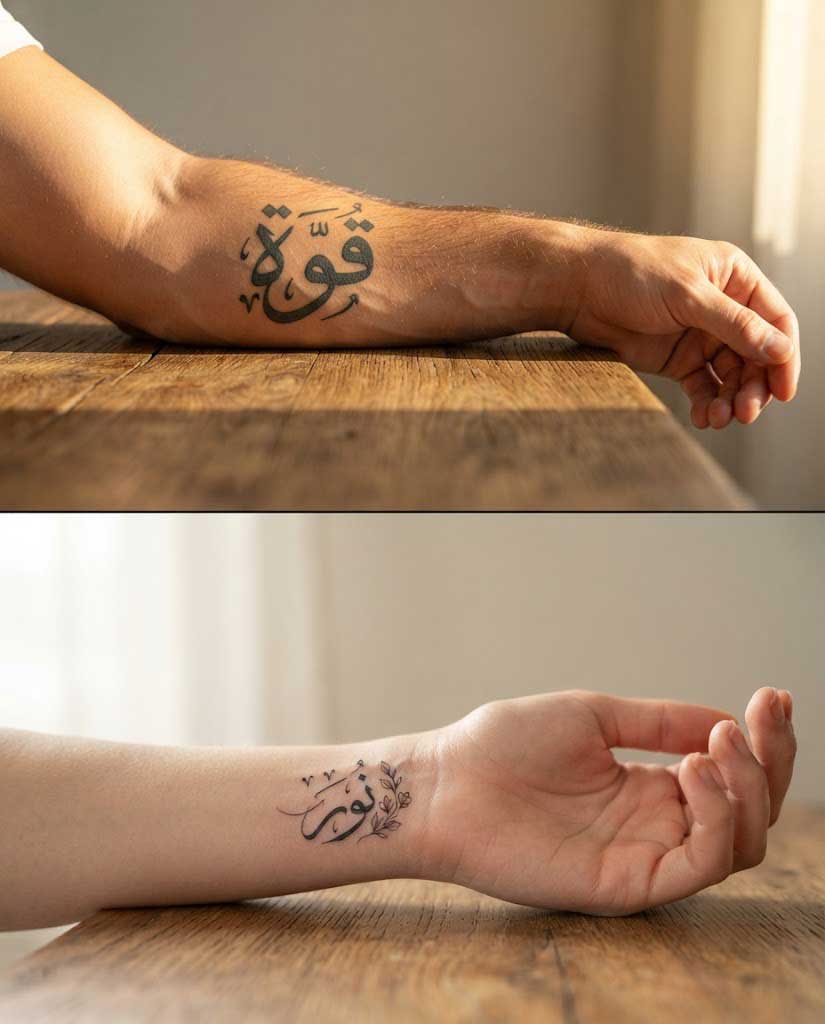
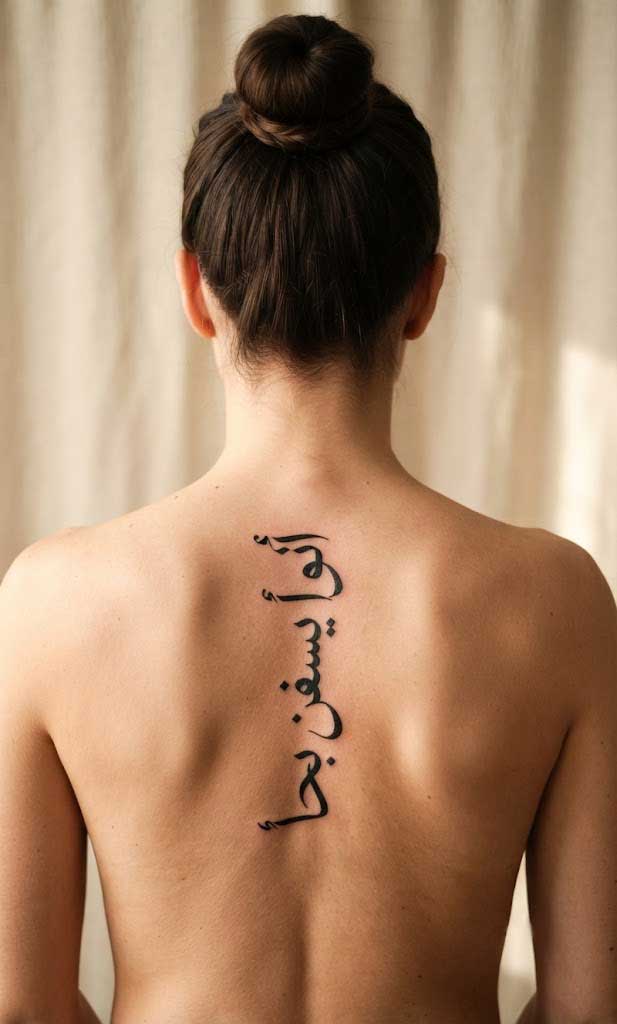
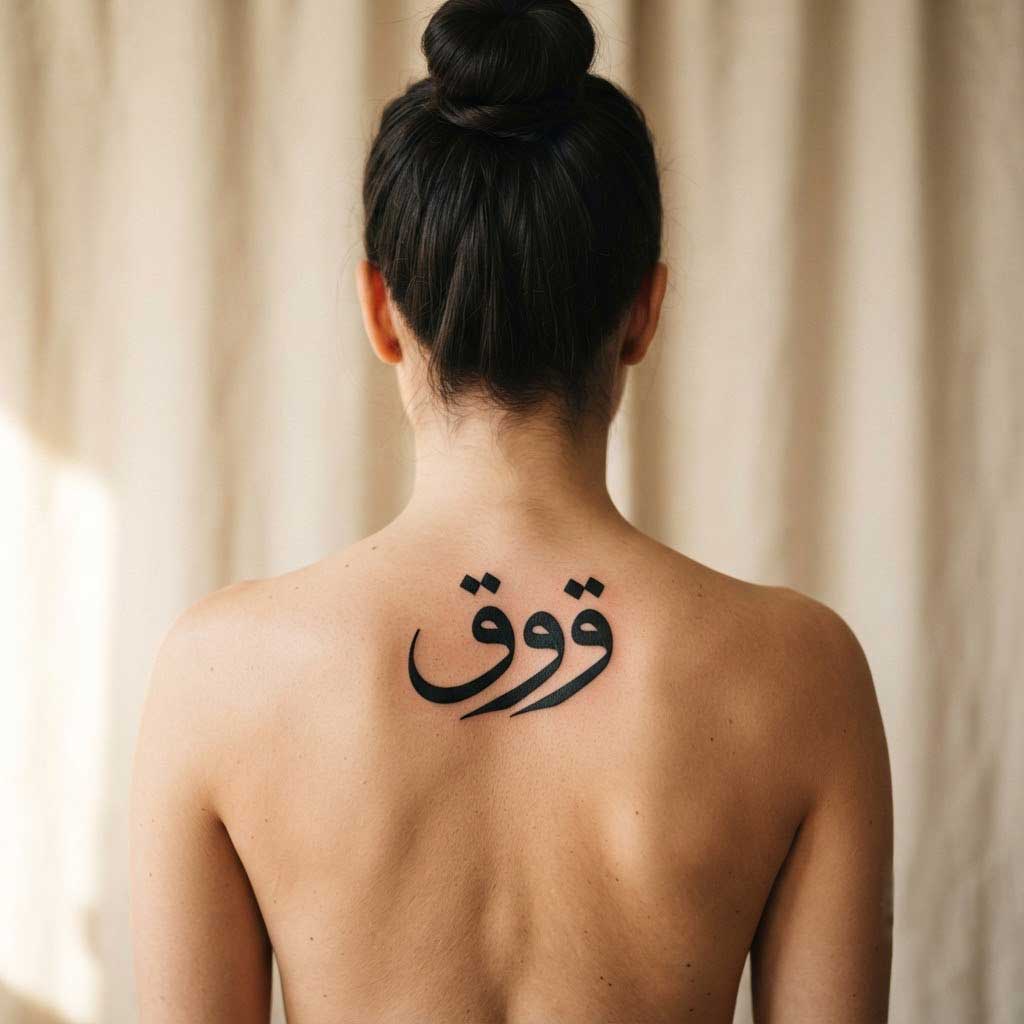
Popular Arabic tattoo designs for men lean toward bold stroke weights, upper body placements (forearm, upper back, chest, ribcage), and Thuluth or Kufic scripts that read confidently at a distance. Common words include قوة (Quwwa, strength), أبدي (Abadiy, eternal), family names, and short Quranic phrases. Multi-line vertical compositions along the ribs or spine are also strongly associated with masculine Arabic tattoo designs.
Arabic Tattoo Designs for Females
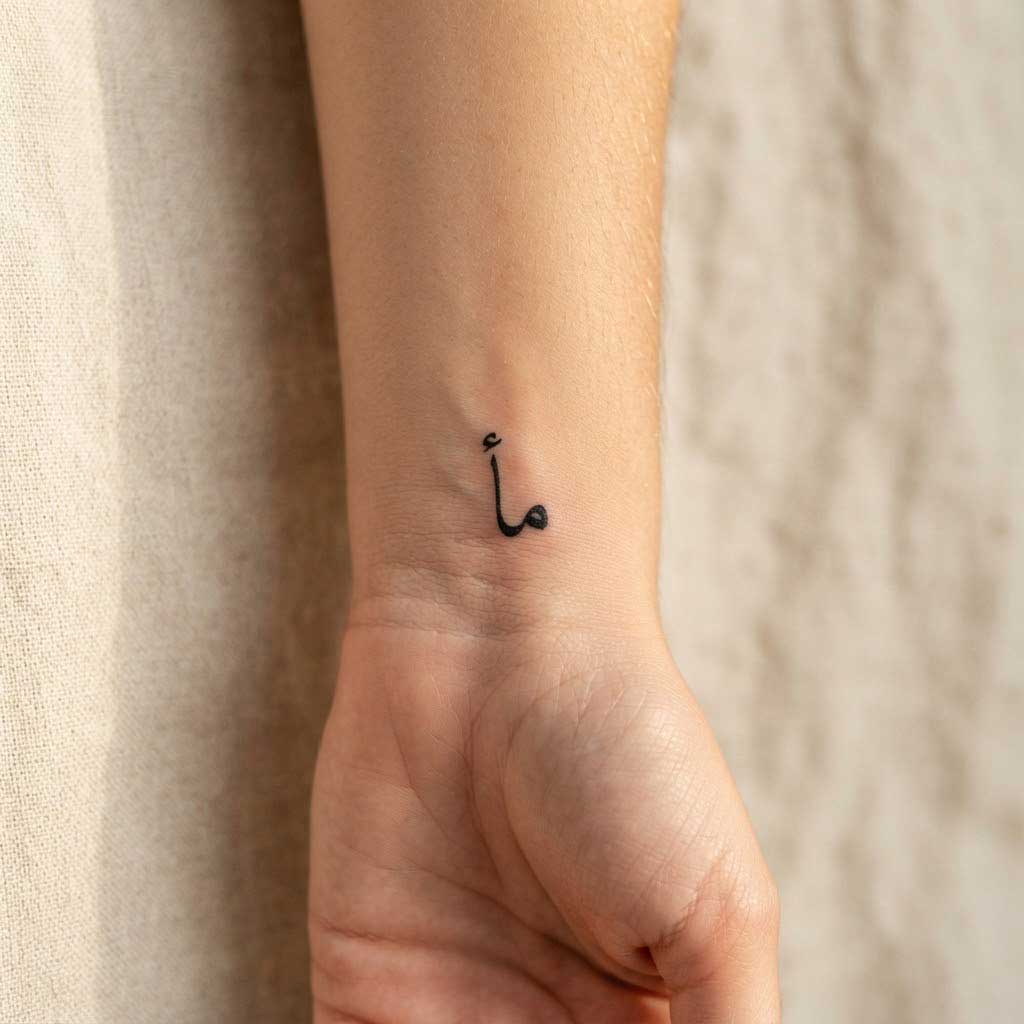
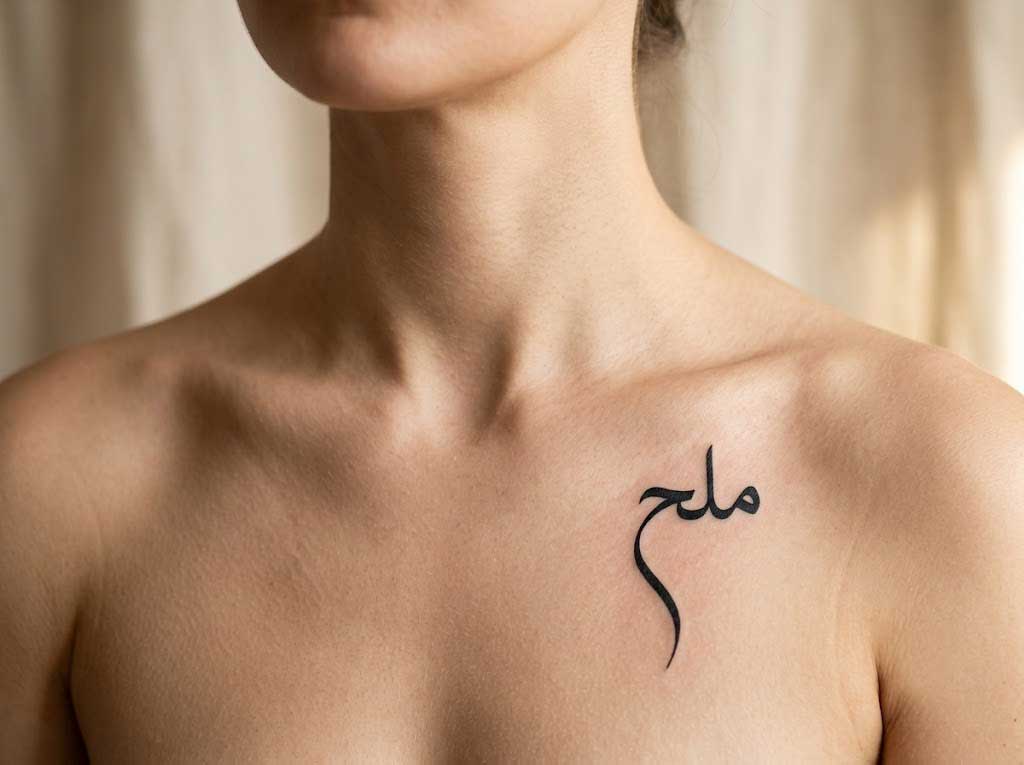
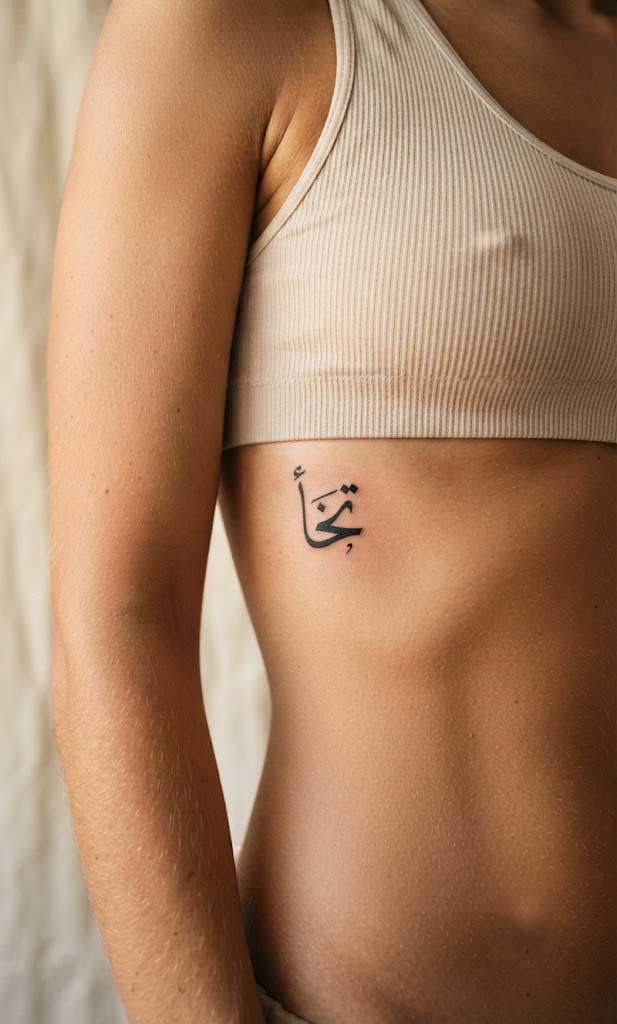
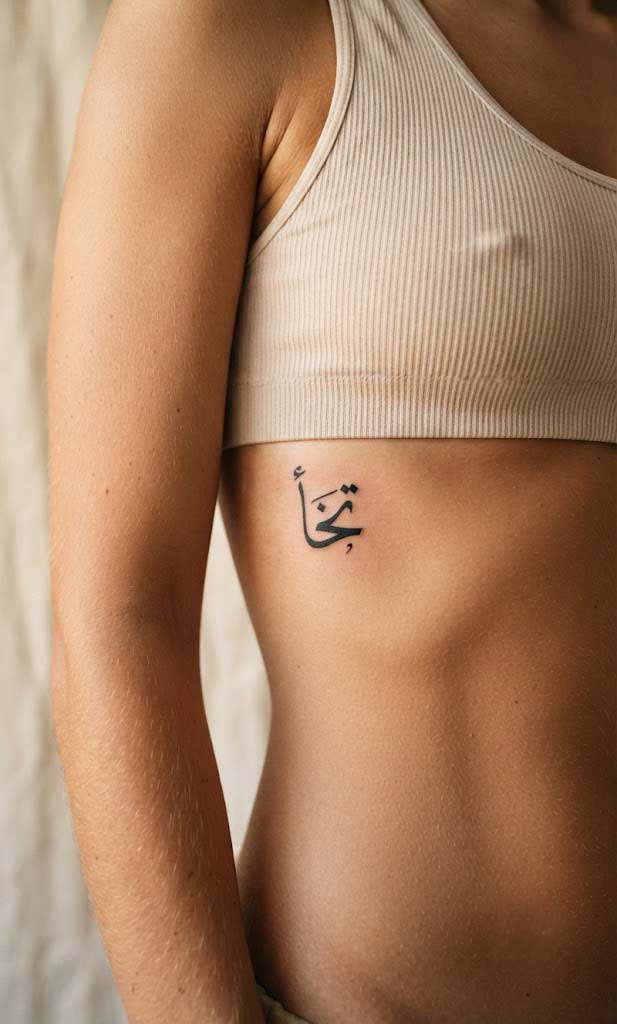
Popular Arabic tattoo designs for females lean toward finer stroke weights, subtle placements (inner wrist, behind the ear, collarbone, nape, inner arm), and Diwani or Nastaliq scripts whose flowing curves feel decorative. Common words include حب (Hubb, love), أم (Umm, mother), حياة (Hayat, life), أمل (Amal, hope), and short poetic lines. Many women pair the Arabic word with a small floral ornament.
Unisex Arabic Tattoo Designs
The strongest Arabic tattoo designs work equally well on any body — a single meaningful word rendered in a font that suits its meaning. صبر (patience), إيمان (faith), سلام (peace), and نور (light) are the most-tattooed unisex Arabic words worldwide. If you want a design you can share with a partner or family member without it feeling gendered, start here.
Arabic Tattoo Designs by Body Placement: Back, Neck & Spine
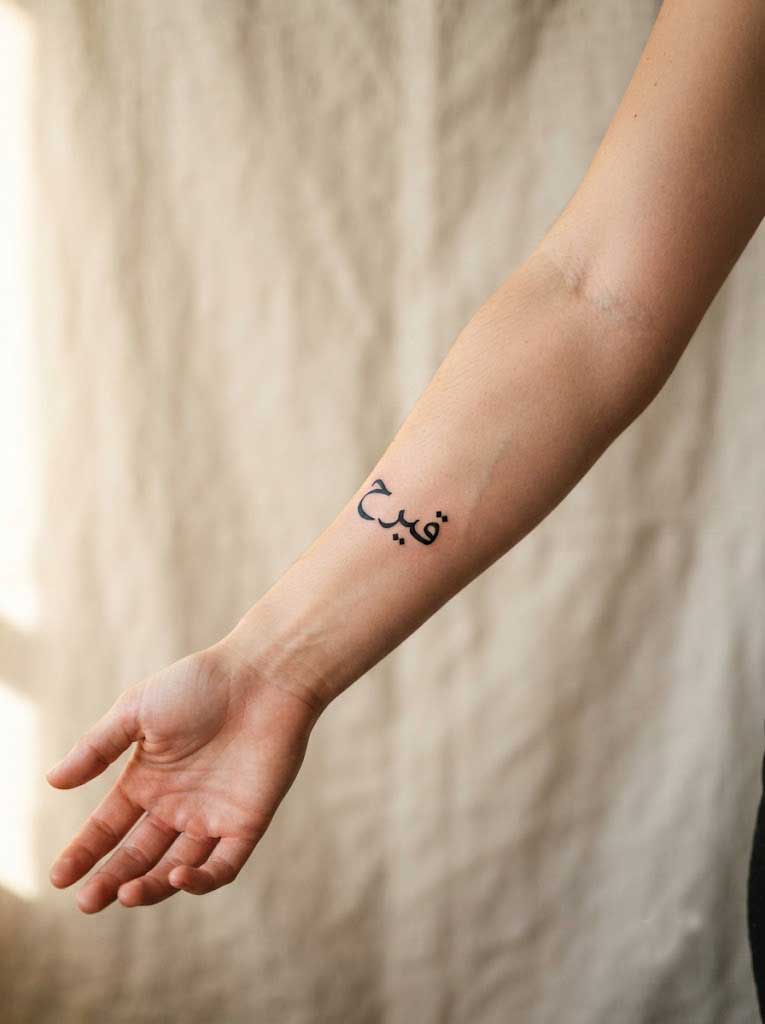
The right Arabic tattoo design depends on where it will live on your body. Long horizontal ligatures suit the forearm and collarbone; vertical rhythmic scripts drape naturally along the spine; compact isolated words fit the wrist and nape. Below are the most popular body placements for Arabic tattoo designs, each with a dedicated guide.
Arabic Back Tattoo Designs
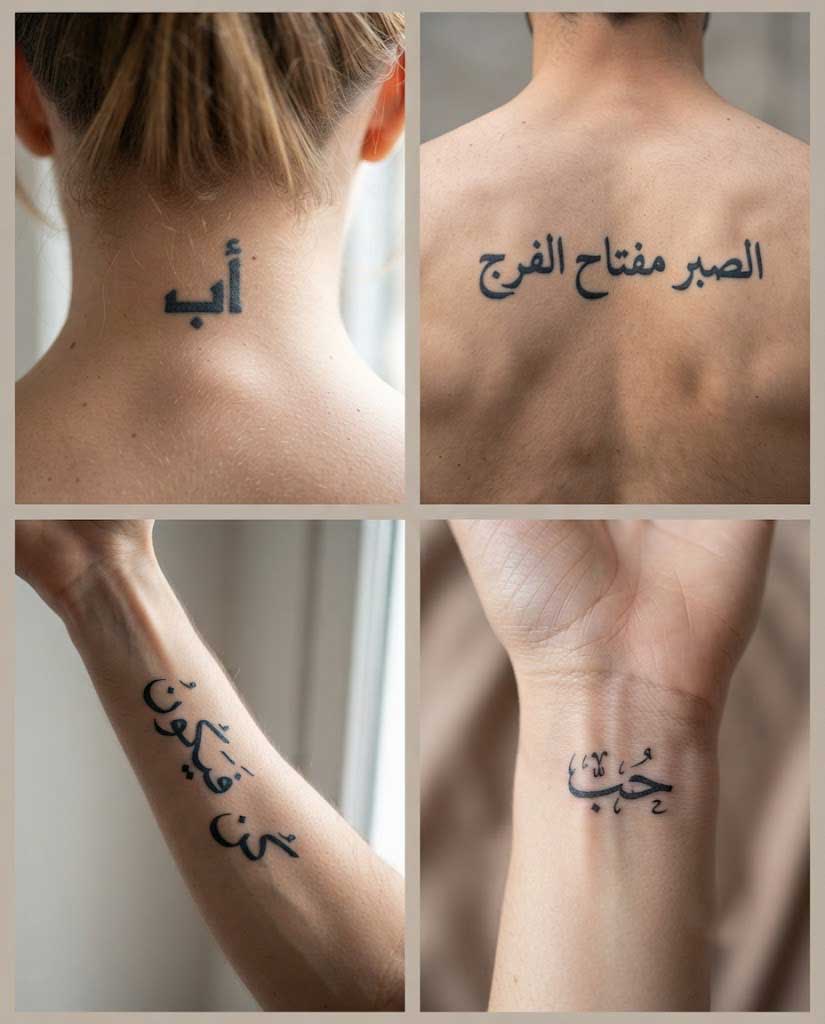
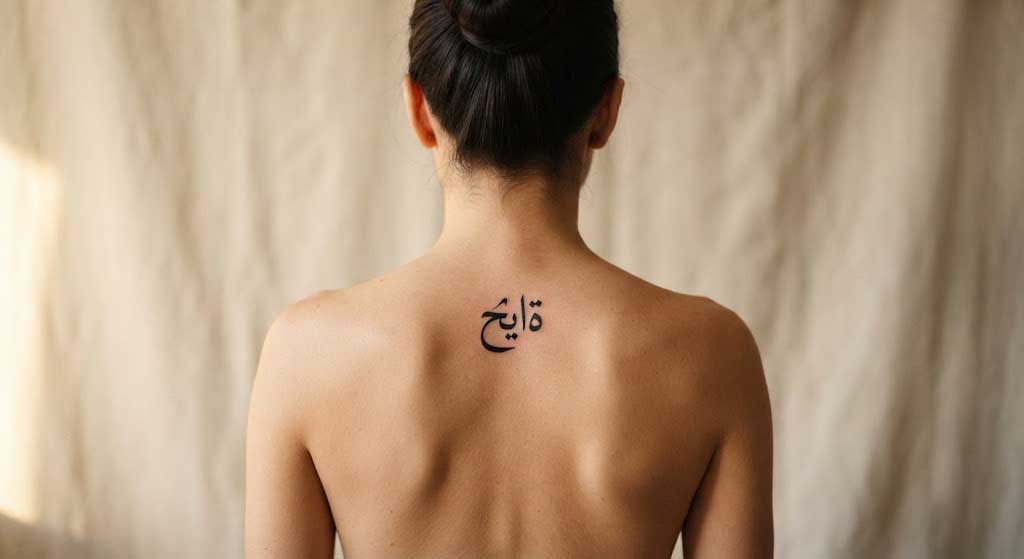
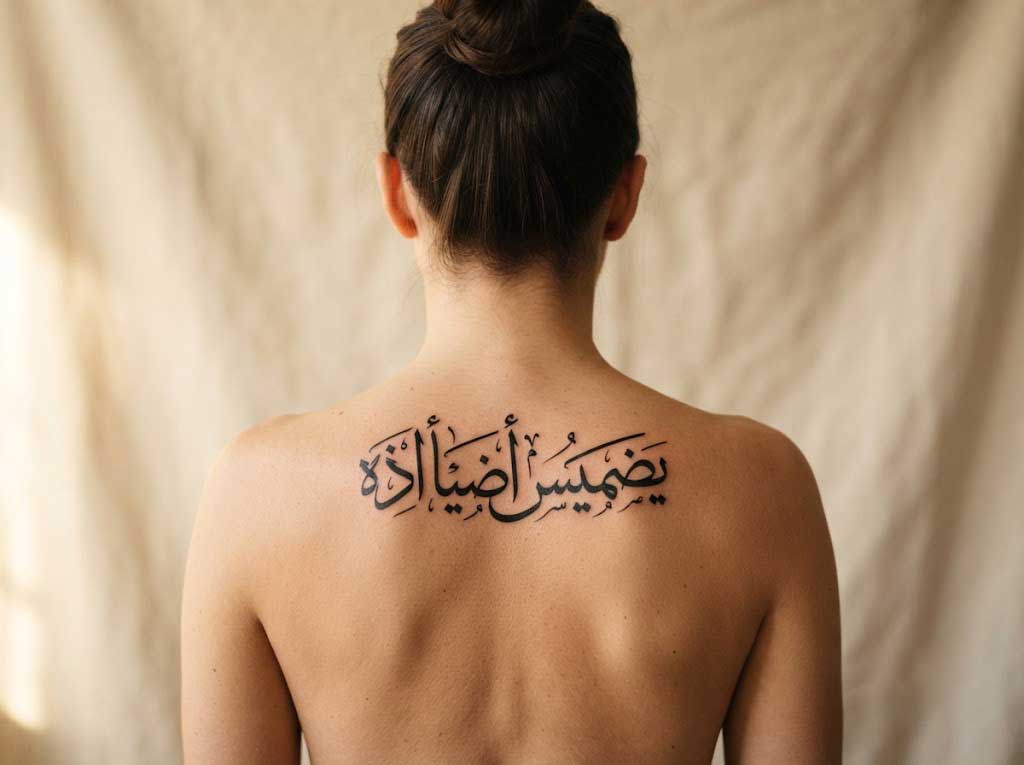
The upper back gives you the largest canvas for Arabic tattoo designs — enough room for multi-line quotes, entire Bismillah phrases, ornate Diwani compositions with flourishes, or symmetric calligraphy medallions. Back placements let you commit to a bolder, more ambitious design without competing with other tattoos. Arabic back tattoo design guide →
Arabic Neck Tattoo Designs
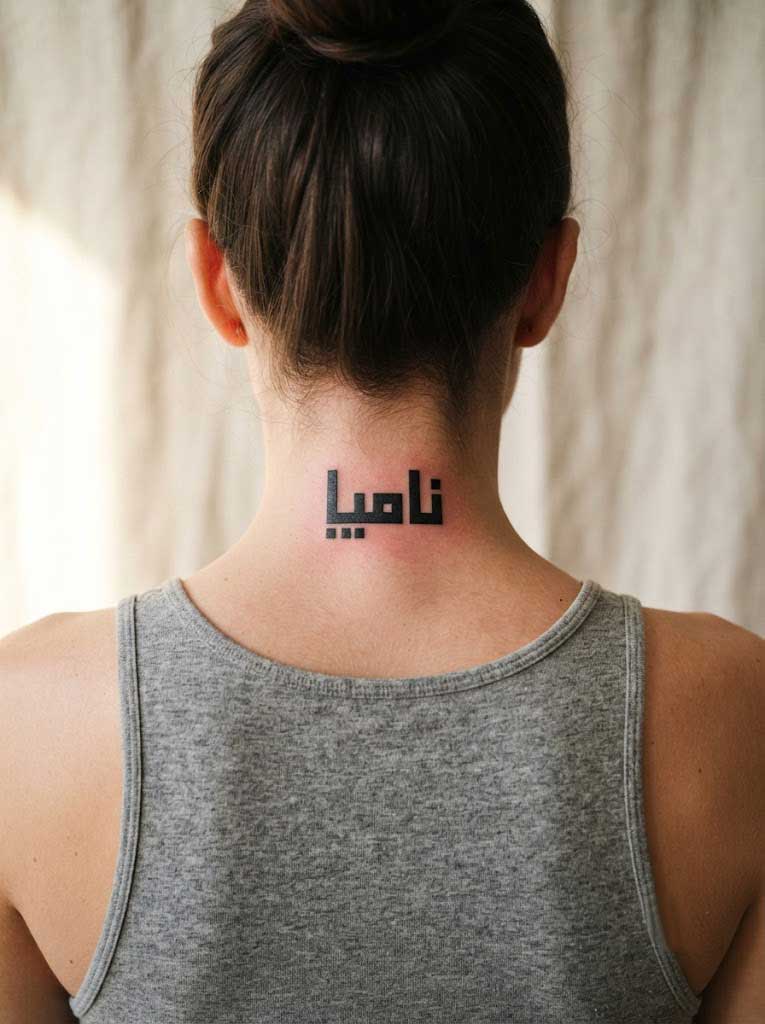
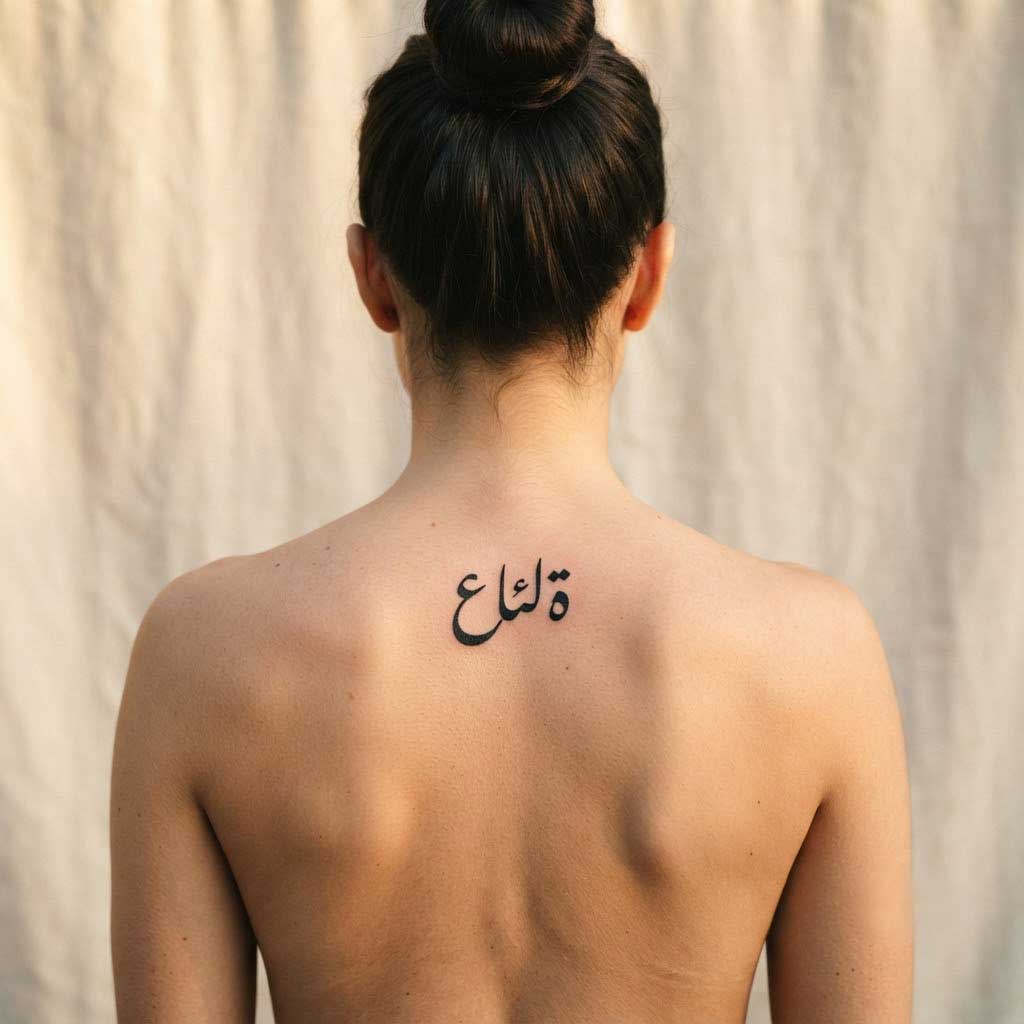
The nape (back of the neck) is the most private of the visible placements — hidden under long hair, revealed only when you choose. Best for short one-to-three-letter Arabic tattoo designs like حب, نور, or إيمان in Kufic or Naskh. The side of the neck suits vertical single-word designs. Arabic neck tattoo design guide →
Arabic Spine Tattoo Designs
The spine is the signature placement for Arabic script. The vertical column suits long Nastaliq or descending Thuluth designs, and the tattoo remains hidden or visible depending on your outfit. Best for full sentences, poetic quotes, and Sufi verses. Arabic spine tattoo design guide →
Arabic Hand & Wrist Tattoo Designs
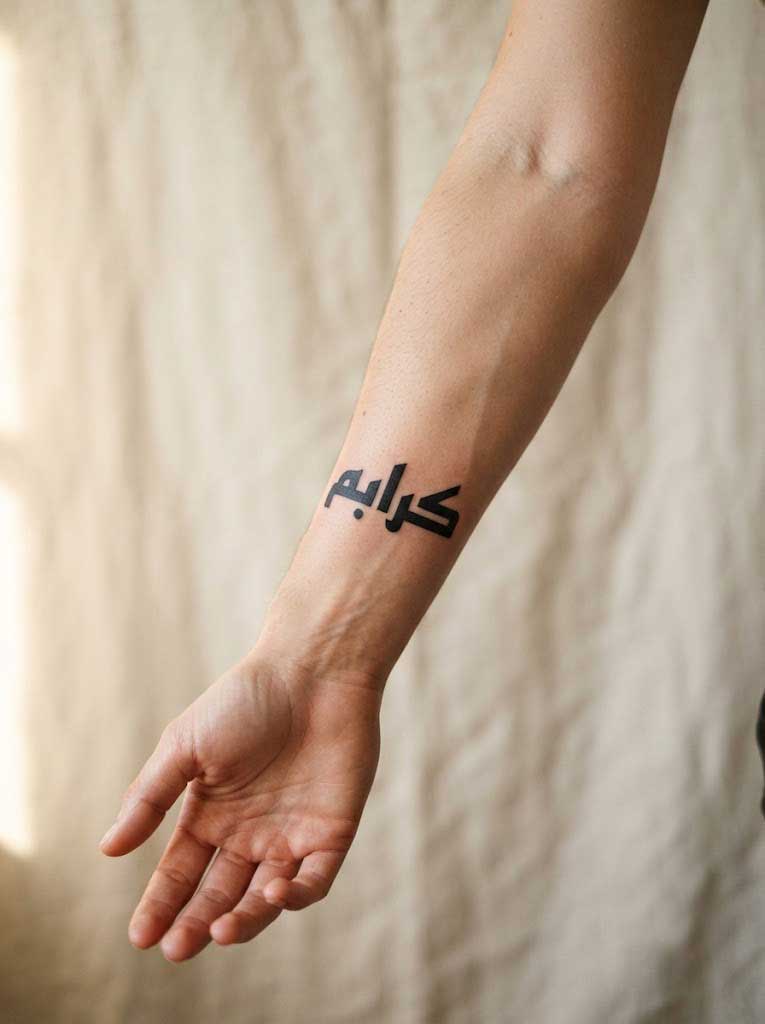
The inner wrist and back of the hand are the most personal Arabic tattoo design placements — visible to you constantly, visible to others when you shake hands. Best for one to three characters in a fine, well-spaced font. Because the skin here moves a lot, choose stroke widths that stay legible even as ink settles. Arabic hand tattoo design guide →
Small Arabic Tattoo Designs (Ankle, Behind the Ear, Finger)
The smallest Arabic tattoo designs — two-letter words like حب or أم — fit behind the ear, on the ankle, along the collarbone, or even a single letter on a finger. Keep stroke widths above 3 mm minimum to survive years of skin turnover, and skip Diwani (its flourishes disappear at tiny sizes).
How to Choose Your Arabic Tattoo Design
Choosing an Arabic tattoo design is a two-part decision: first the meaning, then the visual. Rush the meaning and you end up with a beautiful design that says the wrong thing. Rush the visual and you end up with the right word in a font that fights your body. Work through all five steps before you sit in the chair.
- Start with the meaning, not the font. Decide the exact Arabic word or phrase first — حب, إيمان, a family name, a Quranic line. Every font in the generator can render your text, but no font can rescue a design built around the wrong word. Ask yourself: would you still want this tattoo if it were in English?
- Match the calligraphy style to the meaning. Thuluth for religious weight, Naskh for maximum legibility, Kufic for bold modern minimalism, Diwani for ornate romantic pieces, Nastaliq for Persian-Urdu poetry. Preview the same word across all five in the tool above to compare on the same text.
- Choose a body placement your design shape fits. Long horizontal ligatures live on the forearm and collarbone. Vertical rhythmic scripts follow the spine. Compact isolated words suit the wrist, nape, and behind the ear. Use the Preview on body tab to try the same design across placements before committing.
- Verify spelling with a native Arabic speaker. Every font in our generator uses correct Arabic Unicode, but you should still ask a fluent Arabic speaker — a friend, a mosque contact, or an online translator community — to read the exact text back to you. Five minutes of verification saves years of regret. This is non-negotiable.
- Test the design as a temporary tattoo first. Download the design PNG at 3× or 4× resolution, print it, and wear it as a temporary tattoo transfer or henna for a week. You will notice things about size, placement, and visual weight that no on-screen preview can show — and it is much easier to change your mind on paper than on skin.