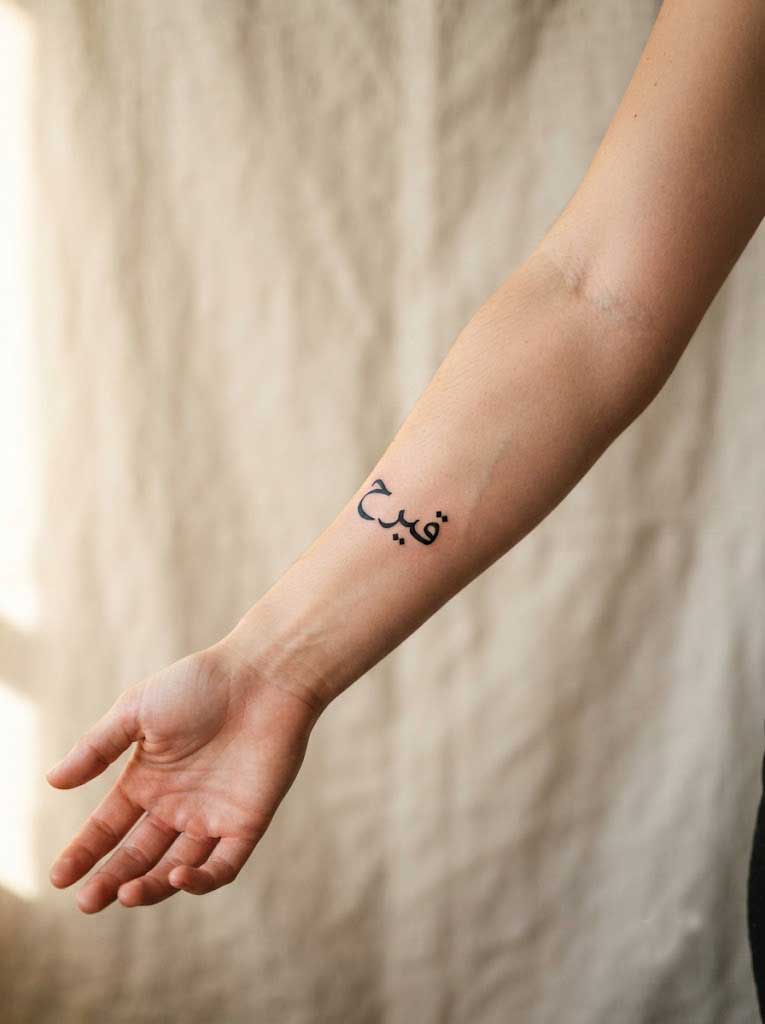
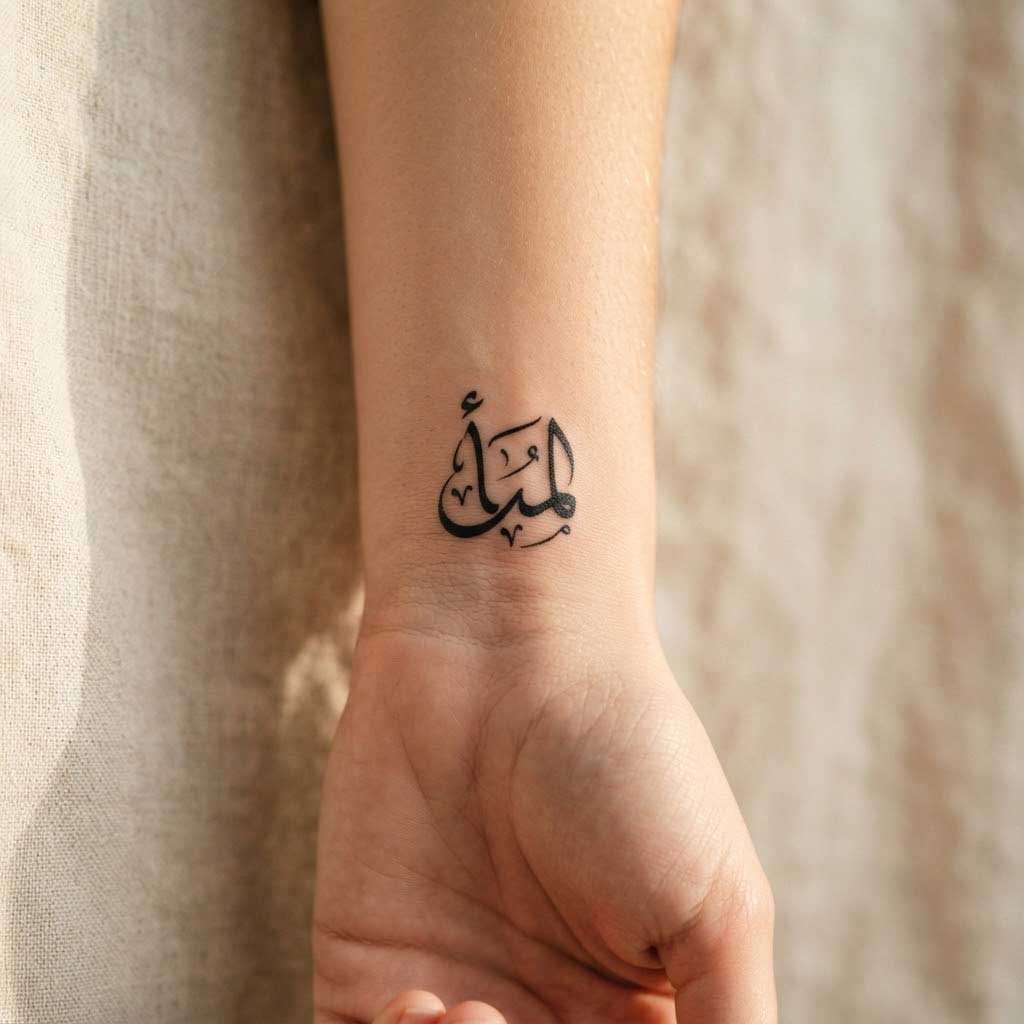
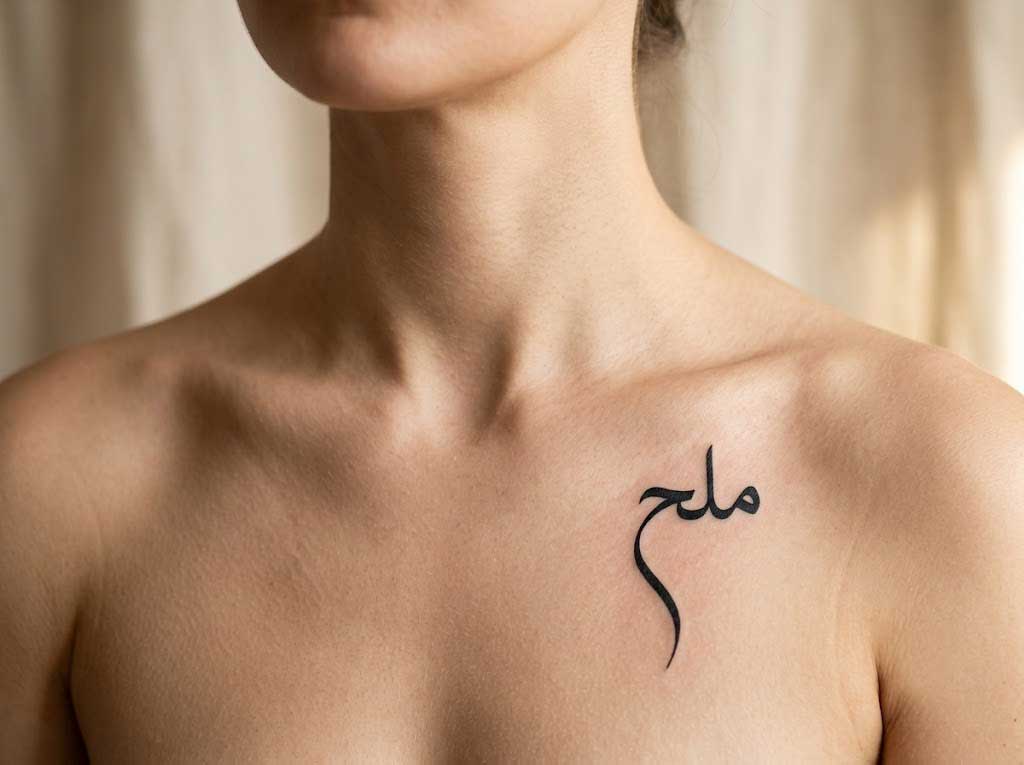
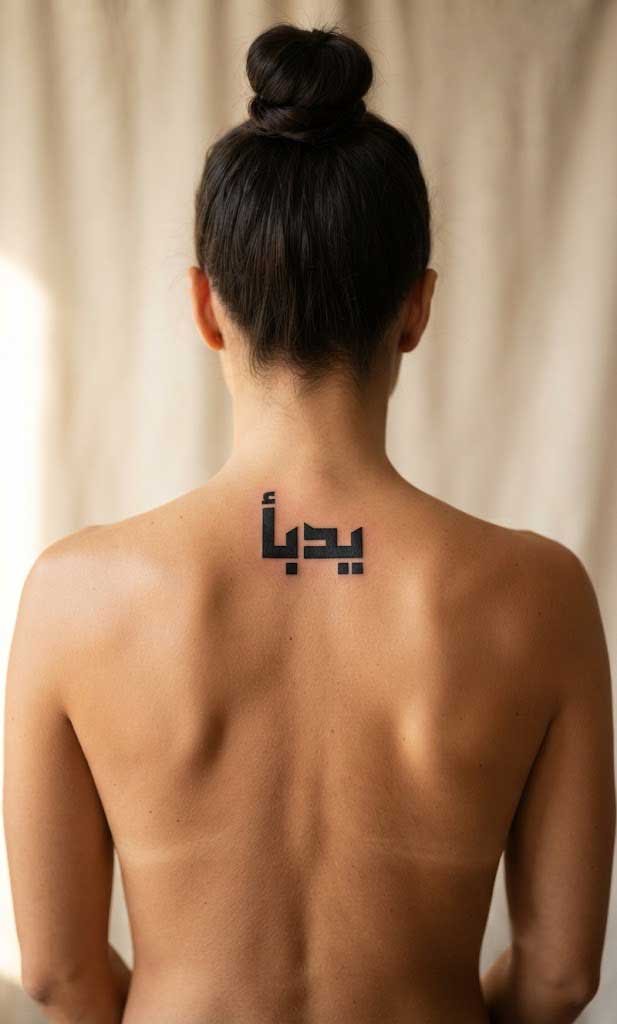
Arabic Neck Tattoo Ideas — Words, Designs & Placement with Meanings

Browse 20+ Arabic tattoos designed for the neck — short words that fit the smallest visible placement, design ideas for side-neck and behind-the-ear pieces, and masculine placement notes. Every design ships with translation, transliteration, and a calligraphy example. Use the free generator to preview any word and download a high-resolution PNG for your tattoo artist.

✓ 20+ neck designs ✓ 5 calligraphy styles ✓ Preview on body ✓ Native-speaker verified
Native-speaker verified spelling
Text
Style
Transform
Canvas
×
Position
Download

Send this file to your tattoo artist — they will use it as a stencil reference. Always double-check the Arabic spelling with a native speaker before getting inked.

Design preview 💡 Drag = move · Corners = resize · ⟳ = rotate · Click empty area to finish 1500 × 1500 px
Preview your Arabic tattoo on the body: 💡 Drag = move · Corners = resize · Bottom ⟳ = rotate · Click empty area to finish
Choose another body placement — or upload your own photo:

Arabic Neck Tattoo — Meaningful Words for the Neck

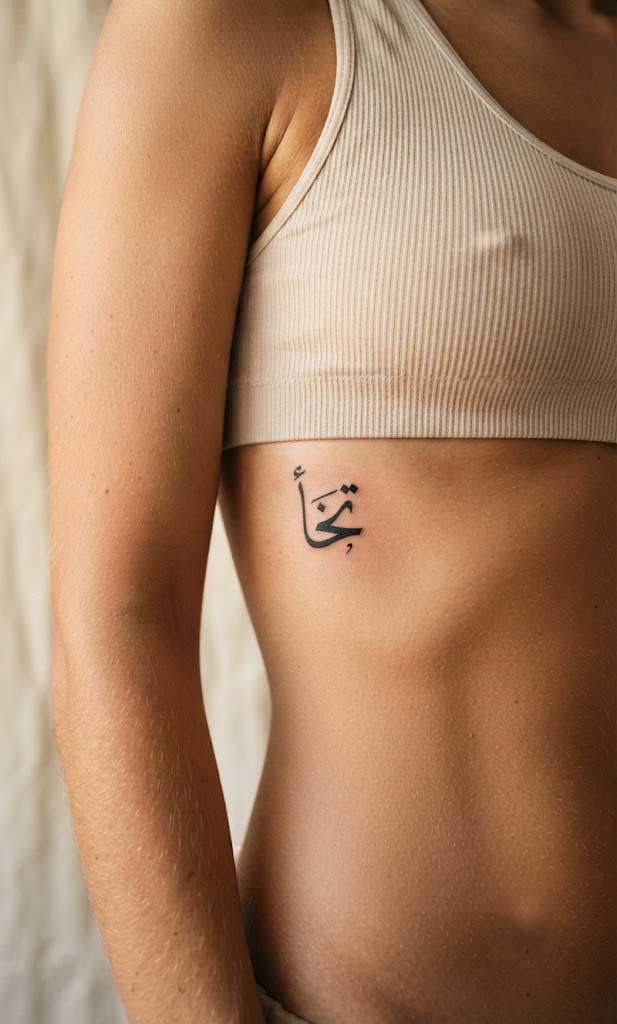
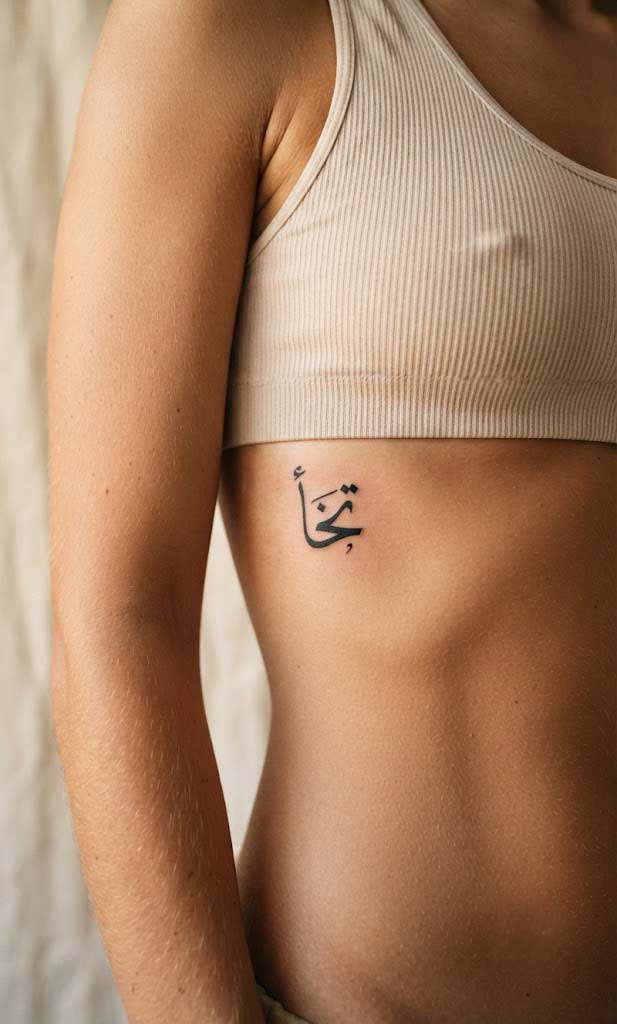
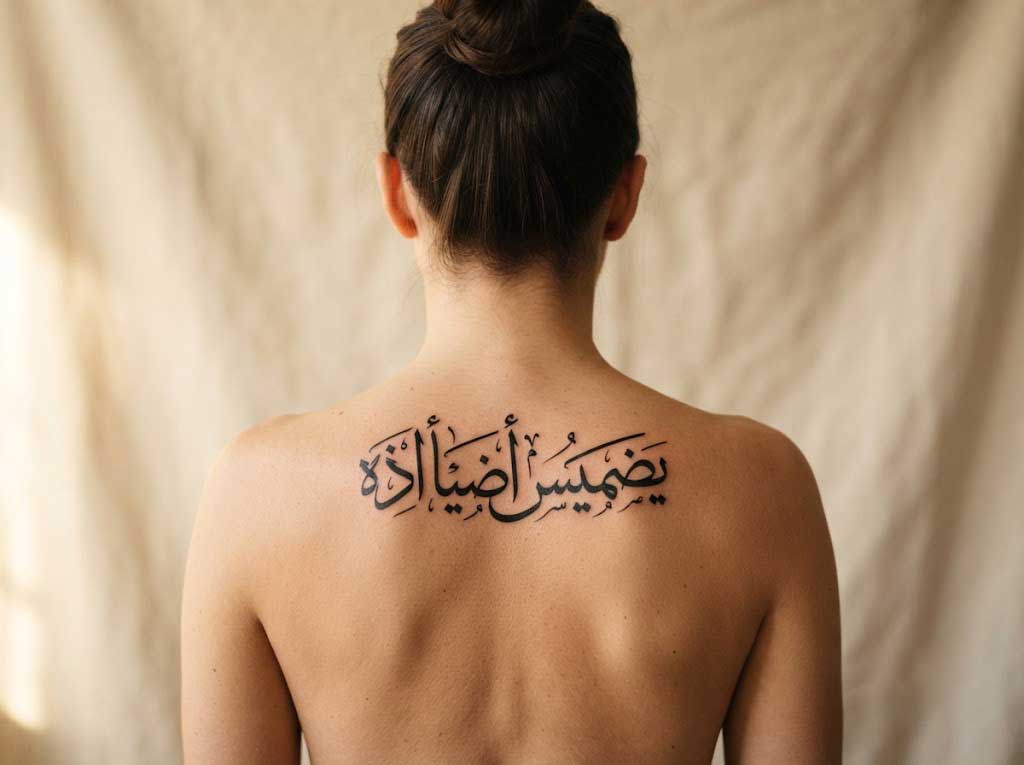
The neck is one of the smallest visible tattoo placements. The best Arabic words for a neck tattoo are two-to-four letters — small enough to sit cleanly behind the ear, on the nape, or on the side of the neck, but visually weighty enough to survive being seen every day. Below are eight short Arabic words that fit.

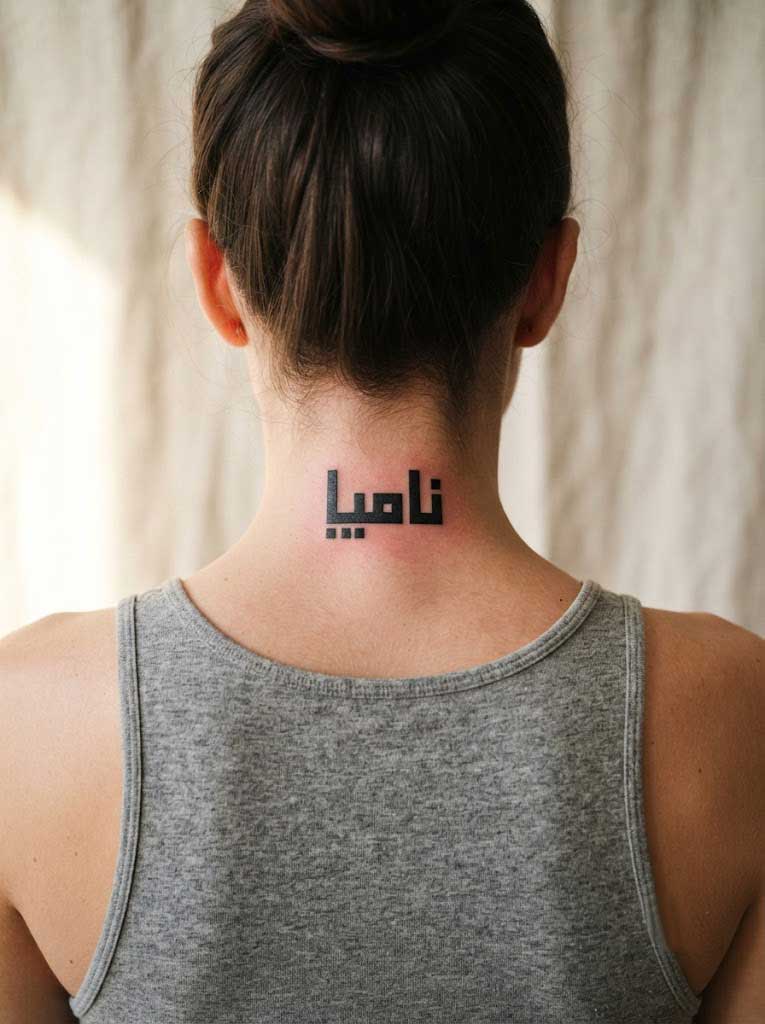
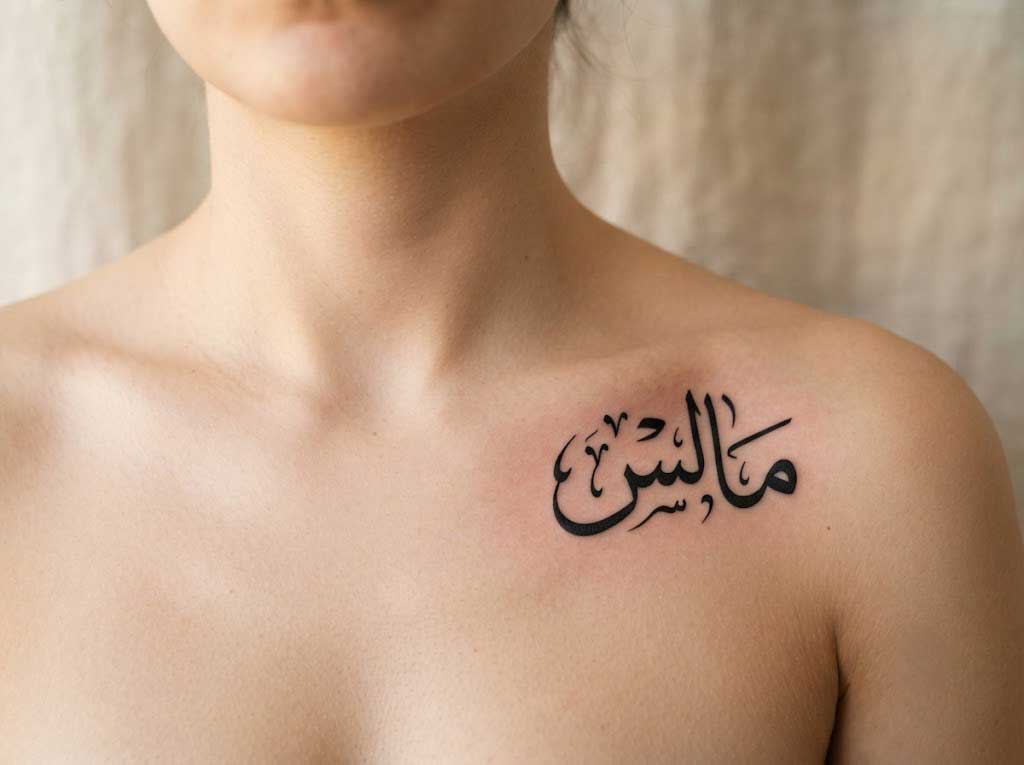
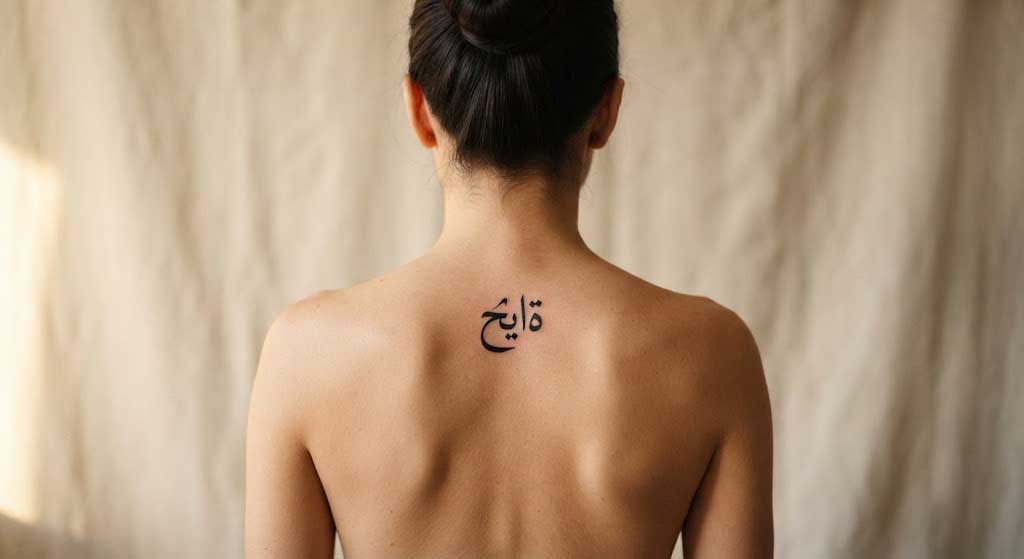
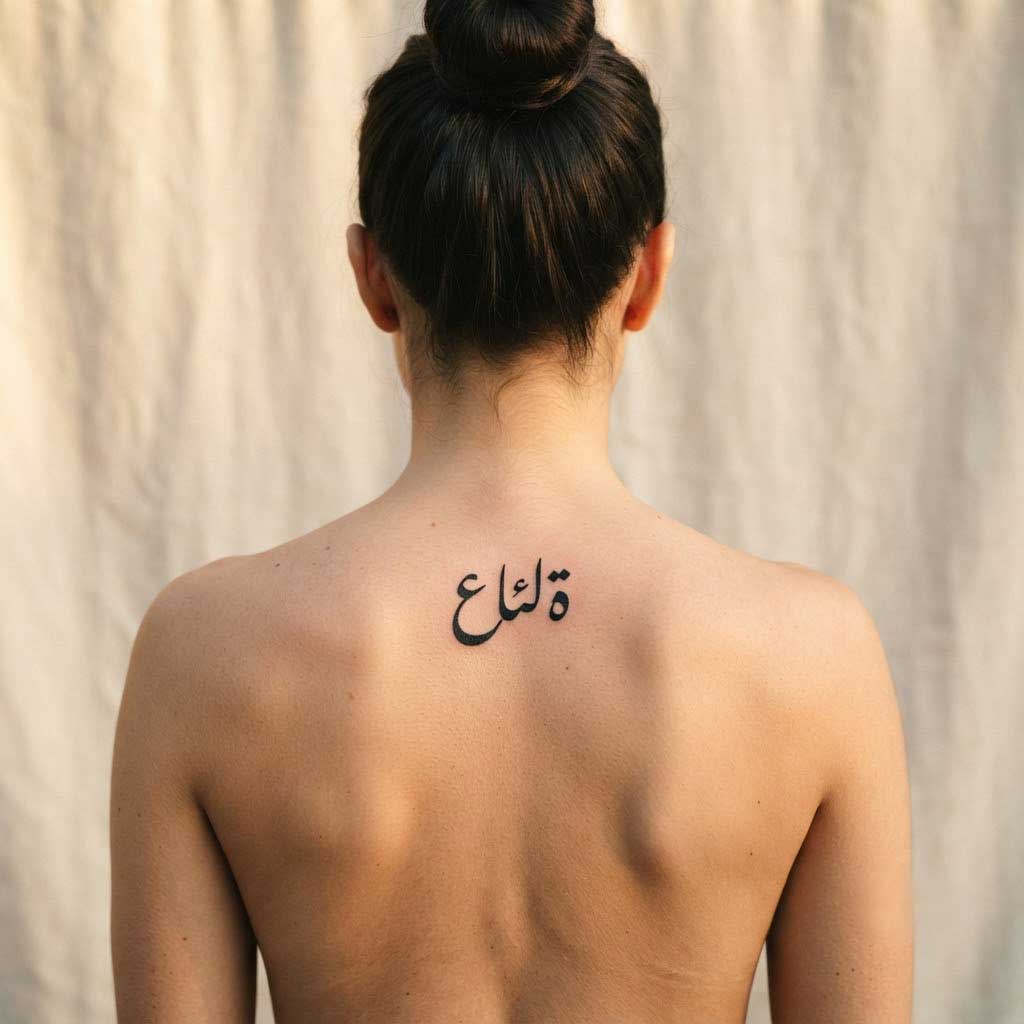
Iman (faith) — an Arabic word tattoo in Kufic calligraphy on the back of the neck
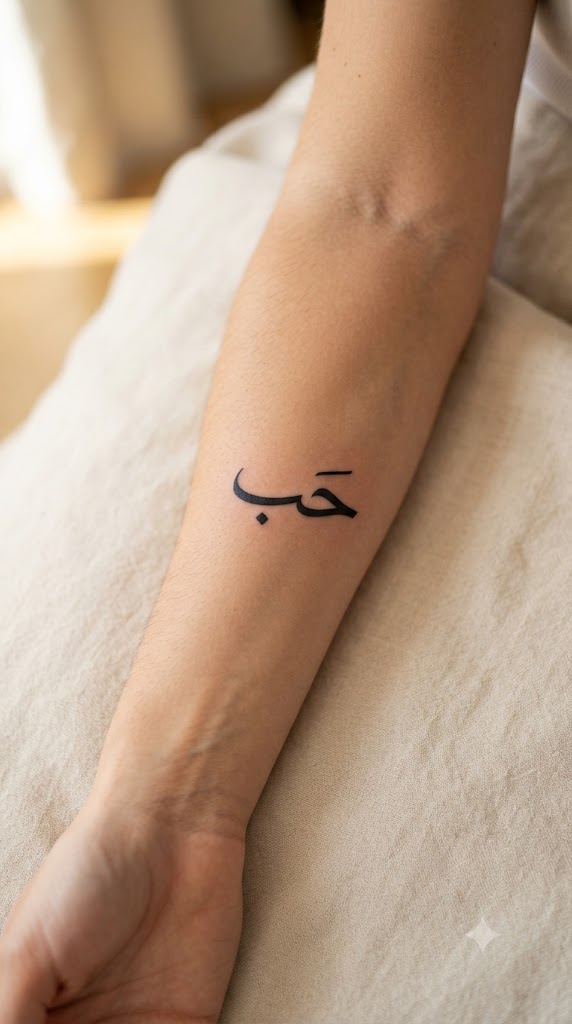
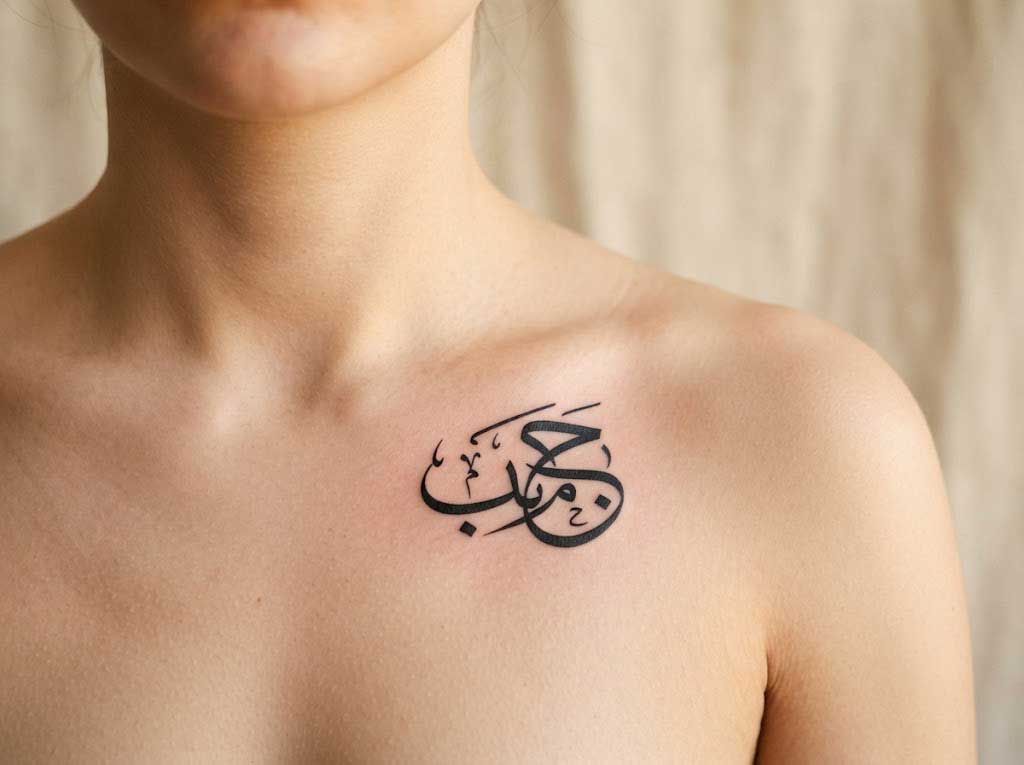
حبHubb — Love. Two letters. The single most-tattooed Arabic neck word — fits behind the ear or on the nape without any wasted space.
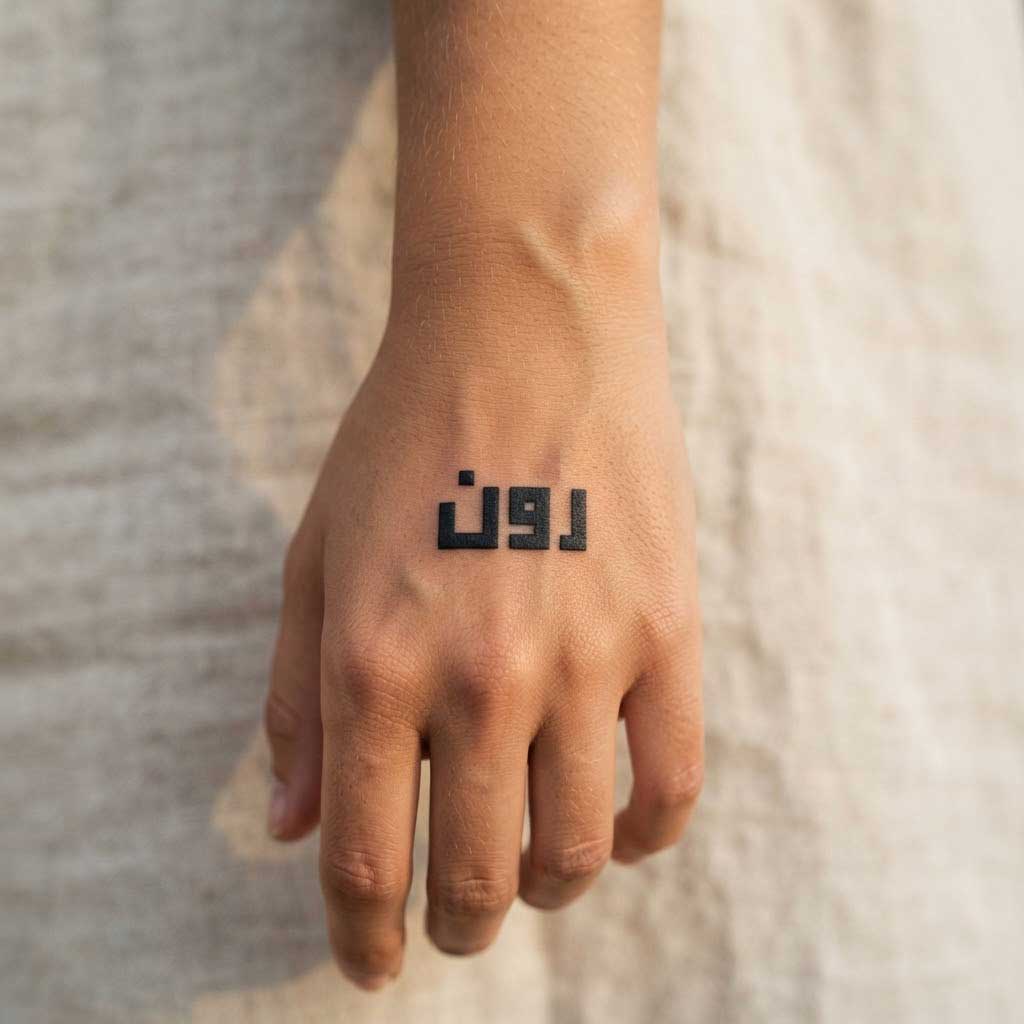
نورNur — Light. Three letters. Bold in Kufic, delicate in Diwani — a favorite for a small side-neck piece.
إيمانIman — Faith. Five letters. A slightly longer neck piece — sits well vertically down the side of the neck.
أملAmal — Hope. Three letters. Delicate and quietly personal — reads well behind the ear.
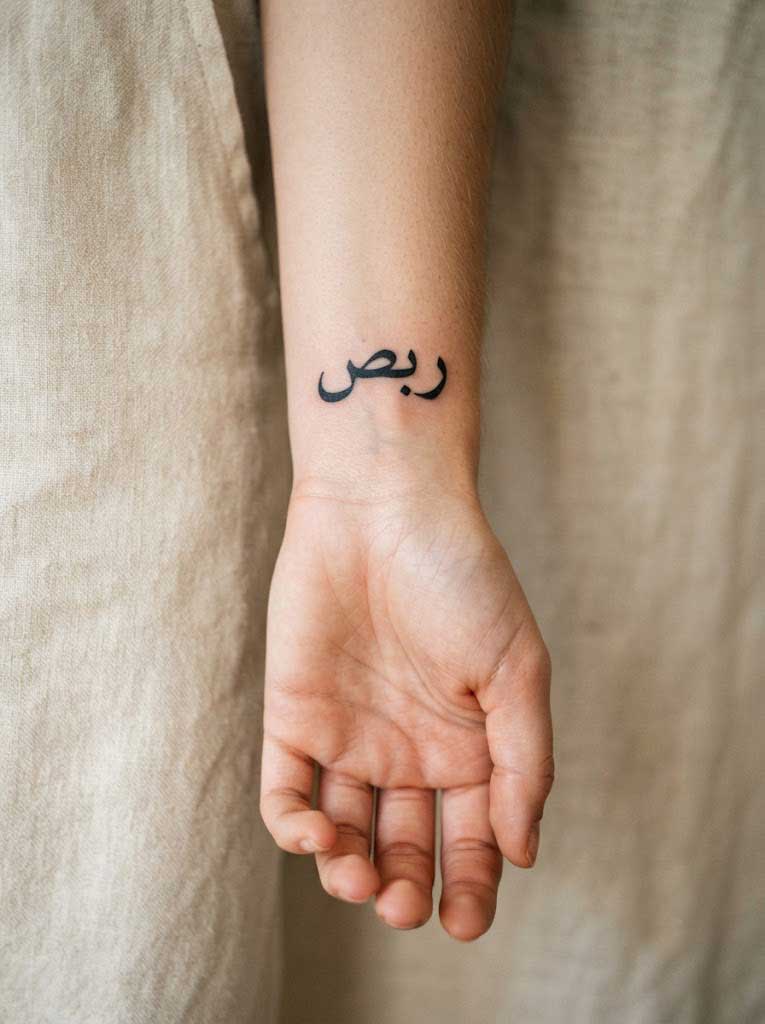
صبرSabr — Patience. Three letters. A daily-reminder virtue word that fits any neck sub-region.
سلامSalaam — Peace. Four letters. Universally recognized — a strong pick for a visible side-neck placement.
حياةHayat — Life. Four letters. Balanced letter shapes look elegant on the nape or lower neck.
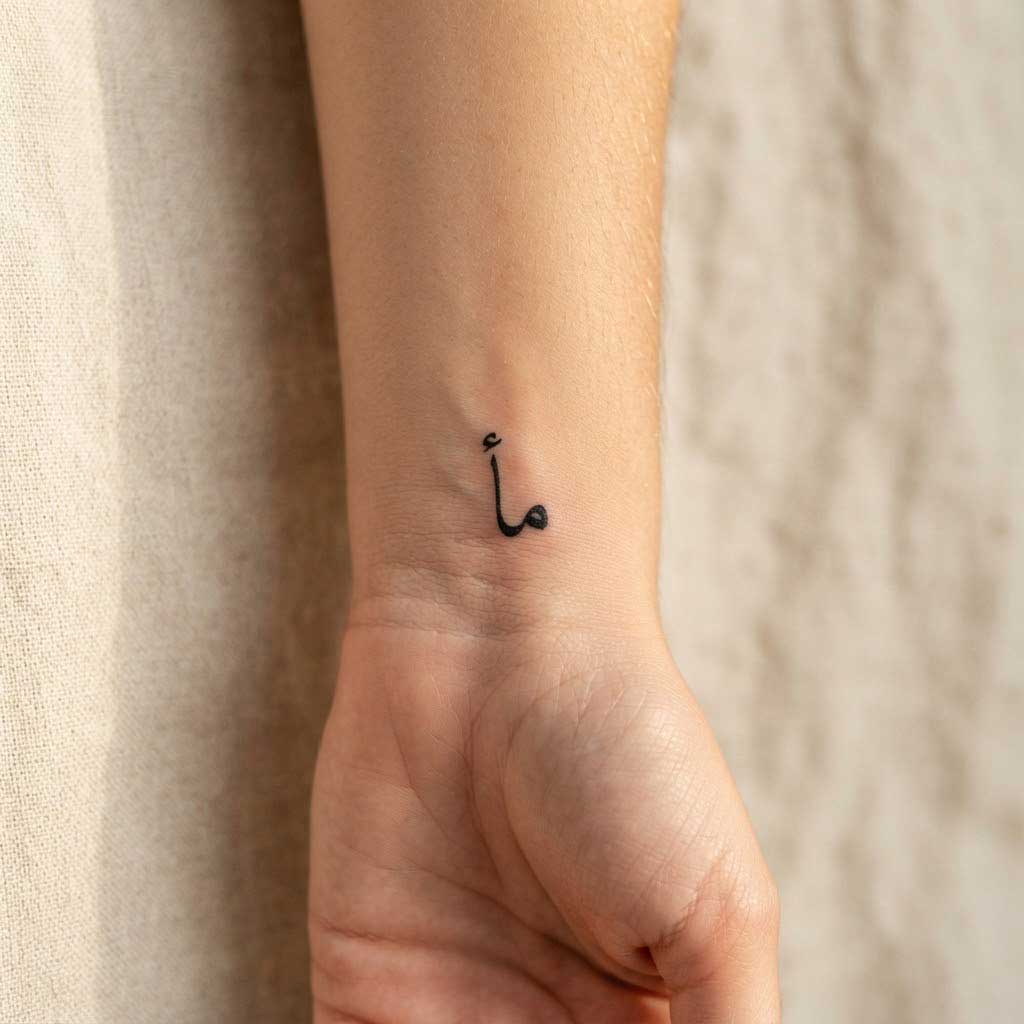
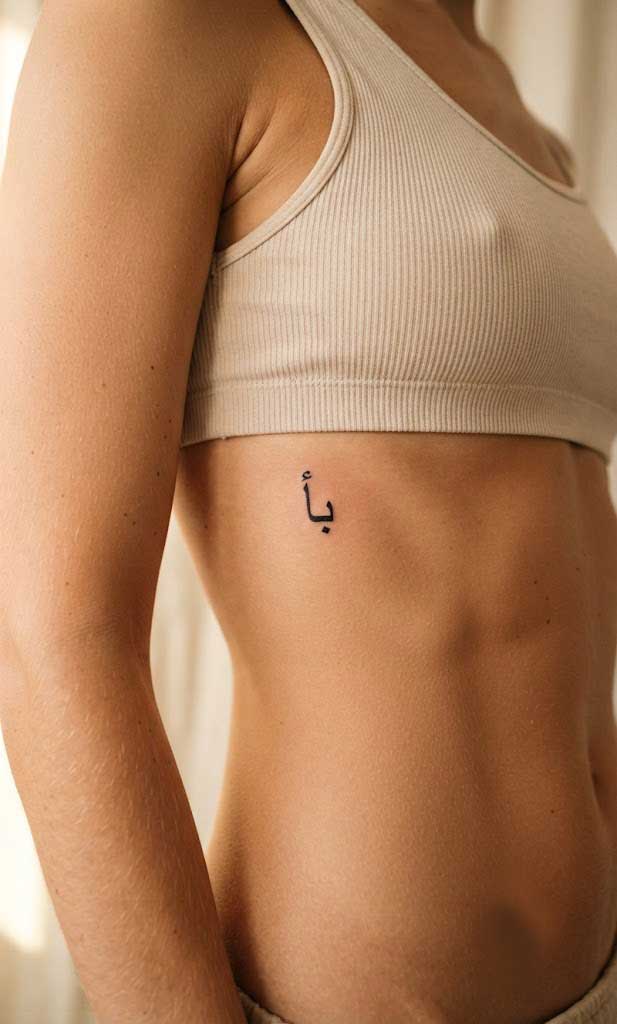
أمUmm — Mother. Two letters. The smallest personal tribute — perfect for a tiny behind-the-ear placement.

See all 20+ Arabic words for tattoos with meanings →

Arabic Neck Tattoo Designs — Small-Placement Design Ideas

A neck tattoo has less canvas than any other visible placement. The design decisions that work on a forearm often fail on a neck — stroke widths blur, ornate flourishes lose readability, long phrases don't fit. Below are four calligraphy-style approaches that consistently work for arabic neck tattoo designs.

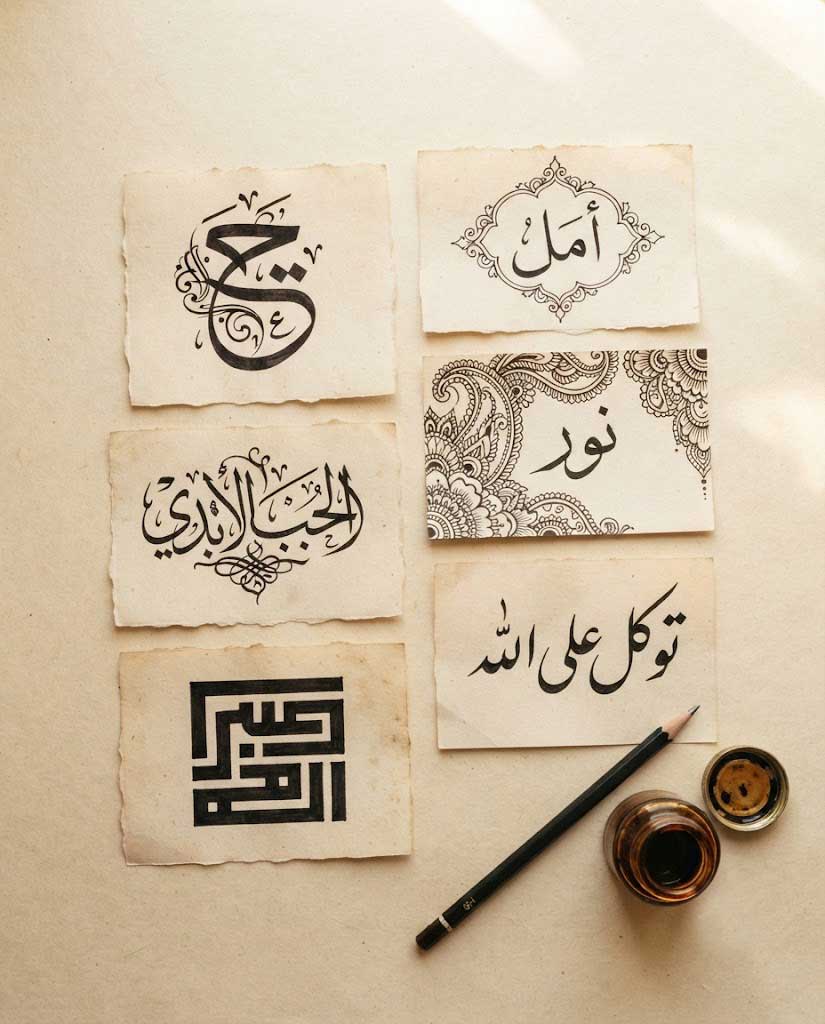
Six Arabic calligraphy tattoo design sketches on parchment — a reference sheet of design directions suited to small placements

Kufic — The Neck's Best Match

Kufic's angular geometric strokes stay readable at the smallest sizes — perfect for two-to-three letter neck tattoos where every millimeter matters. Ideal for حب, نور, or إيمان as blackwork behind the ear or on the nape. Explore Kufic calligraphy →

Naskh — When Legibility Is Non-Negotiable

Naskh is the safest neck choice when the word needs to remain readable at a glance — the printed-Quran style survives small scaling better than ornate scripts. Best for four-to-five letter neck words like سلام or إيمان. Explore Naskh calligraphy →

Diwani — Delicate, Ornate Small Pieces

Diwani's flowing curves add visual interest to a small neck design — but the flourishes need at least 3 mm stroke width to survive years of skin turnover. Best for a slightly larger side-neck piece where the ornament has room to breathe. Explore Diwani calligraphy →

Nastaliq — Vertical Side-Neck Pieces

Nastaliq's sloping diagonal strokes suit a vertical placement down the side of the neck below the ear — the natural rhythm of Persian-Urdu poetry lines works with the vertical neck canvas. Best for three-to-five letter words. Explore Nastaliq calligraphy →

Arabic Side Neck Tattoo — Where on the Neck It Sits

The neck breaks down into four distinct tattoo sub-regions, each with its own visibility, size limit, and design considerations. Below is what actually works in each spot.

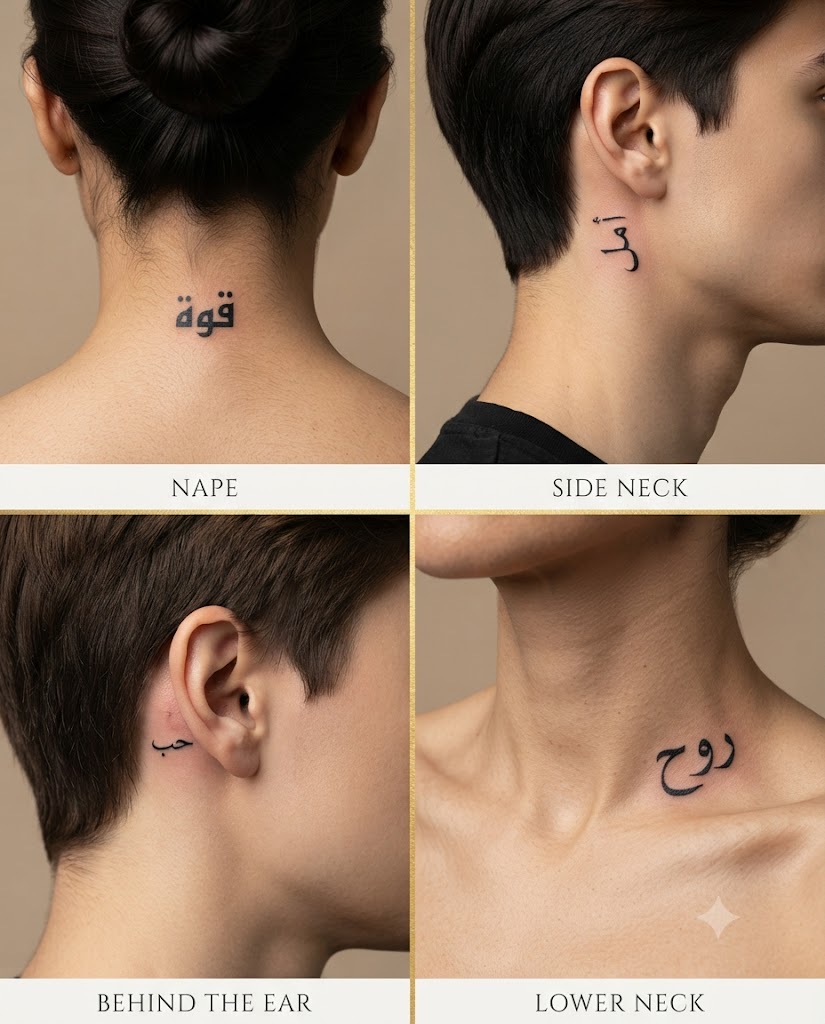
Four Arabic neck tattoo placements shown side by side — nape, side of neck, behind the ear, and lower neck

Nape (Back of the Neck)

The nape is the most private neck placement — hidden under long hair, revealed only when you choose. Best for a short one-to-three-letter Arabic word (حب, نور, إيمان) in Kufic or Naskh. Sits horizontally across the top of the spine.

Side of the Neck

The side of the neck — below the ear, above the collarbone — is the most-searched Arabic neck tattoo sub-region. Suits a vertical arabic side neck tattoo of three-to-five letters running down the neck, or a small horizontal word. Bolder placement than the nape; visible even with long hair.

Behind the Ear

The area just behind the earlobe fits the smallest possible Arabic tattoo — a single two-letter word like حب, أم, or أب. Nearly always hidden by hair or headphones; a private, personal-daily-reminder placement.

Lower Neck / Above the Collarbone

The base of the neck, just above the collarbone, is a bolder placement — always visible unless a high collar covers it. Fits a slightly longer three-to-six letter word in flowing Diwani or Nastaliq, sometimes paired with a small ornament.

Arabic Neck Tattoos for Men — Masculine Design Notes

Search demand shows a distinct masculine aesthetic for arabic neck tattoos: bolder stroke weights, side-neck placements, and calligraphy styles that read confidently at a glance. Below are the three design decisions most masculine neck-tattoo commissions turn out the same way.

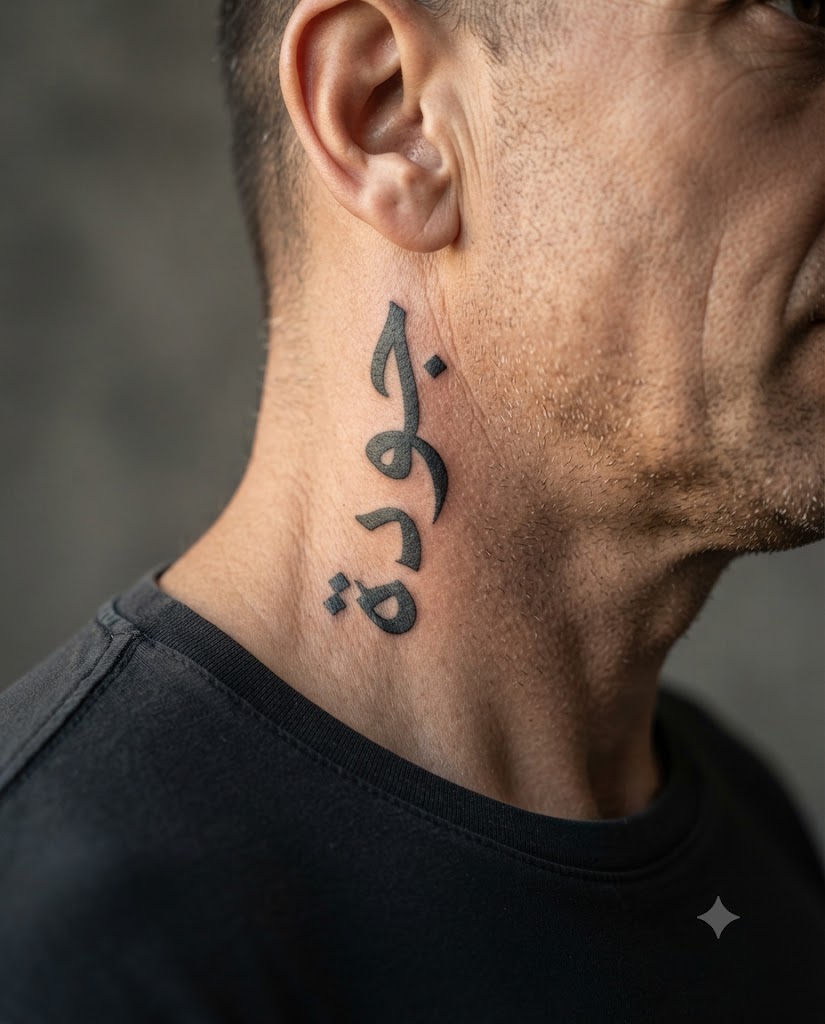
A masculine Arabic calligraphy tattoo running vertically down the side of a man's neck — bold thick strokes in Thuluth or Kufic

Bolder Stroke Weights

Masculine arabic neck tattoos tend to use thicker stroke widths — 4-6 mm minimum, versus 2-3 mm for typically feminine neck pieces. Bolder strokes read as confident and hold up better on a body with less skin translucency. Kufic and Thuluth suit this weight best.

Side-Neck Vertical Placement

The most-tattooed masculine Arabic neck placement is a vertical piece down the side of the neck below the ear, three-to-five letters long. Reads confidently from across a room and doesn't compete with facial hair or collar lines. Nastaliq or bold Thuluth work well for this vertical rhythm.

Typical Masculine Word Picks

Search demand and tattoo-shop reference photos show masculine Arabic neck tattoos favoring virtue and strength words: قوة (Quwwa — strength), أبدي (Abadiy — eternal), حرية (Hurriya — freedom), إيمان (Iman — faith), plus family names or short Quranic phrases.

Frequently Asked Questions

What is the most popular Arabic neck tattoo?

+
The most-tattooed Arabic neck words are the two-to-three letter classics: حب (Hubb — love), نور (Nur — light), إيمان (Iman — faith), أمل (Amal — hope), صبر (Sabr — patience). Kufic is the most-requested calligraphy style for a neck piece — its bold geometric strokes stay readable at the smallest sizes.

Where on the neck do Arabic tattoos look best?

+
Four sub-regions each work for different design goals. Nape (back of neck): private, hidden under hair, best for short one-to-three-letter words. Side of the neck: bold and visible, suits a vertical three-to-five letter piece below the ear. Behind the ear: the smallest possible tattoo, single two-letter word. Lower neck / above collarbone: always visible unless covered by a collar, fits three-to-six letter words. See the sub-region section above for details.

What Arabic words work best for a small neck tattoo?

+
Two-letter words fit any neck placement: حب (Hubb — love), أم (Umm — mother), أب (Ab — father), أخ (Akh — brother). Three-letter words that hold up well: نور (Nur — light), أمل (Amal — hope), صبر (Sabr — patience), أخت (Ukht — sister). Longer than four letters, and the design usually needs to move down to the side of the neck or across the base of the neck.

What's the difference between a side neck and a back-of-neck Arabic tattoo?

+
A side neck (arabic side neck tattoo) piece sits below the ear and above the collarbone — always visible, larger canvas, suits a vertical three-to-five letter word running down the neck. A back-of-neck piece sits horizontally at the nape (top of the spine) — private, hidden under long hair, best for a short one-to-three-letter word. Search demand shows both are popular; the side neck is the bolder public choice.

Are Arabic neck tattoos more popular for men or women?

+
Search demand shows a clear masculine sub-cluster (arabic neck tattoo men) with a distinct aesthetic — bolder stroke weights (4-6 mm), side-neck vertical placement below the ear, and virtue/strength words like قوة or إيمان. Feminine neck tattoos tend toward finer strokes (2-3 mm), nape or behind-the-ear placements, and softer scripts (Diwani, Nastaliq). Both aesthetics are popular; the specific placement and stroke choice differs.

How painful is an Arabic neck tattoo?

+
Neck tattoo pain varies significantly by sub-region. The side of the neck and lower neck (above collarbone) are generally more tolerable — soft tissue with muscle padding. The nape directly on the spinous processes and the area behind the ear (thin skin over cartilage) are the sharpest zones. For a first neck tattoo, choose the side of the neck or lower neck; both let you scale up size later without moving on to a more painful region.