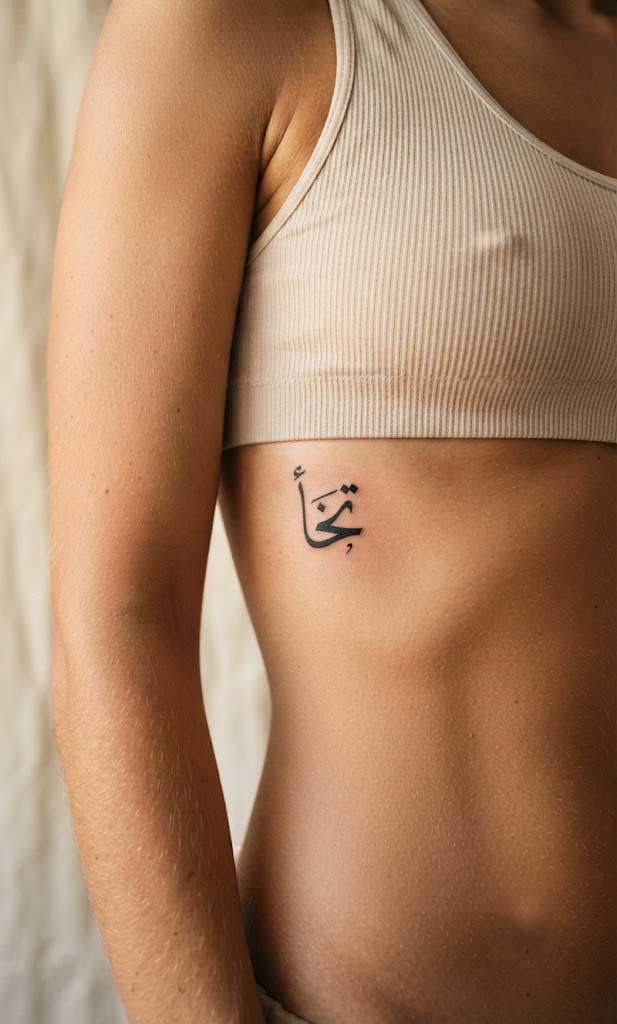
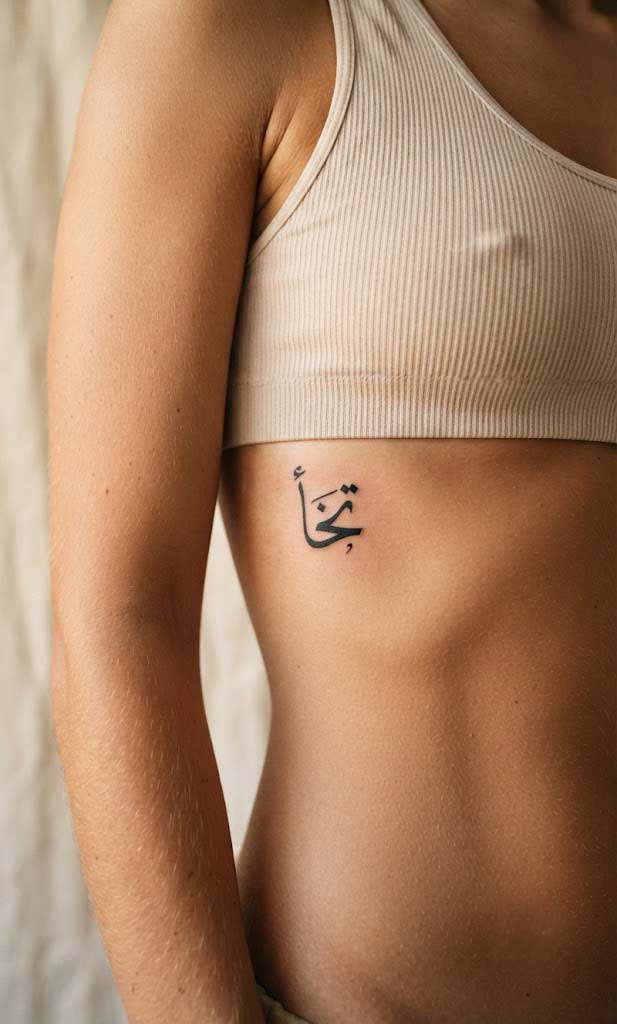
Arabic Back Tattoo — Words, Designs & Placement Ideas with Meanings
Browse 20+ Arabic tattoos designed for the back — words that fill the shoulder-blade canvas, phrases long enough to trace across the upper back, and placement guidance for both upper and lower back. Every design ships with translation, transliteration, and a calligraphy example. Use the free generator to preview any word or phrase and download a high-resolution PNG for your tattoo artist.
✓ 20+ back designs
✓ 5 calligraphy styles
✓ Preview on body
✓ Native-speaker verified
Arabic Back Tattoo — Meaningful Words for the Back
The back is the largest canvas the human body offers a tattoo — enough room for a full sentence, a stacked multi-word phrase, or a single word rendered large enough to carry serious meaning. The best Arabic words for a back tattoo are three-to-six letters, chosen for a meaning weighty enough to justify the placement. Below are eight Arabic words that fit.
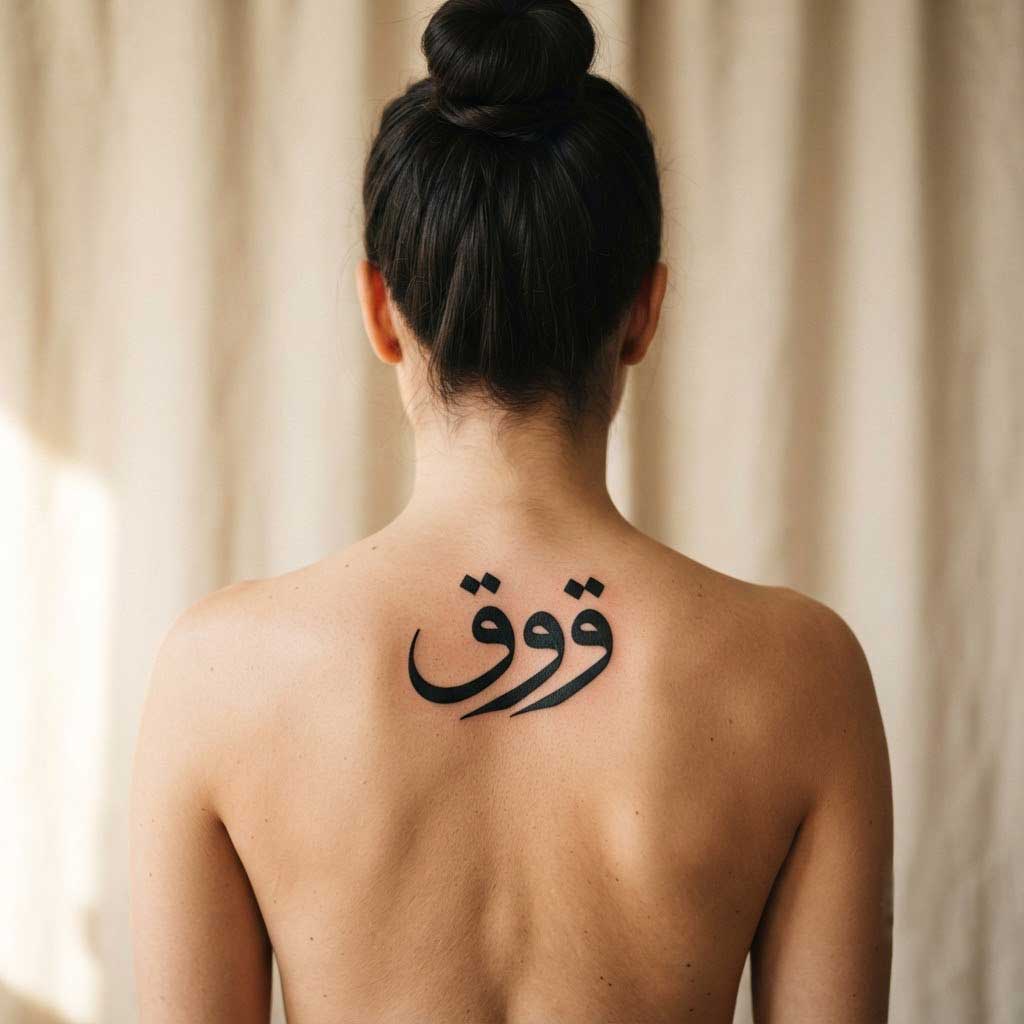
قوة — Quwwa — Strength. Three letters. Bold and iconic on the upper back — one of the most-tattooed Arabic back words worldwide.
حياة — Hayat — Life. Four letters. Balanced letter shapes look elegant centered between the shoulder blades in Thuluth or Nastaliq.
إيمان — Iman — Faith. Five letters. A serious reverent piece — best in ceremonial Thuluth across the upper back.
حرية — Hurriya — Freedom. Five letters. The elongated ي descends beautifully — reads well in flowing scripts on the upper back.
شجاعة — Shajaa'a — Courage. Six letters. Full-back statement piece — the letter shapes stack into a substantial visual column.
عزيمة — Azima — Determination. Six letters. Strong verticals and a distinctive final ة — ambitious full-back design.
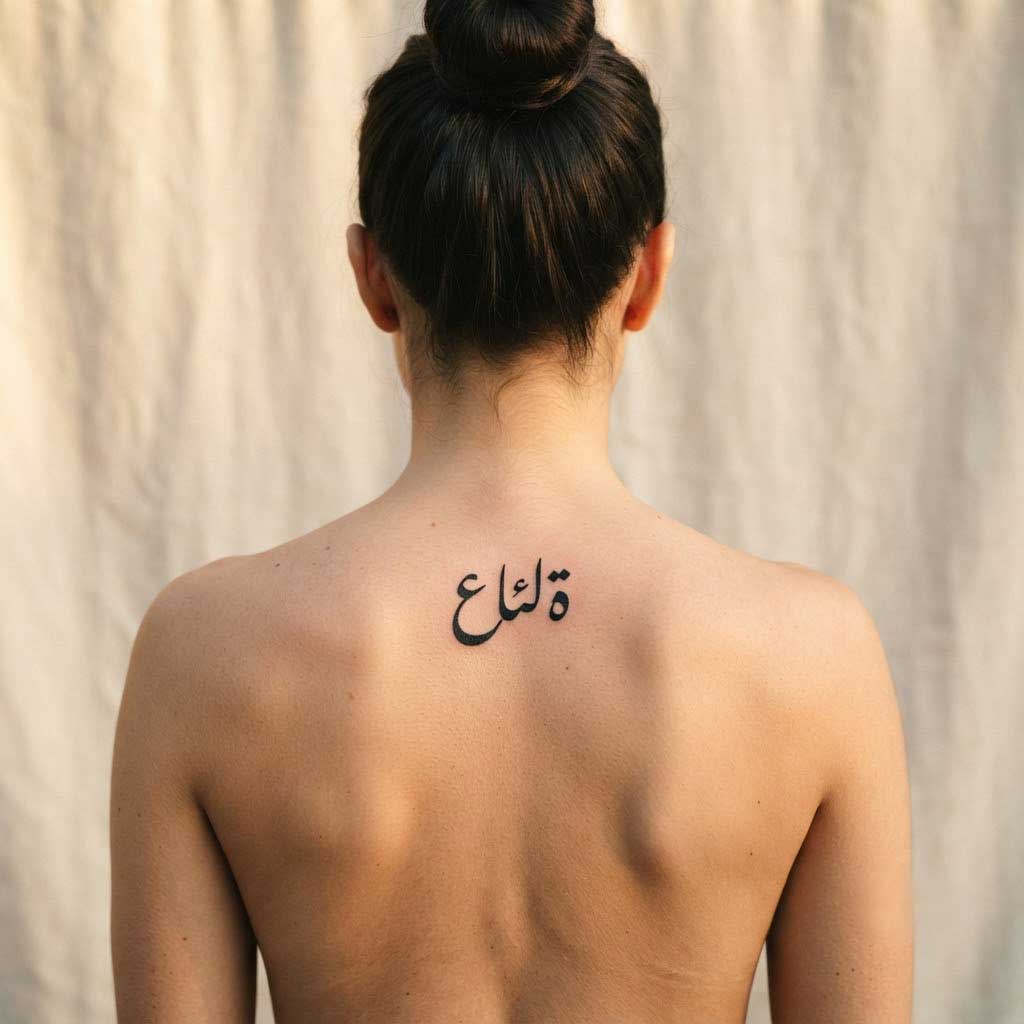
عائلة — Aila — Family. Four letters. A tribute-word choice — reads with quiet weight across the upper back.
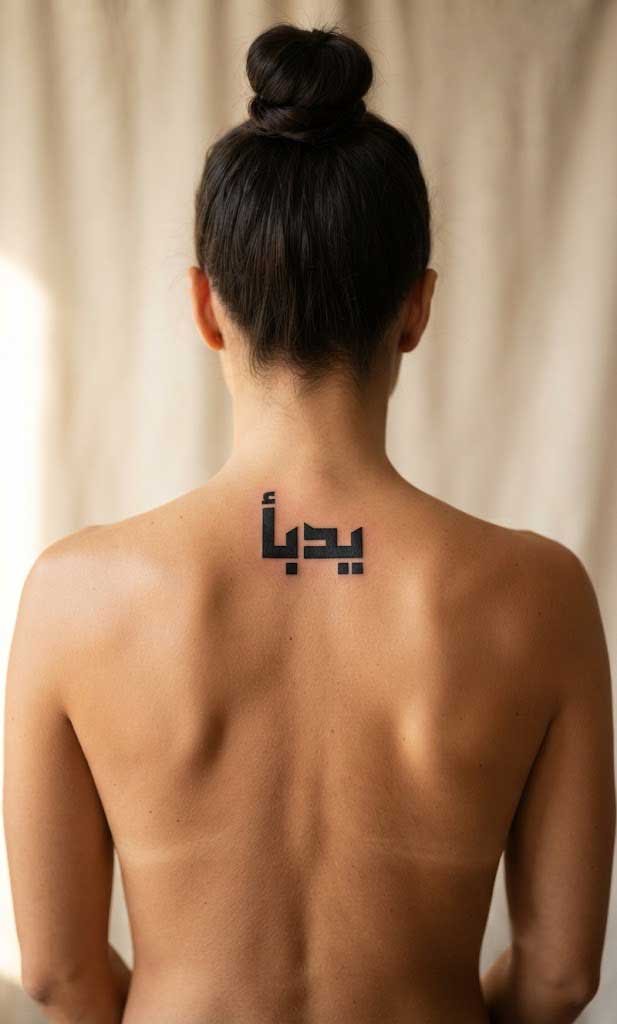
أبدي — Abadiy — Eternal. Four letters. Often paired with a name or date — a timeless modifier for a memorial back piece.
See all 20+ Arabic words for tattoos with meanings →
Arabic Back Tattoo Designs with Meanings — By Calligraphy Style
The back gives Arabic writing enough canvas that the calligraphy style becomes the design. The four scripts below each turn the same word into a completely different back piece — pick the style whose emotional register matches the meaning you're carrying.
Thuluth — Best for Full-Back Ceremonial Pieces
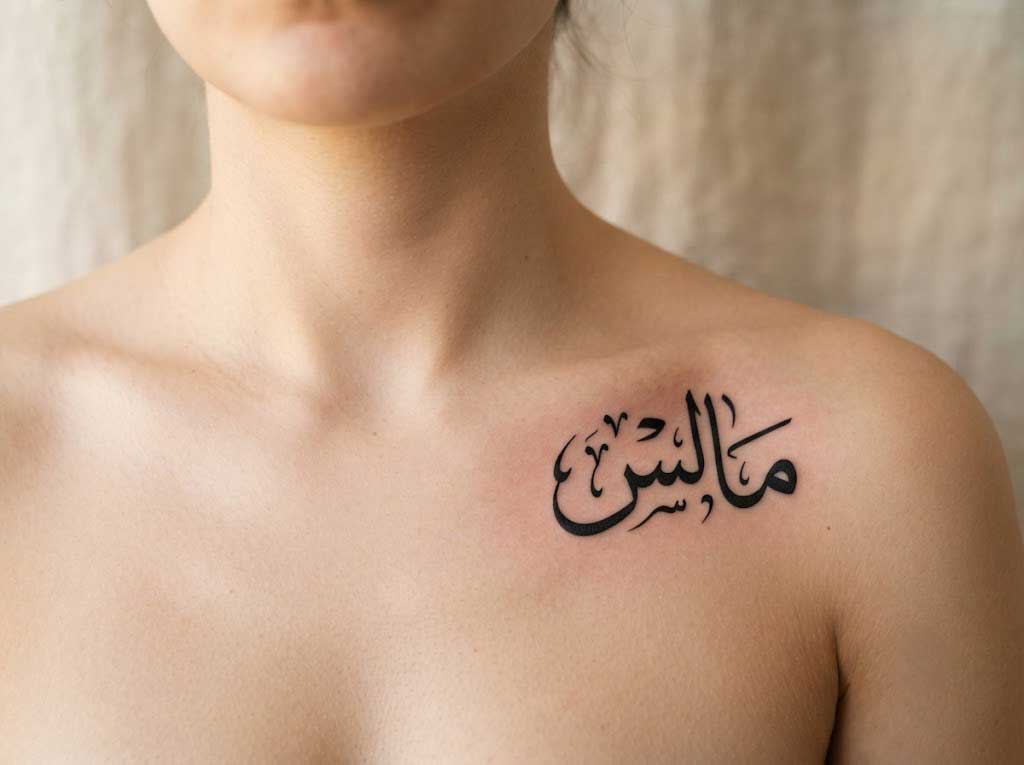
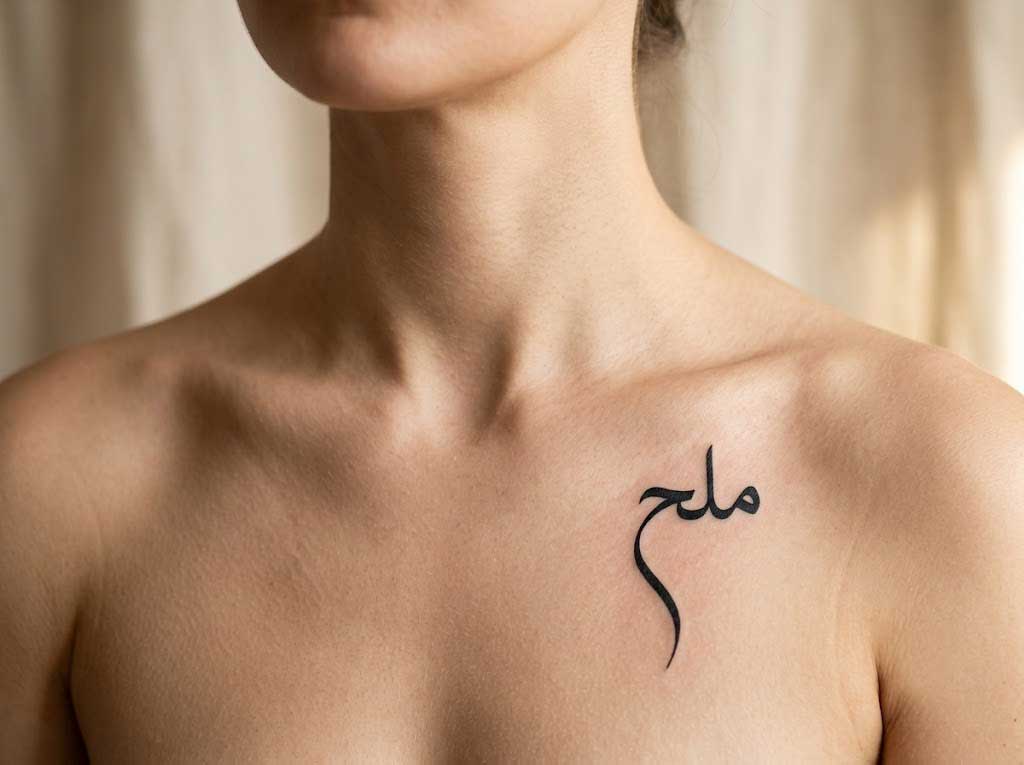
Thuluth's long descending curves fill the back canvas with ceremonial weight. Best for reverent single words (إيمان, حياة, family names) and religious phrases. Runs beautifully across the upper back or between the shoulder blades. Explore Thuluth calligraphy →
Naskh — Best for Long Legible Multi-Line Quotes
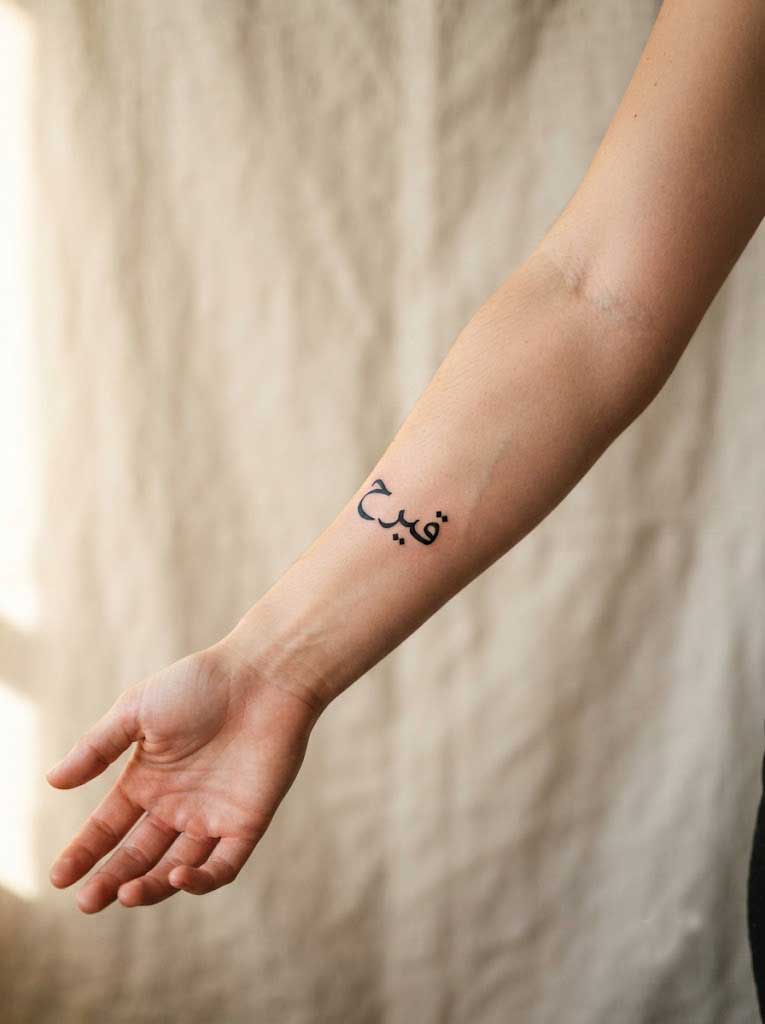
Naskh is the most legible Arabic script — the choice when the back tattoo is a full sentence or multi-line quote that must remain readable. Ideal for Arabic writing back tattoos where the words carry the meaning rather than the visual style. Explore Naskh calligraphy →
Kufic — Best for Bold Modern Statement Pieces
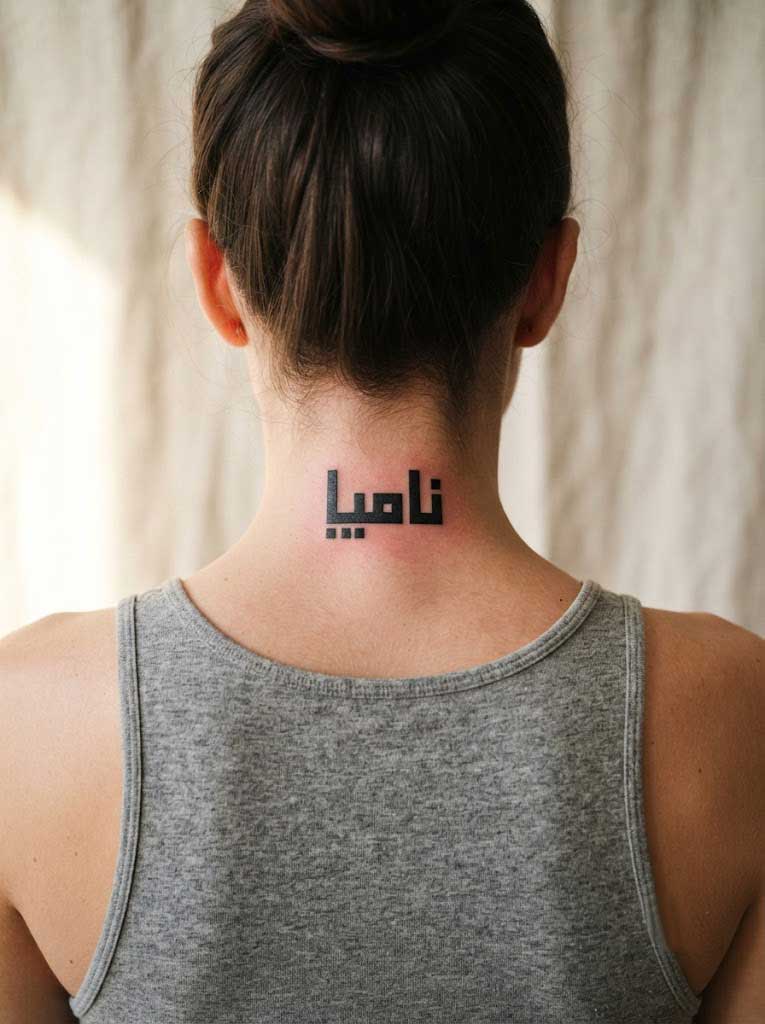
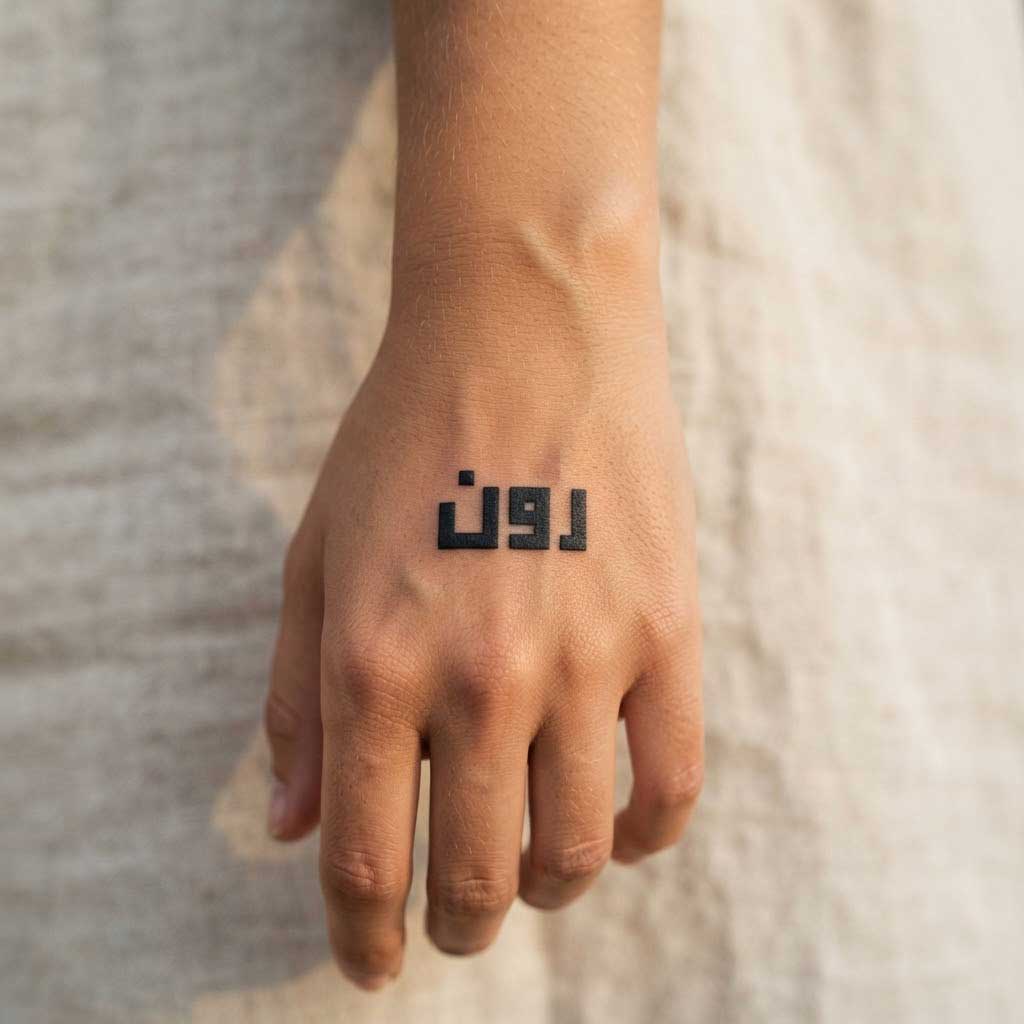
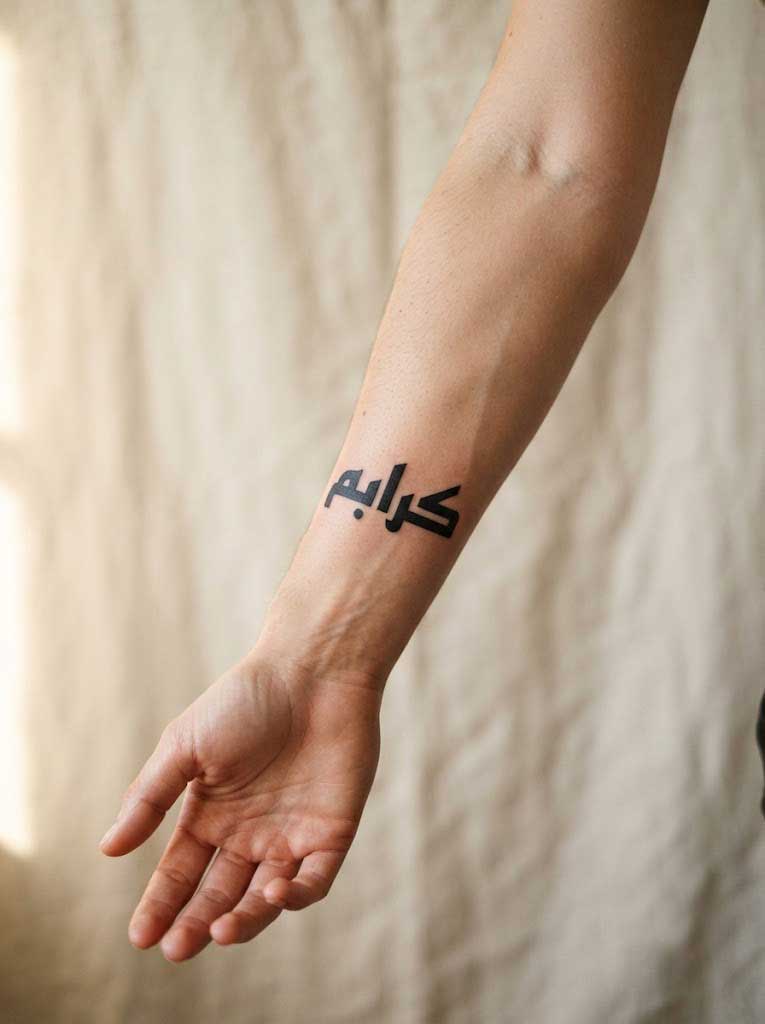
Kufic's angular geometric strokes turn a back tattoo into an architectural statement — reads as intentional and modern rather than traditional. Best for one-word designs (قوة, حرية) or short punchy phrases as blackwork. Explore Kufic calligraphy →
Diwani or Nastaliq — Best for Ornate & Poetic Back Pieces
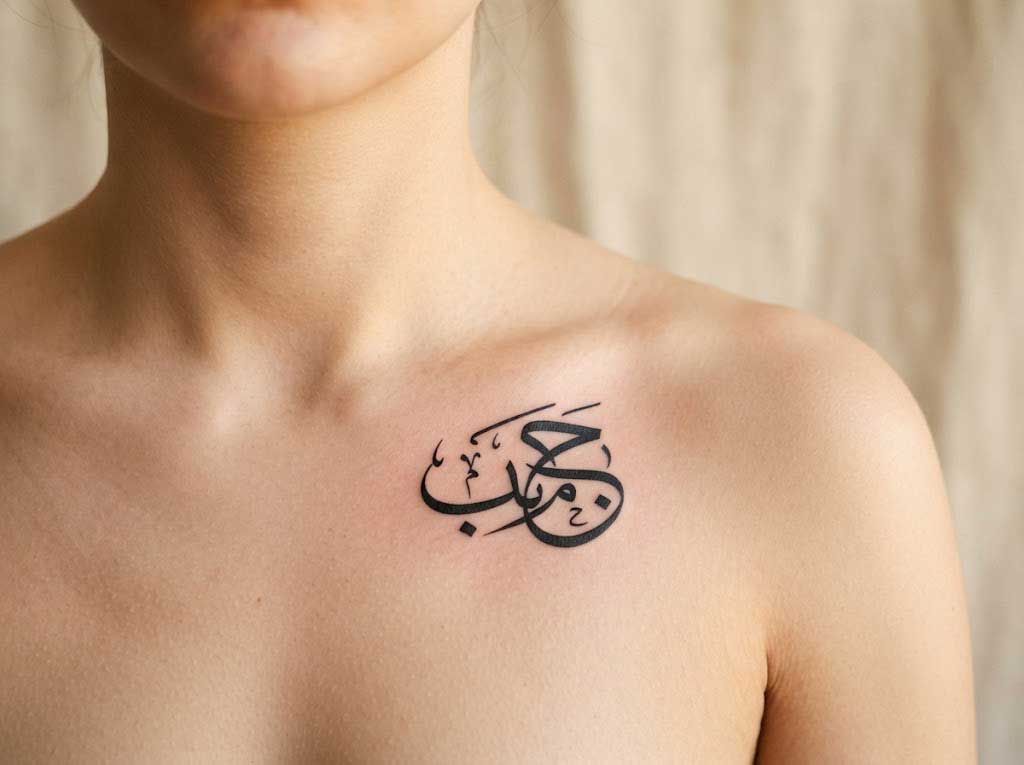
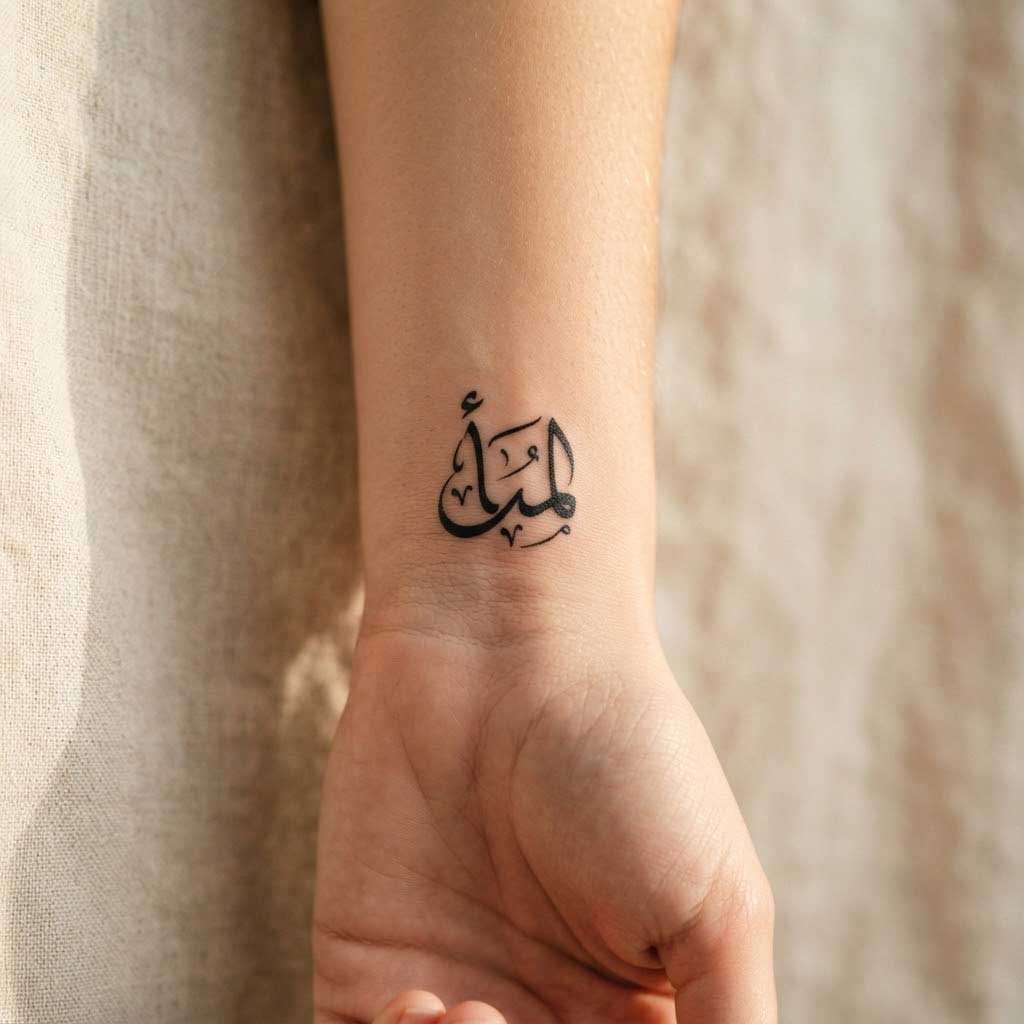
Diwani's elaborate loops and Nastaliq's sloping baselines both feel decorative on a large back canvas. Best for romantic multi-word phrases like the classic "to the moon and back" in Arabic (إلى القمر والعودة — Ila al-qamar wal-awda), Rumi lines, or Persian-Urdu poetry. Diwani → · Nastaliq →
Arabic Lower Back Tattoo — Placement Sub-Regions
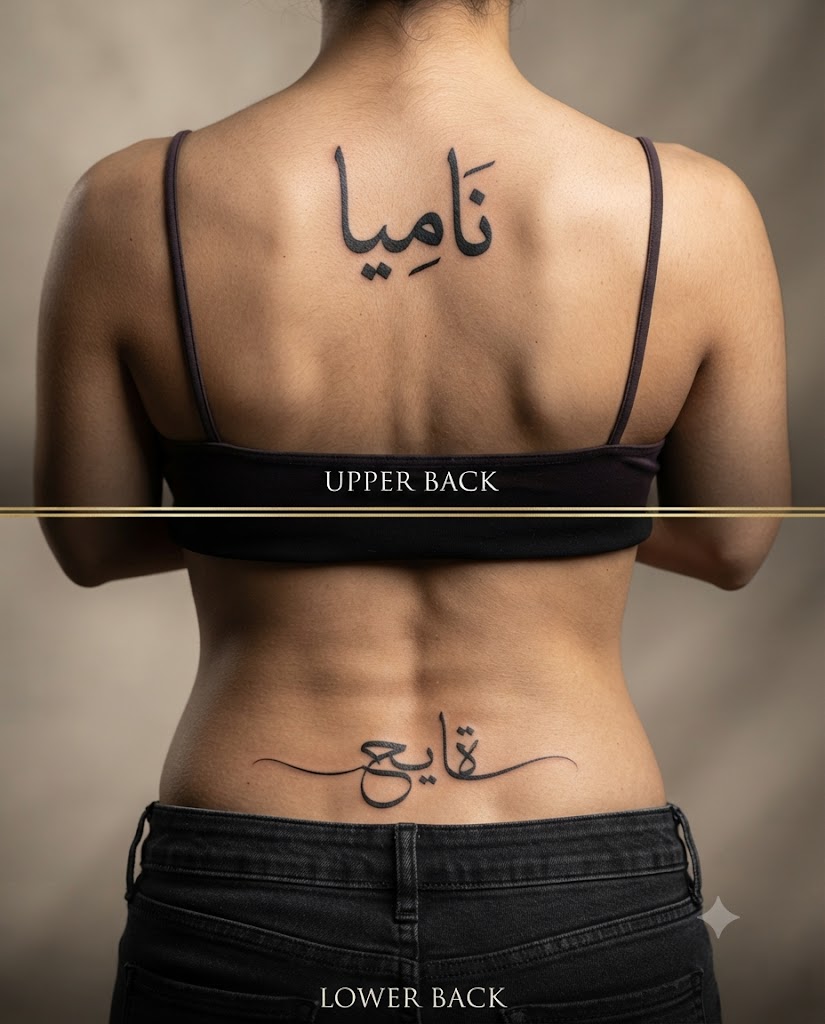
The back divides into two very different tattoo zones: the upper back (shoulders and shoulder blades) and the lower back (lumbar area). Each has its own visibility, size limit, and typical design conventions. Below is what actually works in each spot.
Upper Back & Between the Shoulder Blades
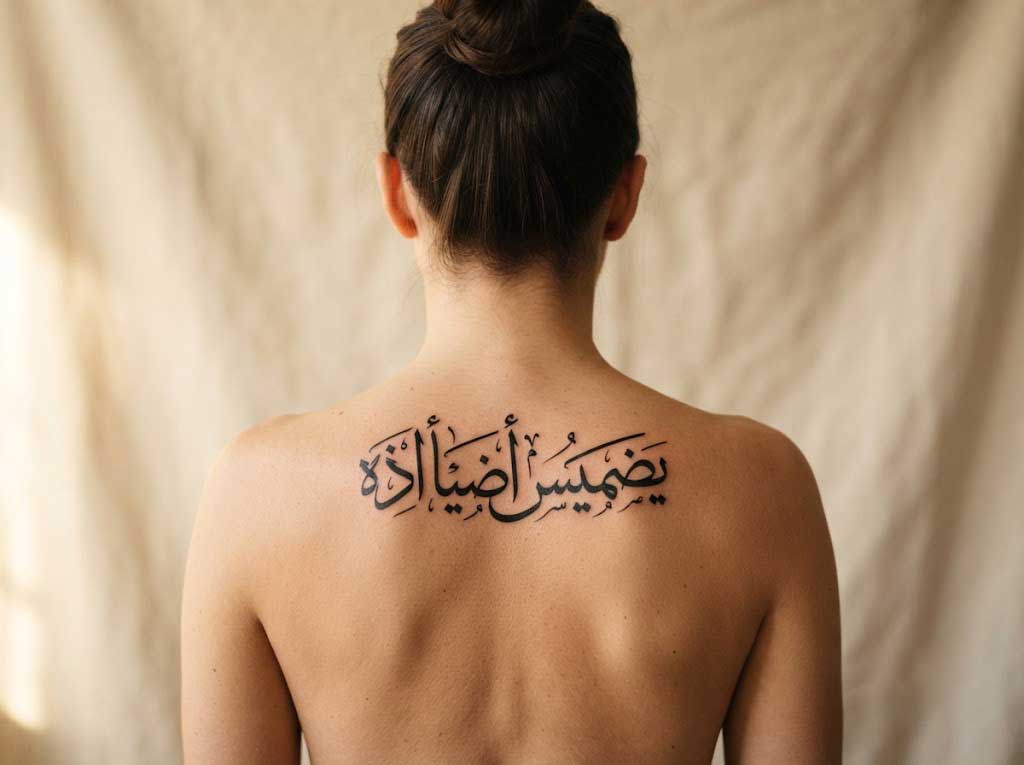
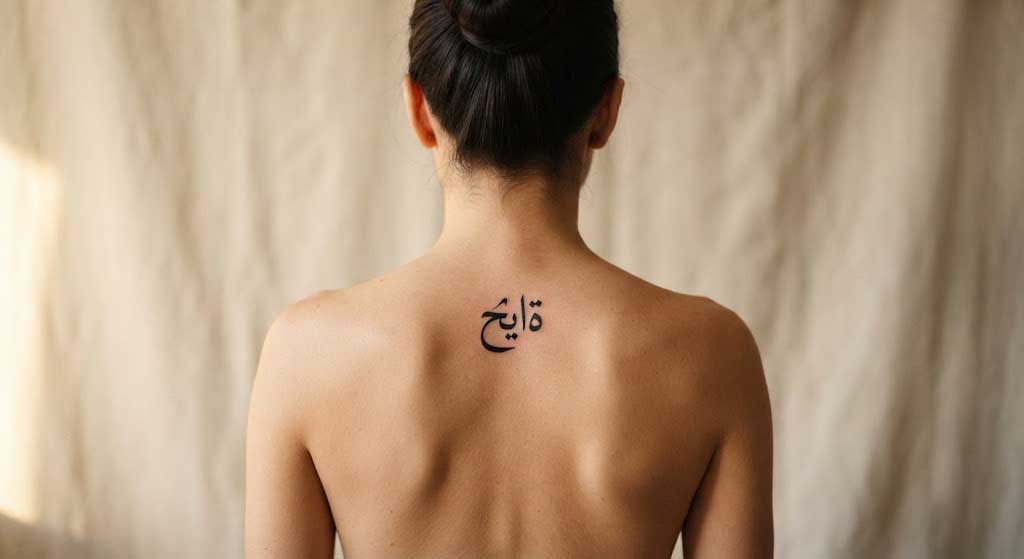
The upper back is the largest and most-tattooed Arabic back zone. Fits full-sentence quotes, ornate calligraphy medallions, or a single large-scale word rendered ceremonially. The area between the shoulder blades is the classic centered placement — symmetric, visible in open-back clothing, hidden under any shirt. Best for 3-to-8 word designs in Thuluth or Naskh.
Arabic Lower Back Tattoo
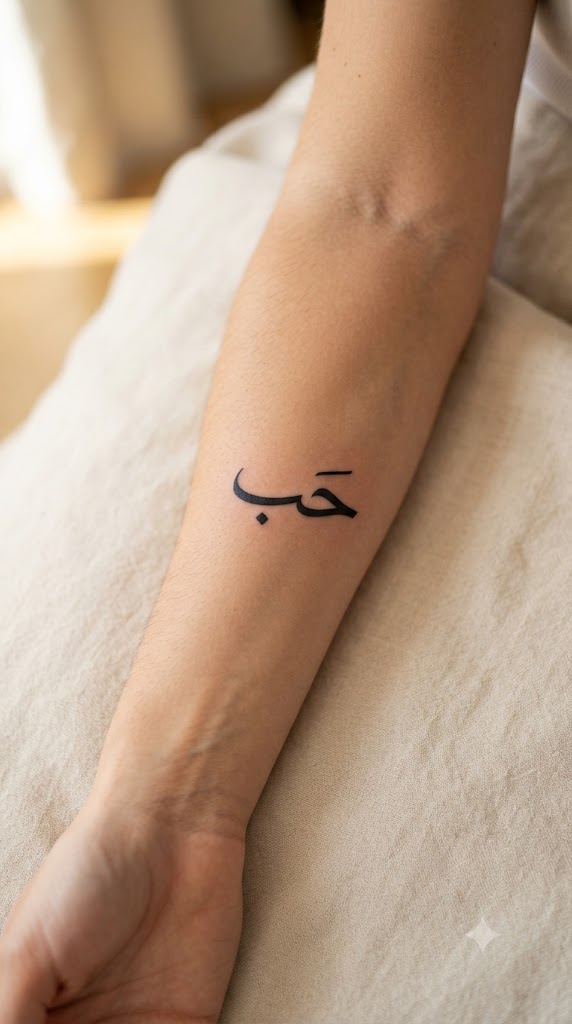
The lower back — the lumbar area above the waistband — is the smaller and more intimate back placement. Suits a horizontal Arabic word or short phrase running along the lumbar curve, or a delicate ornament with a single word centered. Reads as more decorative than the upper back; best in flowing Diwani or Nastaliq at finer stroke widths. Popular for shorter 3-to-5 letter words like حياة, أمل, or حب.
Full-Back Designs — Nape to Lumbar
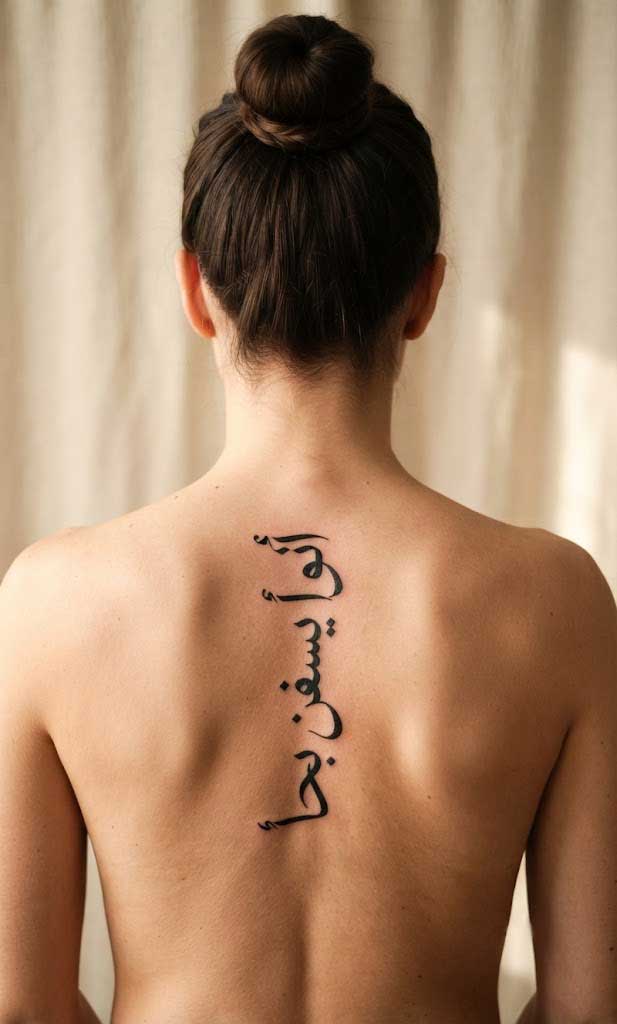
For a truly ambitious piece, an Arabic back tattoo can run the full length of the back from the nape down to the lower lumbar — the same canvas as an arabic spine tattoo, but wider. Fits full poems, multi-verse Quranic passages, or a large centered calligraphy composition with ornamental flourishes. Consult a tattoo artist with real Arabic-script portfolio experience before attempting this scale.
Arabic Back Tattoos for Men and Females
Search demand shows two distinct aesthetics for Arabic back tattoos — one masculine, one feminine — with different scale, stroke weight, and typical placement preferences. Neither is more "correct" than the other; below is what people actually get inked.
Arabic Back Tattoos for Men
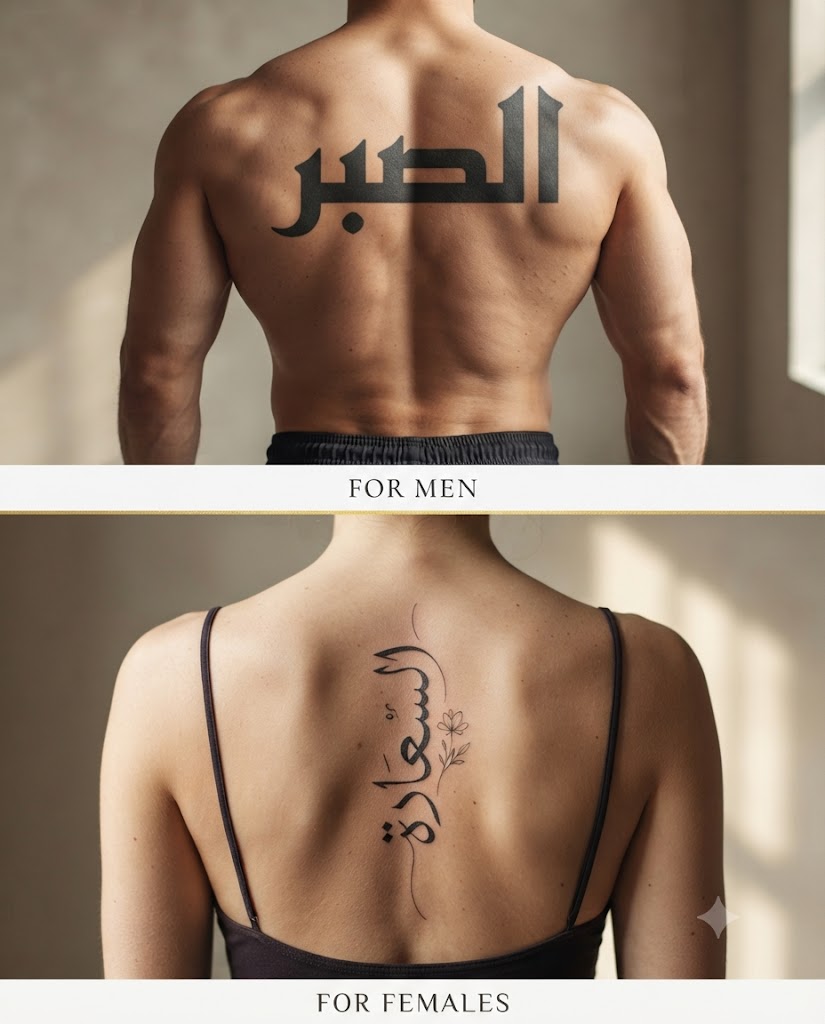
Masculine Arabic back tattoos tend toward bold stroke weights (4-6 mm minimum), larger-scale words that fill the upper back canvas, and Thuluth or Kufic scripts. Common word picks: قوة (Quwwa — strength), حرية (Hurriya — freedom), أبدي (Abadiy — eternal), family names, Quranic phrases. Often placed horizontally across the shoulder blades or centered high between them.
Arabic Back Tattoos for Females
Feminine Arabic back tattoos tend toward finer stroke weights, vertical or gently curved placements (down the spine, across the lumbar, or angled from shoulder to opposite hip), and Diwani or Nastaliq scripts. Common word picks: حب (Hubb — love), حياة (Hayat — life), أمل (Amal — hope), حلم (Hulm — dream), poetic phrases. Often paired with a small floral or ornamental accent.
Unisex Arabic Back Tattoo Words
The strongest Arabic back tattoos work on any body — a single meaningful word rendered in a font that suits the meaning. إيمان (Iman — faith), صبر (Sabr — patience), سلام (Salaam — peace), and نور (Nur — light) are the most-tattooed unisex Arabic back words. Consider one of these if you want a design that reads the same on any body without gendered visual language.