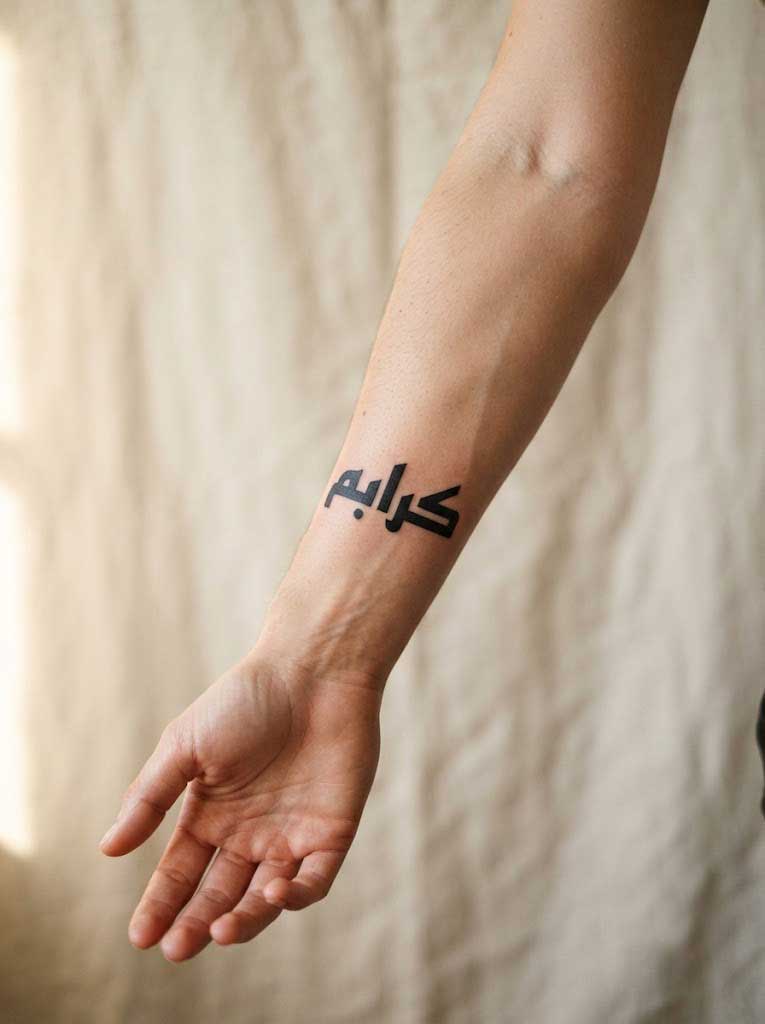
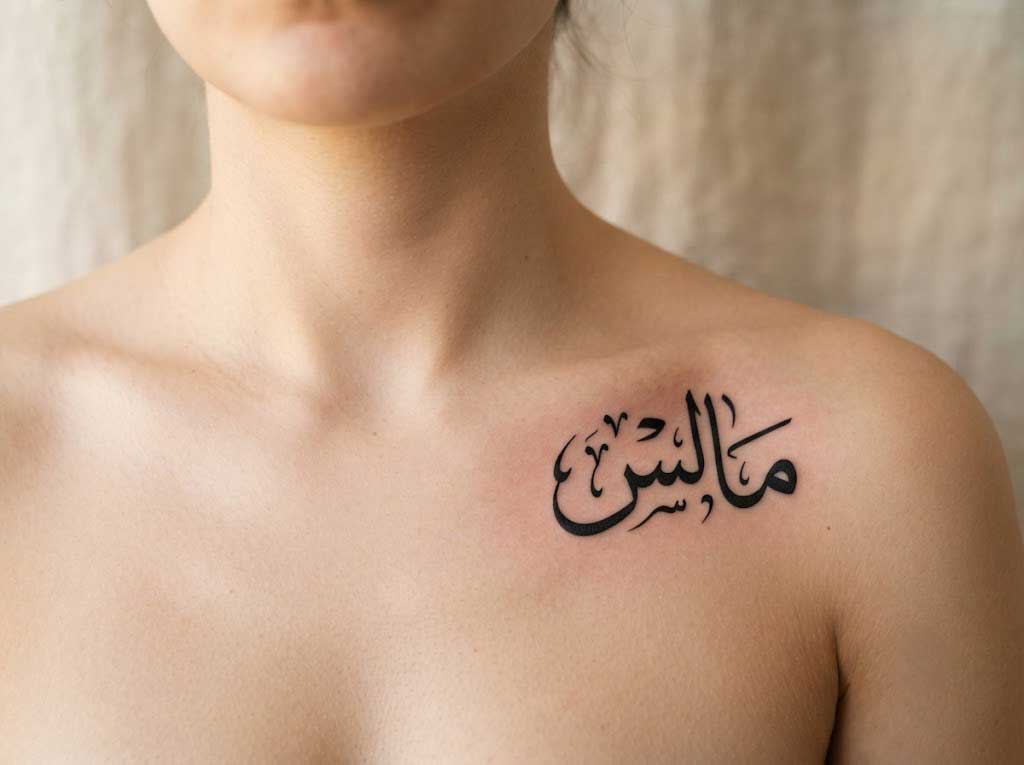
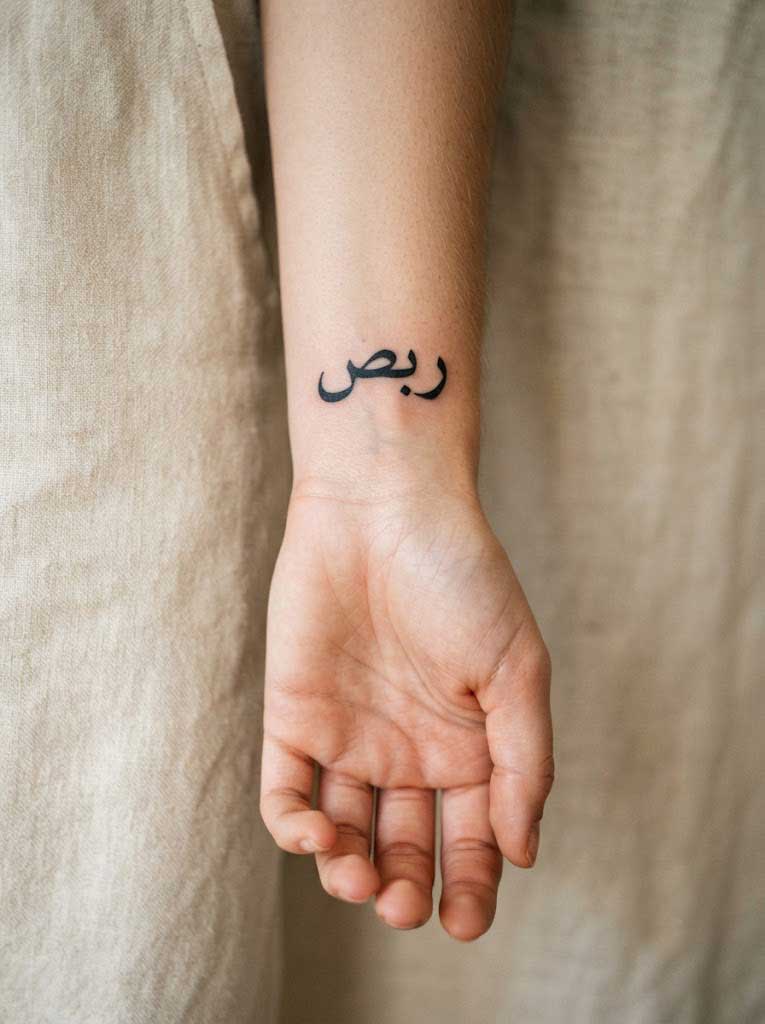
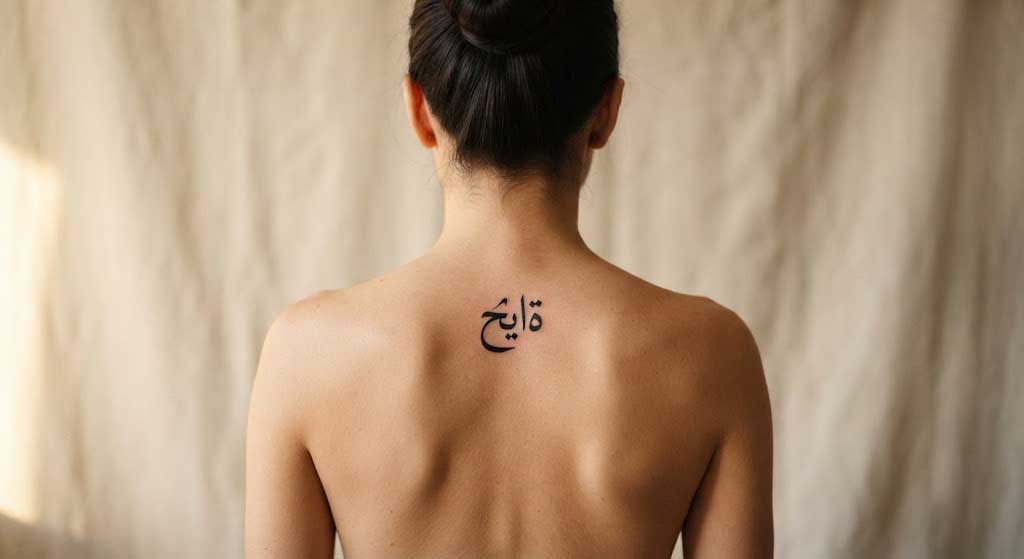
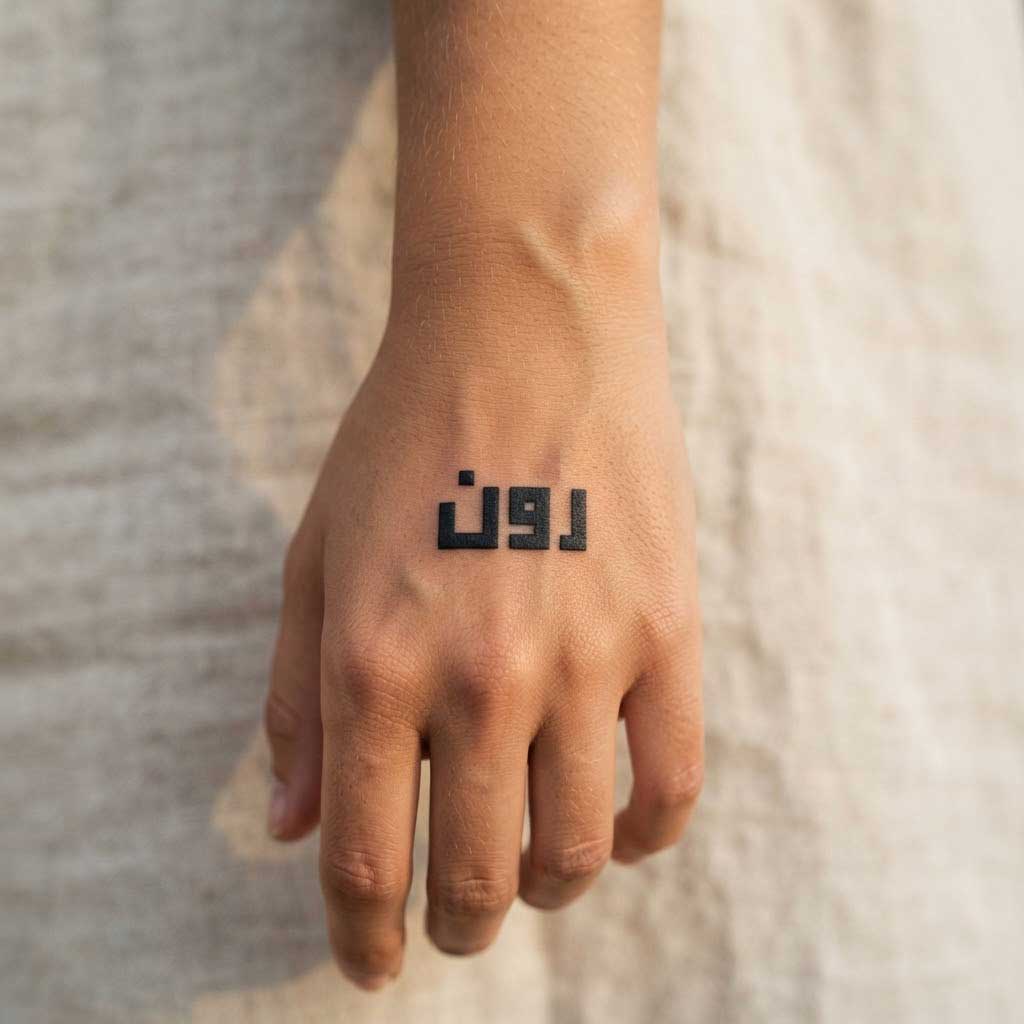
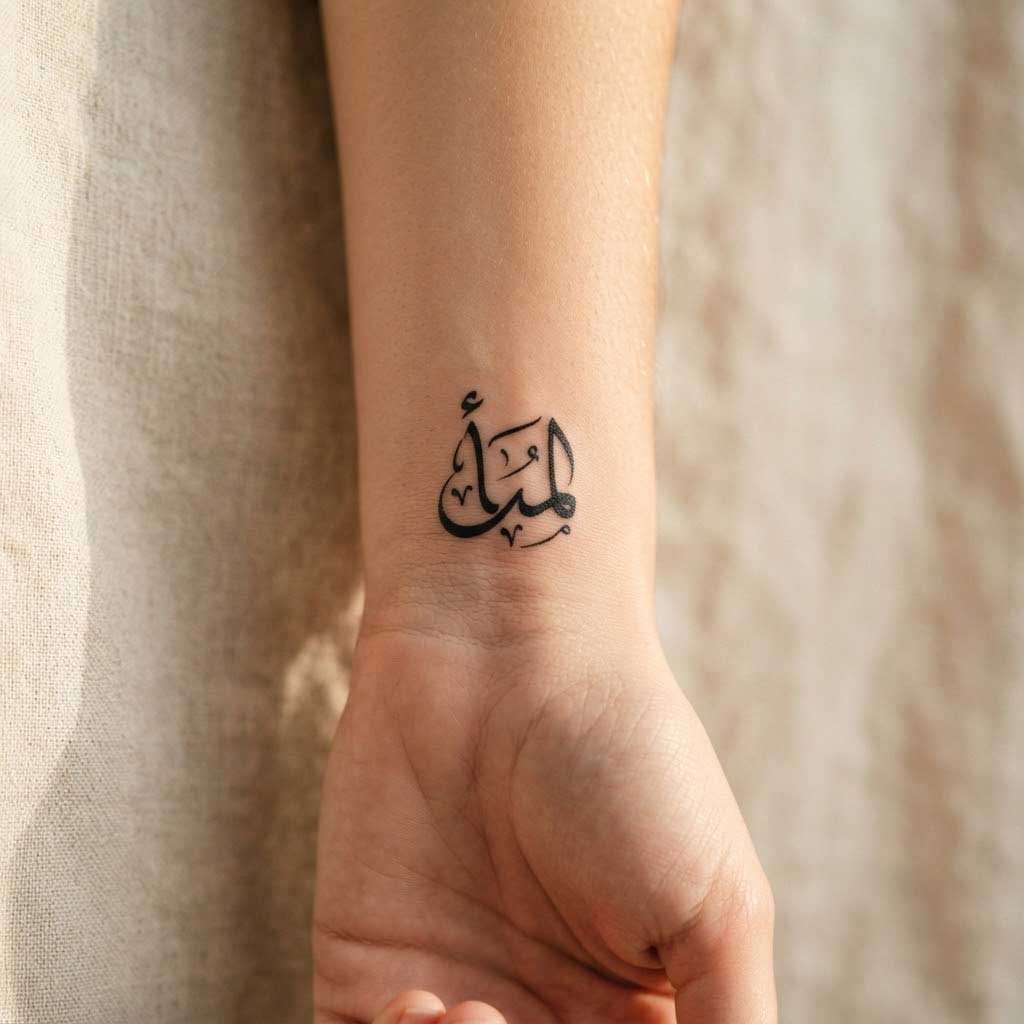
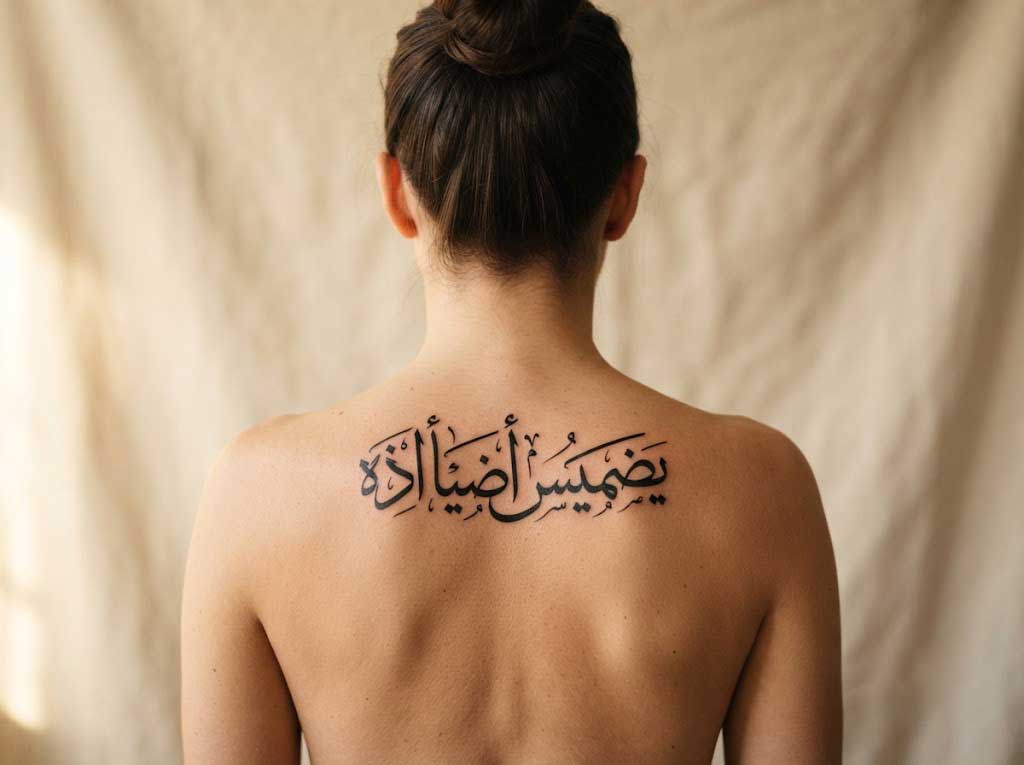
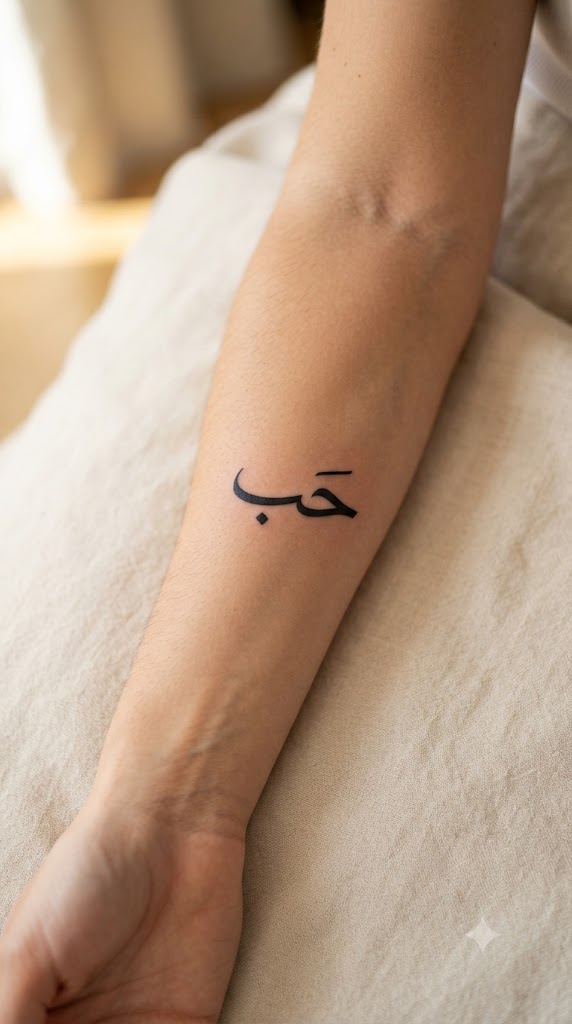
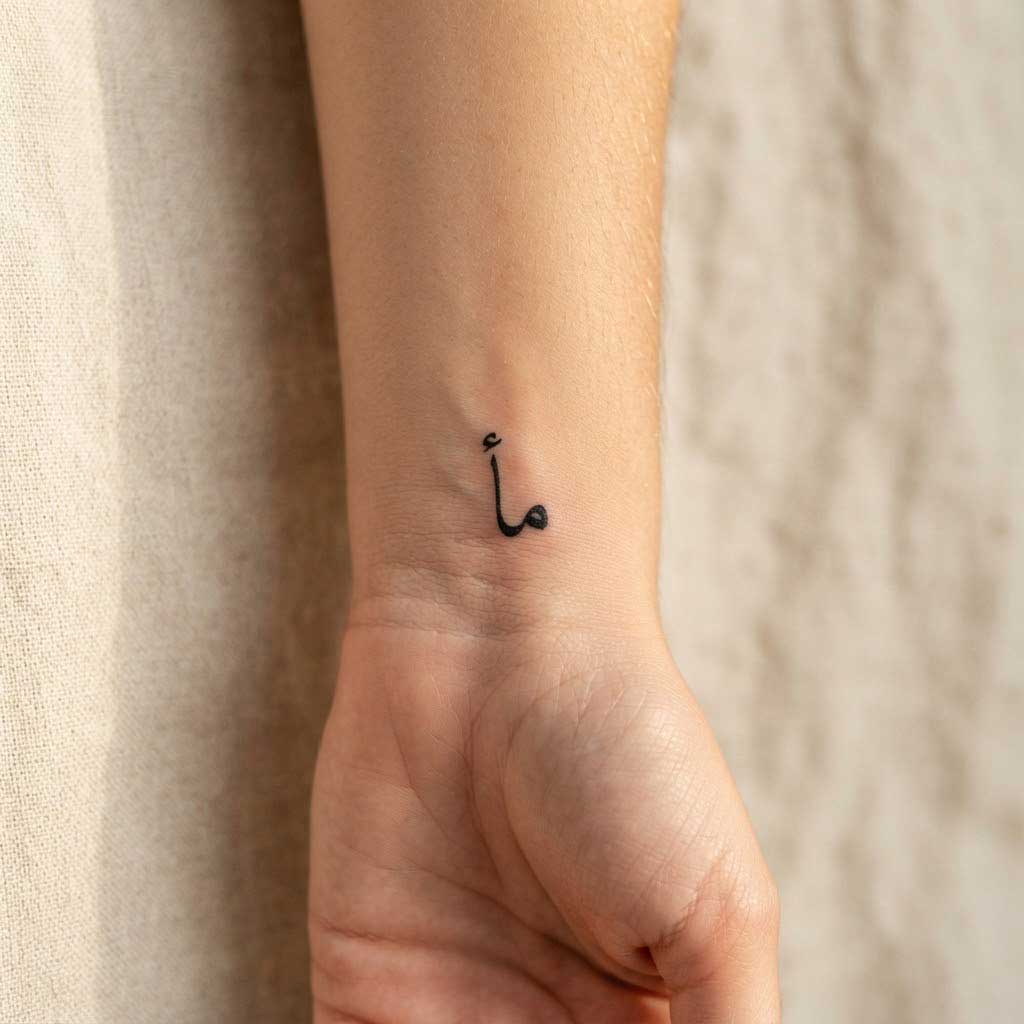
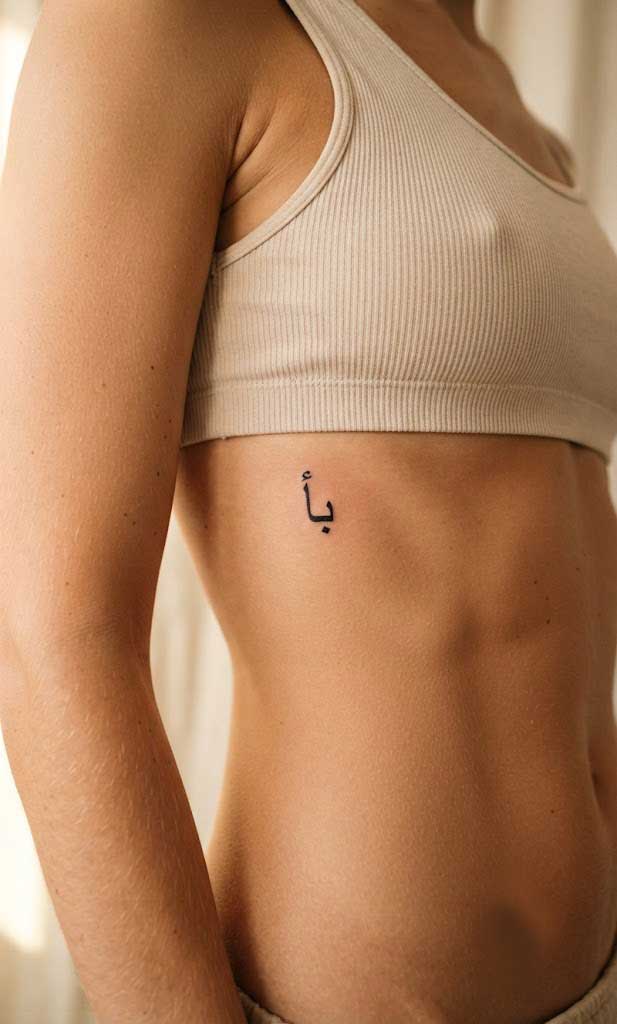
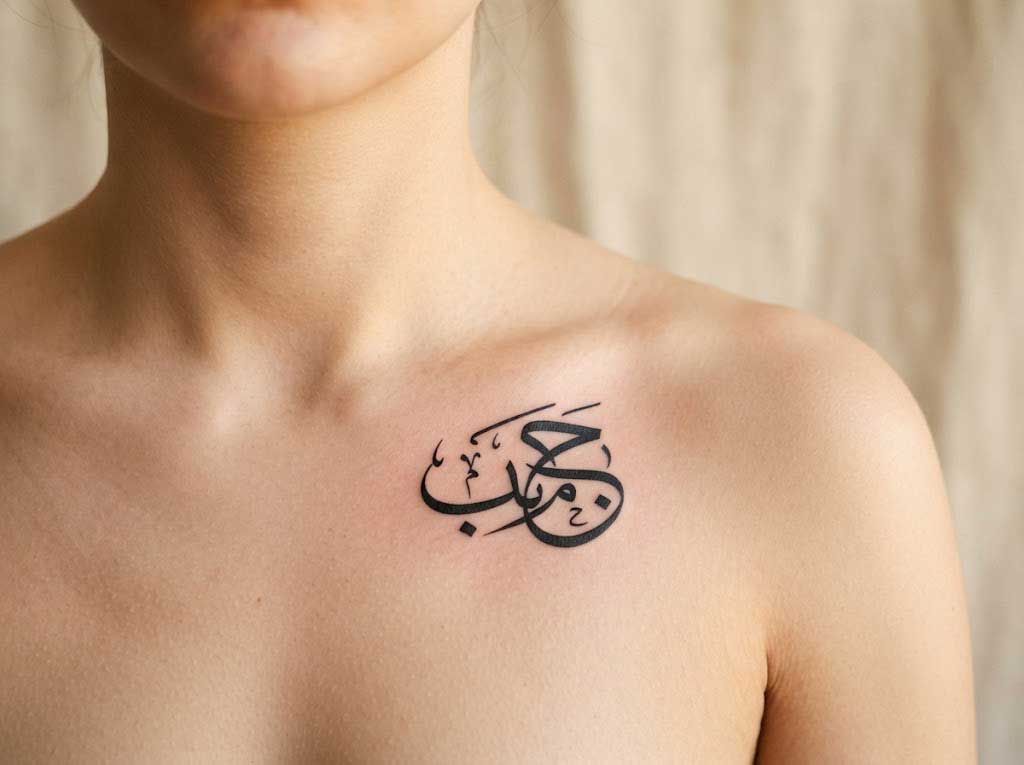
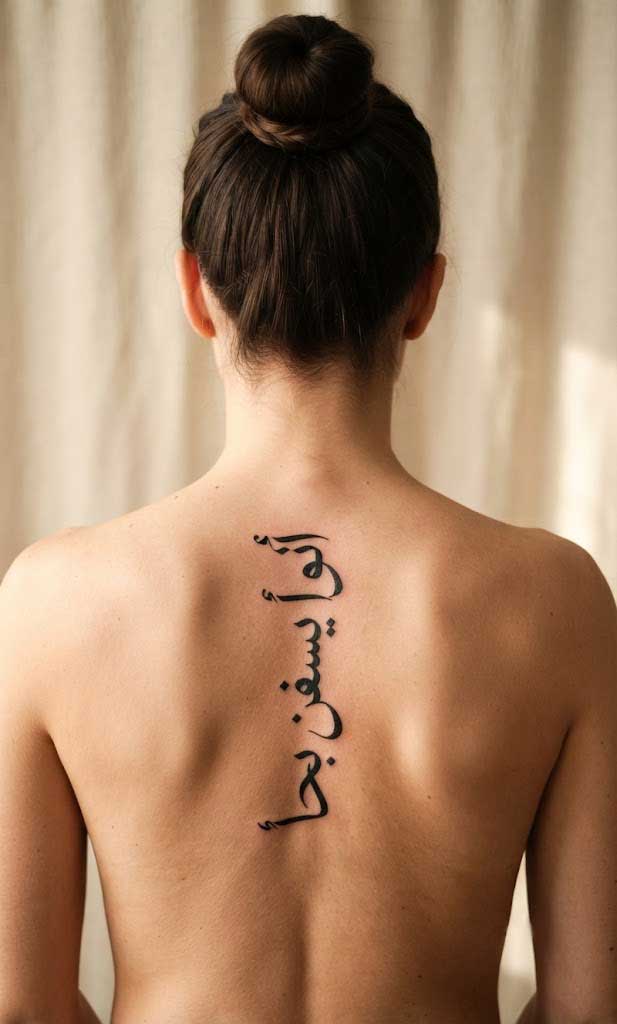
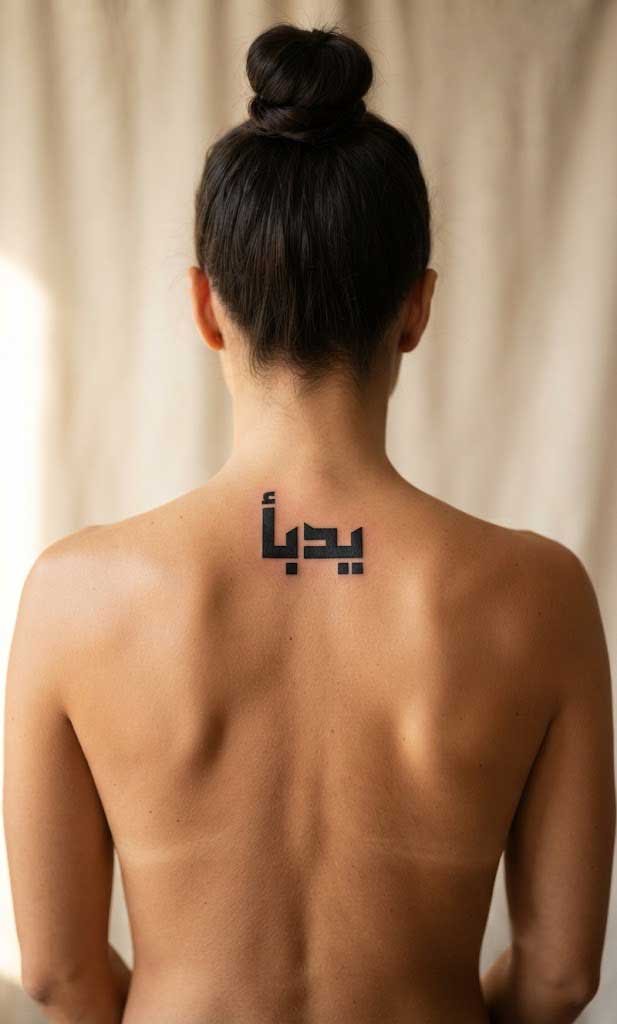
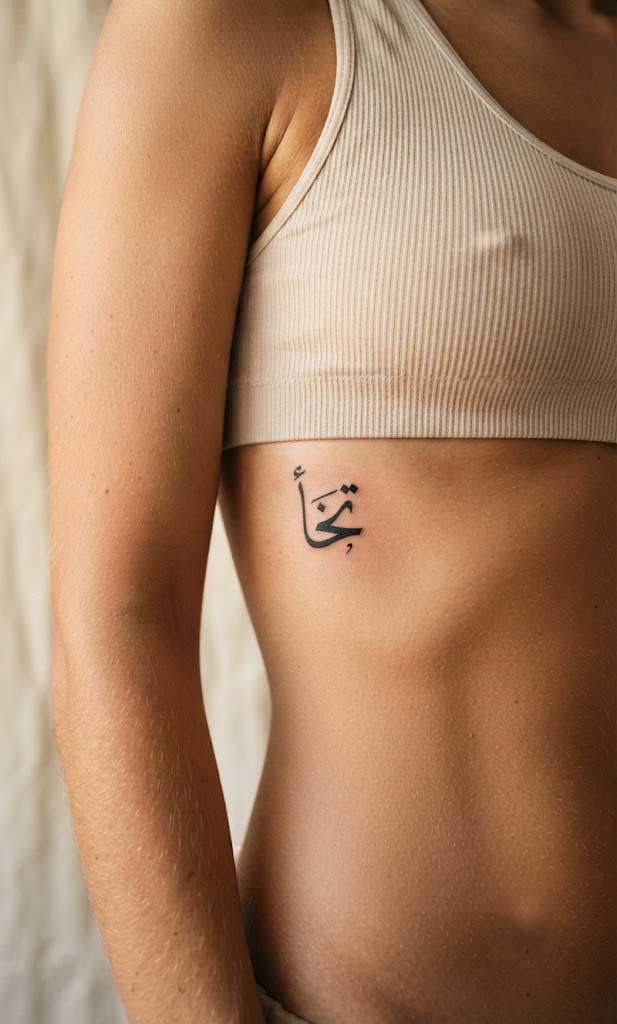
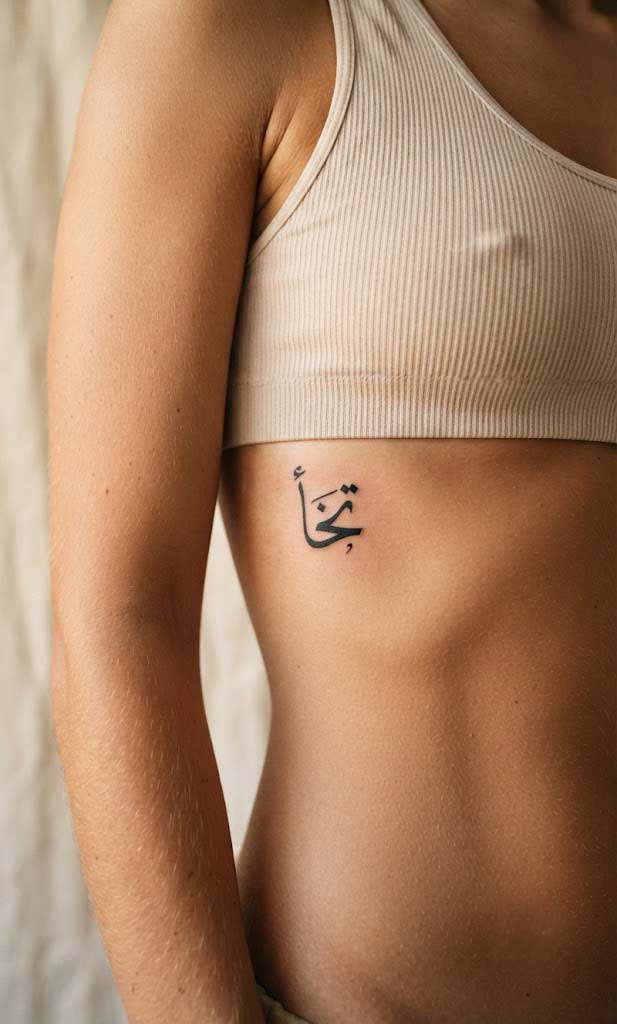
Faith in Arabic Tattoo — Words, Bible Verses & Islamic Terms with Meanings
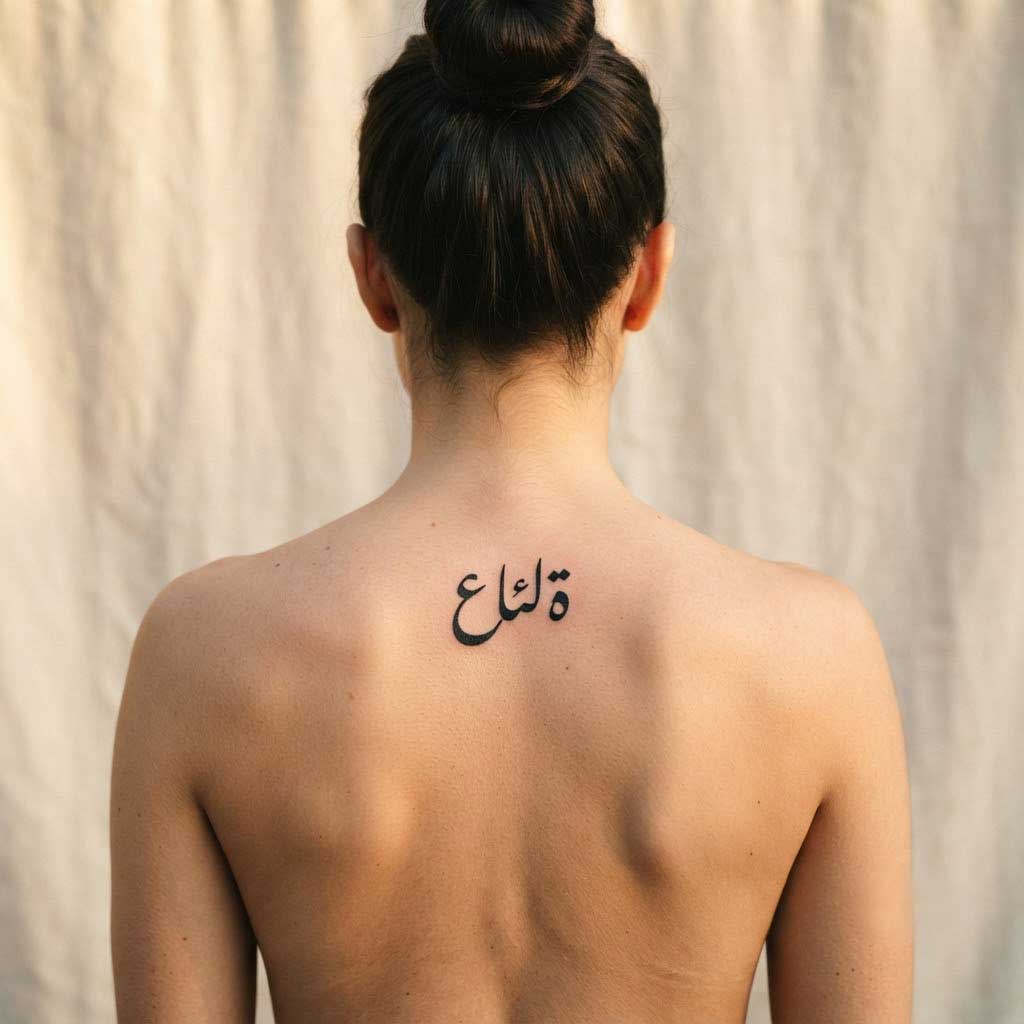
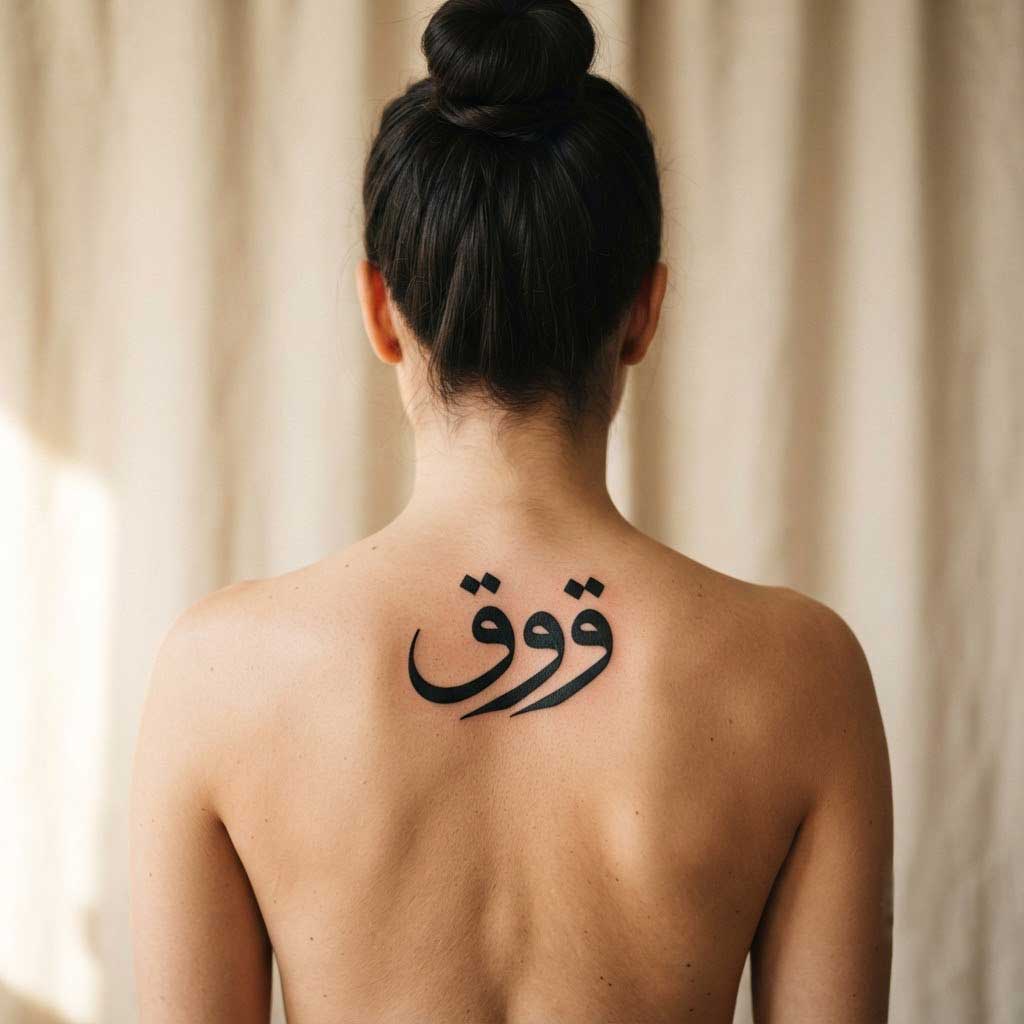
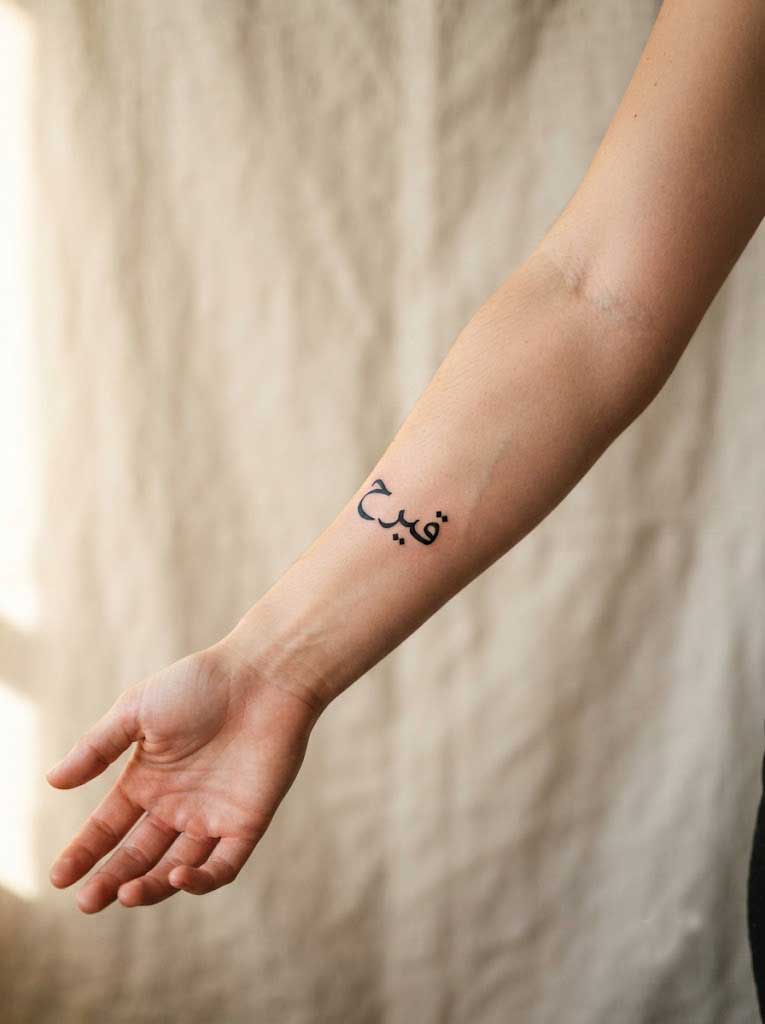
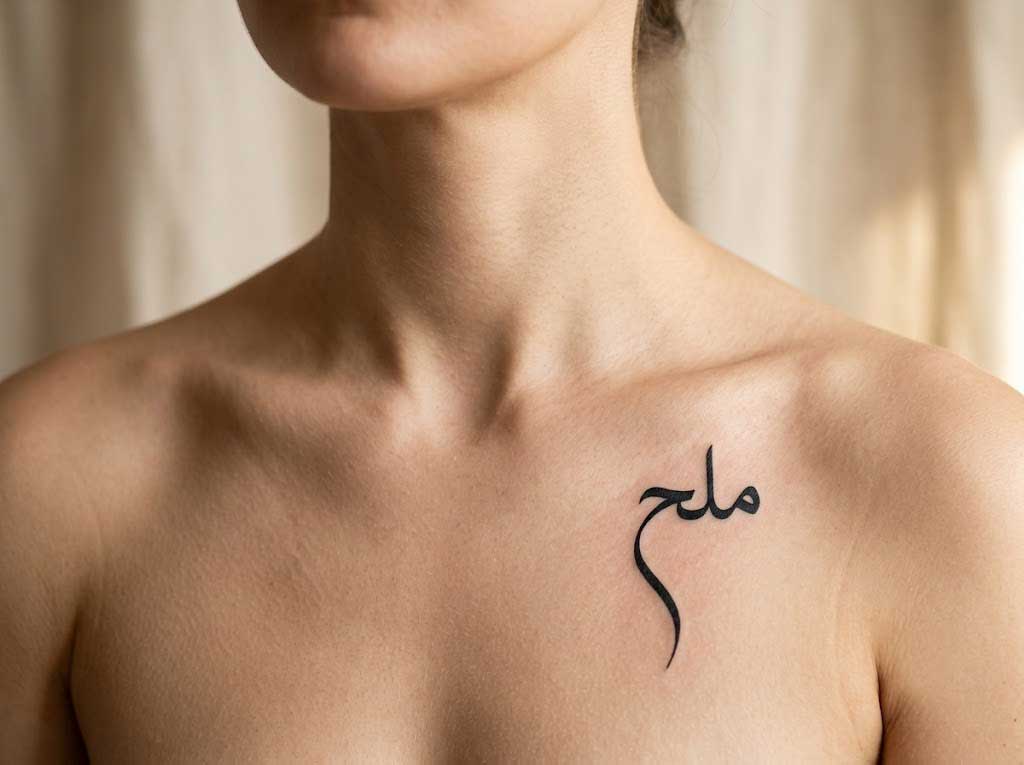
Browse 20+ Arabic tattoos designed around faith — the word "faith" itself in both Christian and Islamic Arabic, plus full renderings of the most-searched Bible verses translated to Arabic: Faith Hope Love (1 Corinthians 13:13), Walk by Faith Not by Sight (2 Corinthians 5:7), Faith Over Fear, and By Grace Through Faith. Every phrase ships with translation, transliteration, and a calligraphy example.
✓ 20+ faith words & verses
✓ 5 calligraphy styles
✓ Preview on body
✓ Native-speaker verified
Faith in Arabic Tattoo — The Word "Faith" & Related Terms
Arabic has more than one word for "faith," and Christian and Islamic Arabic tattoo traditions favor different ones. Below is a native-speaker verified glossary of eight Arabic faith terms — pick the one whose religious register matches yours before choosing a Bible-verse phrase in the sections that follow.
إيمان — Iman — Faith (Islamic). Five letters. The core Islamic term for belief — used across Arabic-speaking Muslim communities. The most-tattooed Arabic faith word overall.
الإيمان — Al-iman — The faith (definite form). Six letters. Used in Christian Arabic Bible translations — the standard form in the Faith Hope Love verse.
يقين — Yaqin — Certainty of faith. Four letters. Deeper Islamic register — a stage of faith beyond إيمان.
توكل — Tawakkul — Trust in God. Five letters. Islamic term for surrender-based faith — a devotional tattoo choice.
الرجاء — Al-raja — Hope (Christian). Six letters. Paired with الإيمان and المحبة in Bible-verse tattoos.
المحبة — Al-mahabba — Love (Christian, divine love). Six letters. The Christian Arabic word for love in 1 Corinthians 13, distinct from the general حب.
نعمة — Ni'ma — Grace (Christian). Four letters. Central Christian term — the "grace" in Ephesians 2:8's "by grace through faith."
الله — Allah — God. Four letters. Used by both Arabic Christians and Muslims for God — the same word appears in Arabic-language Bibles and the Quran.
See all 20+ Arabic words for tattoos with meanings →
Faith Hope Love in Arabic Tattoo — 1 Corinthians 13:13
"Faith, hope, and love — but the greatest of these is love." Paul's three-word triad from 1 Corinthians 13:13 is the single most-searched Christian Arabic tattoo phrase. Below is the standard Arabic Bible rendering and the popular tattoo variants.
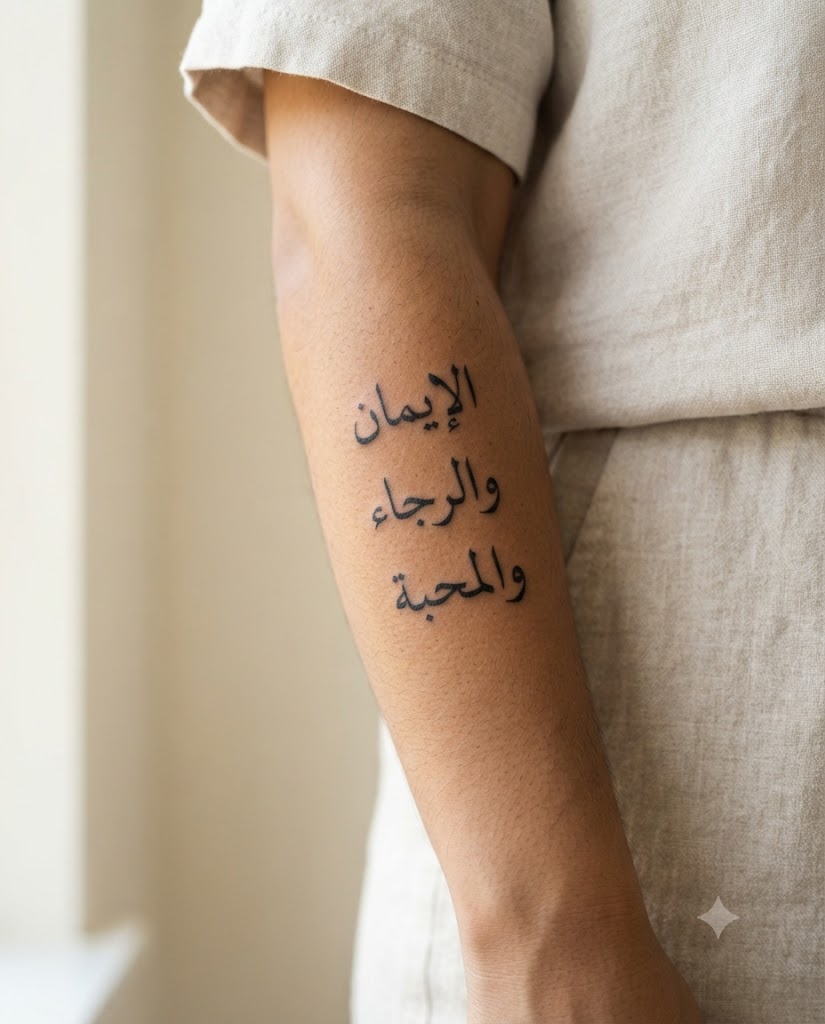
The Full Verse — الإيمان والرجاء والمحبة
الإيمان والرجاء والمحبة (Al-iman wal-raja' wal-mahabba — Faith and hope and love). Six words in Arabic (three concept-words + three connectors). This is the standard Arabic Bible translation — used by Coptic, Maronite, and other Arabic-speaking Christian communities. Best rendered horizontally along a forearm or ribcage in Naskh for legibility.
Stacked Three-Word Design
For a vertical spine or inner-forearm placement, stack the three concept-words on separate lines: الإيمان (faith) / الرجاء (hope) / المحبة (love). Drops the Arabic connectors for visual balance — reads as a poetic triangle rather than a full sentence. Nastaliq or Diwani both suit the stacked format.
"The Greatest of These Is Love" Extension
Some Christian Arabic tattoos add the second half of the verse: وأعظمهن المحبة (Wa a'zamuhunna al-mahabba — And the greatest of these is love). Turns the three-word triad into a full theological statement. Best as a two-line design where the first line stacks the triad and the second line runs the emphasis phrase.
Faith Love Hope — Word Order Variants
The word order occasionally varies in tattoo commissions — الإيمان والمحبة والرجاء (Faith and love and hope) reorders love to the middle position. Neither reading is more "correct" than the other biblically; choose based on visual balance. If in doubt, follow the canonical Faith → Hope → Love order from 1 Corinthians 13:13.
Walk by Faith Tattoo in Arabic — 2 Corinthians 5:7
"For we walk by faith, not by sight" (2 Corinthians 5:7). One of the most-tattooed Christian encouragement verses in English — and the Arabic rendering is a natural fit for a longer forearm or ribcage placement. Below is the standard Arabic Bible text and shorter variants.
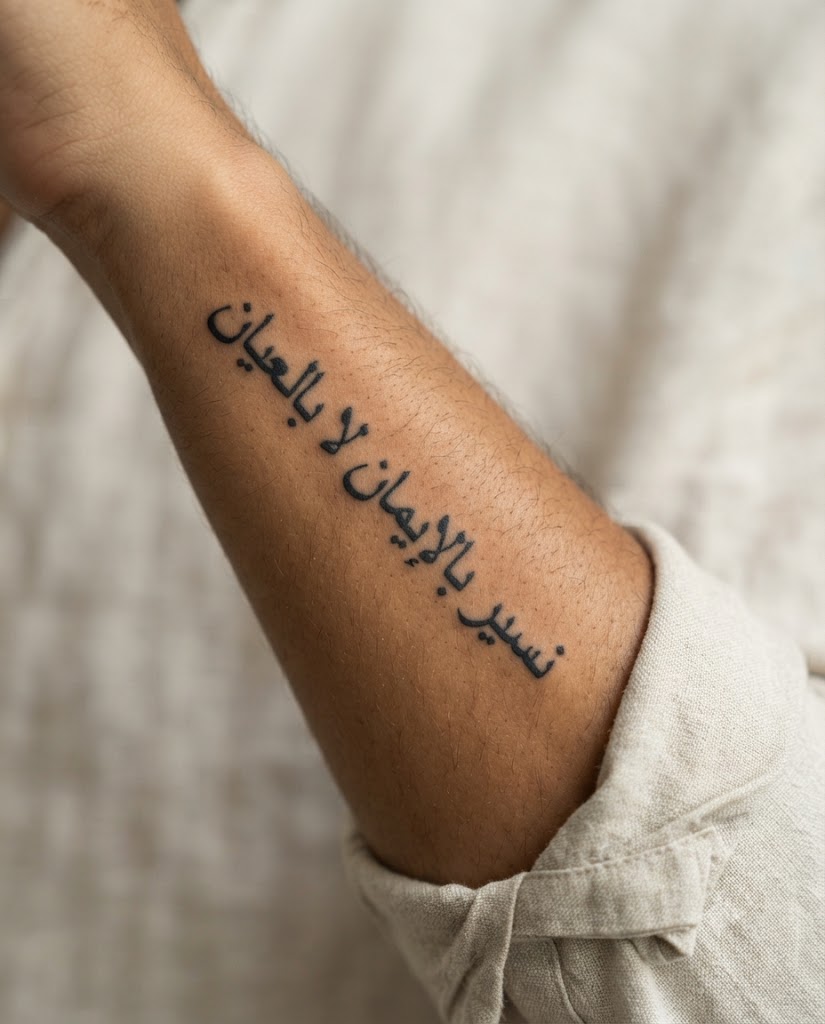
The Full Verse — نسير بالإيمان لا بالعيان
نسير بالإيمان لا بالعيان (Nasir bil-iman la bil-ayan — We walk by faith not by sight). Five words. This is the standard Arabic Bible rendering, used across Arabic-language Christian translations. Best as a single-line horizontal tattoo along the inside of the forearm from wrist toward elbow, or across the ribcage. Naskh or clean Thuluth work best.
Short Form — بالإيمان نسير
For a smaller placement, shorten to بالإيمان نسير (Bil-iman nasir — By faith we walk). Two words, keeps the core meaning, fits a wrist, collarbone, or ankle. Loses the "not by sight" contrast but reads cleaner at small sizes.
Alternative Rendering — نمشي بالإيمان
Some Arabic Bible translations use the verb نمشي (nimshi — we walk, in a more colloquial register) instead of نسير (nasir — we walk, in classical register). نمشي بالإيمان لا بالعيان reads slightly more contemporary. Verify with your Arabic-speaking friend or pastor which rendering fits your tradition.
Placement Notes for a Longer Verse
Full-verse Arabic phrases (five words or more) need a long linear canvas — the inside of the forearm (elbow-to-wrist runs 20-25 cm), the ribcage side (25-35 cm), or the spine (nape-to-lumbar, 45-55 cm). Avoid the wrist, ankle, or behind the ear — the phrase compresses illegibly at those small placements.
Faith Over Fear & By Grace Through Faith — Christian Arabic Phrases
Two more Christian Arabic tattoo phrases show consistent search demand — one modern (Faith Over Fear), one scriptural (By Grace Through Faith, Ephesians 2:8). Below is the standard Arabic rendering of each.
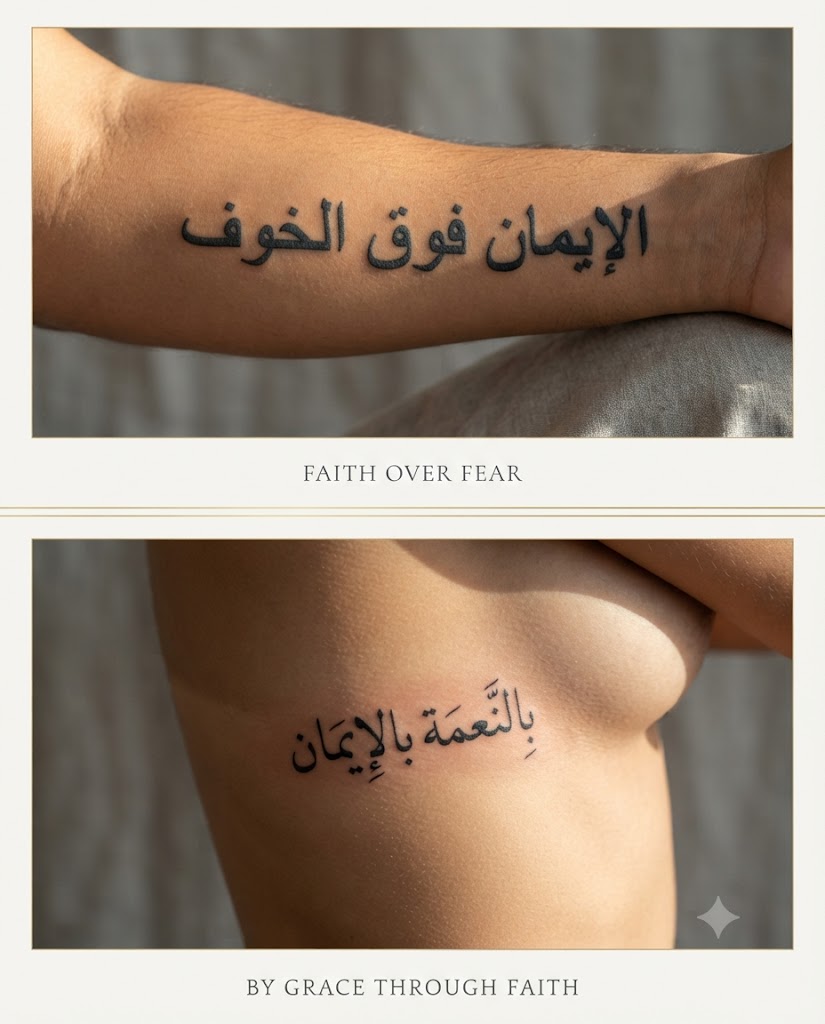
Faith Over Fear — الإيمان فوق الخوف
الإيمان فوق الخوف (Al-iman fawq al-khawf — Faith above fear). Four words in Arabic. This is a modern Christian empowerment phrase (not scriptural), popularized in the past decade as an encouragement tattoo. Reads well as a horizontal forearm piece in bold Kufic or Thuluth — the visual weight matches the assertive meaning.
By Grace Through Faith — بالنعمة بالإيمان
بالنعمة بالإيمان (Bin-ni'ma bil-iman — By grace through faith) is the short form from Ephesians 2:8. Two Arabic words carry the theological weight of the whole phrase. Best as a compact piece on the ribcage, inner forearm, or as a two-line stack (grace / faith) on the wrist. Nastaliq or Naskh suit the softer register.
Longer Ephesians 2:8 Rendering
For a longer piece, the fuller Ephesians 2:8 rendering is بالنعمة أنتم مخلصون بالإيمان (Bin-ni'ma antum mukhlasun bil-iman — By grace you are saved through faith). Six words — needs a spine, upper back, or long forearm canvas. Verify the exact wording against your preferred Arabic Bible translation (Van Dyck vs Good News Arabic) before inking.