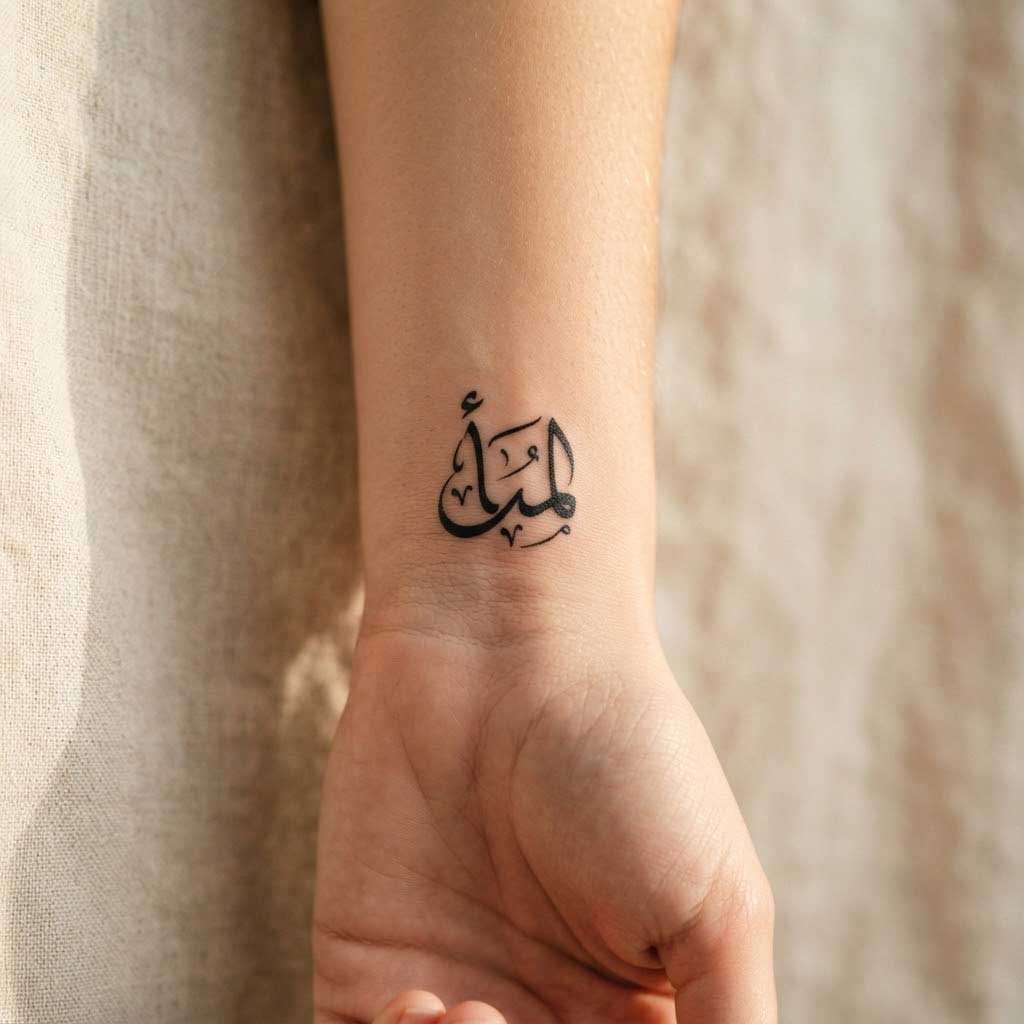
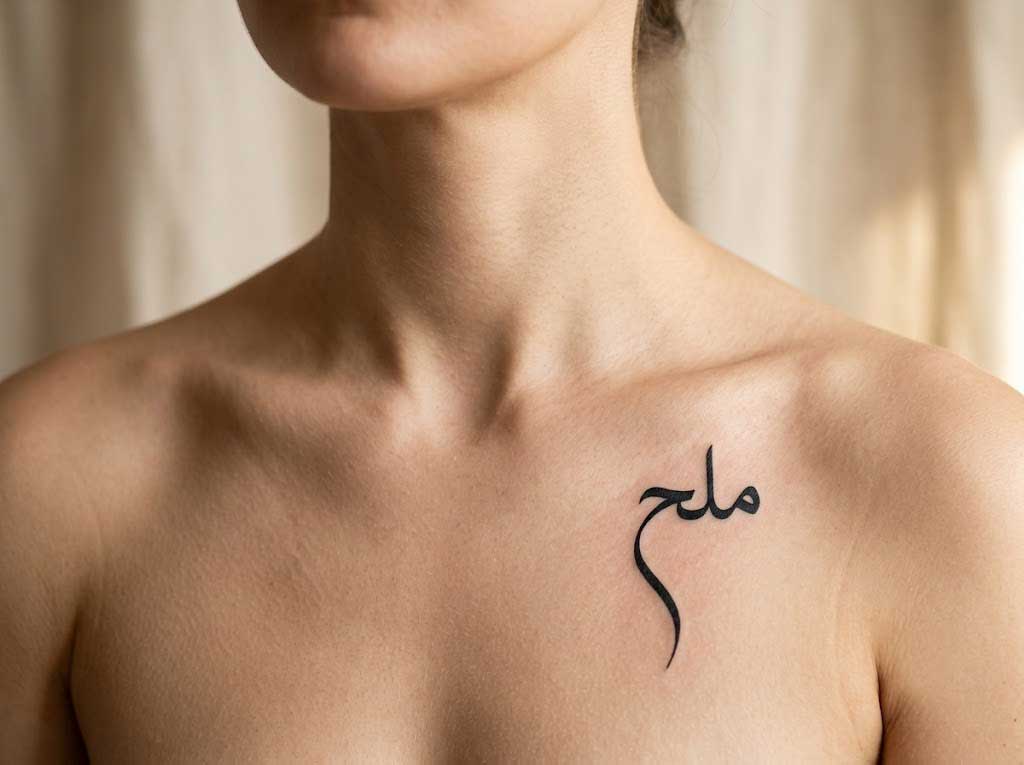
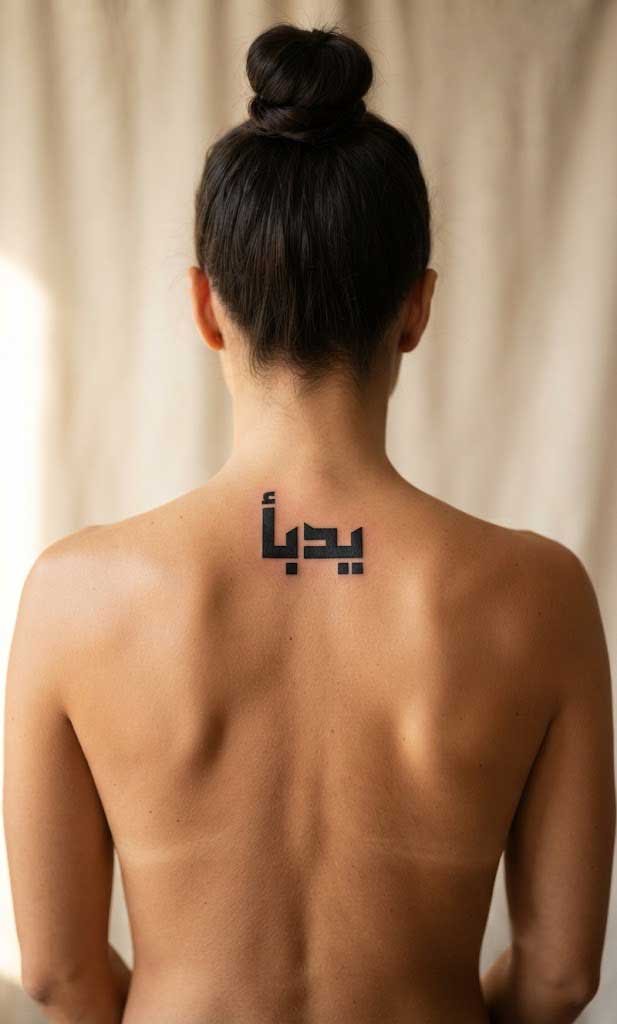
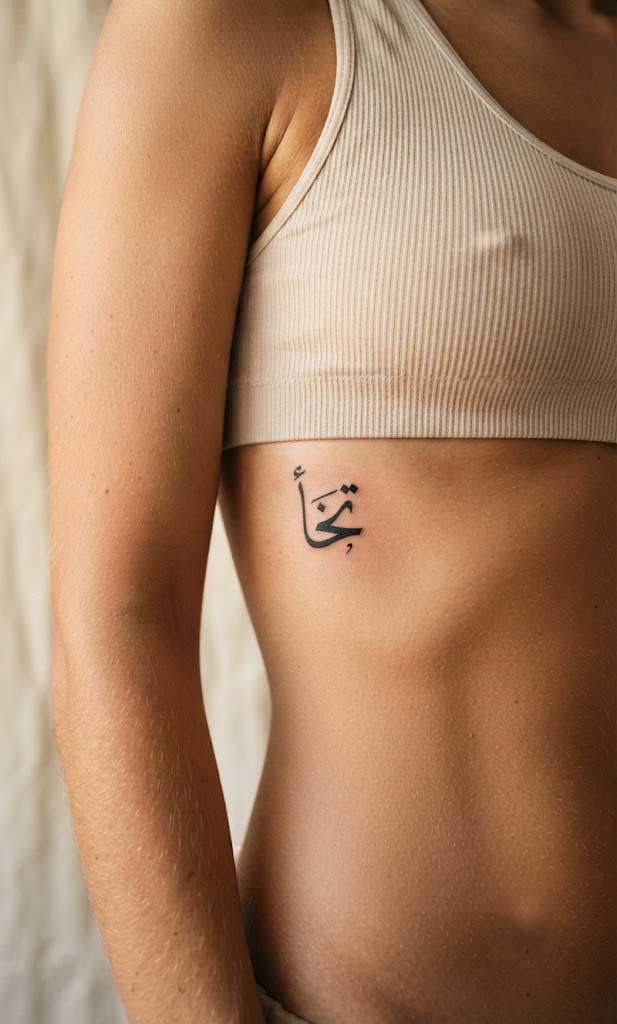
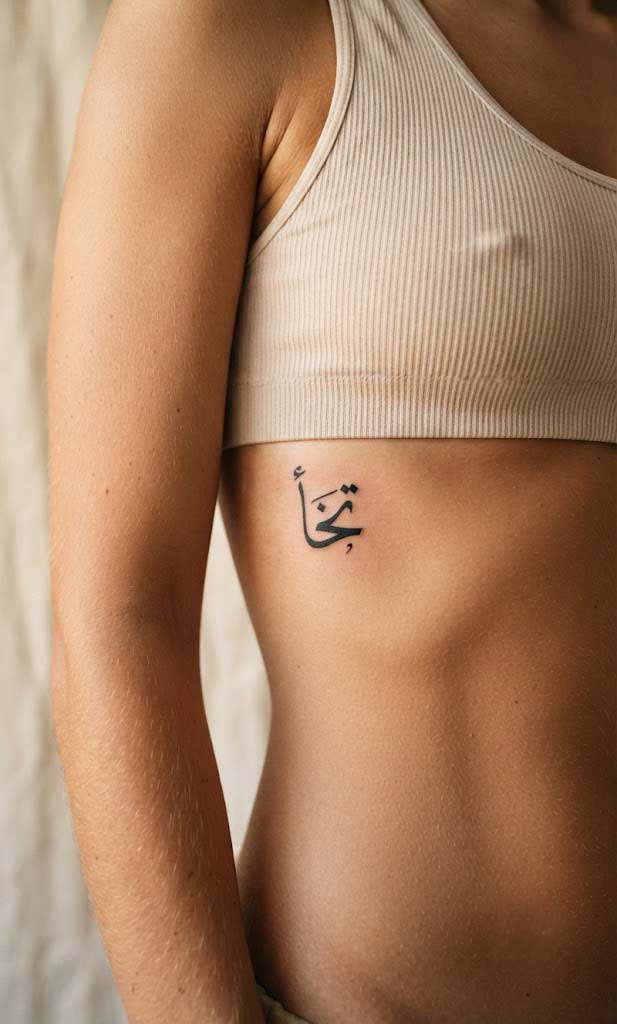
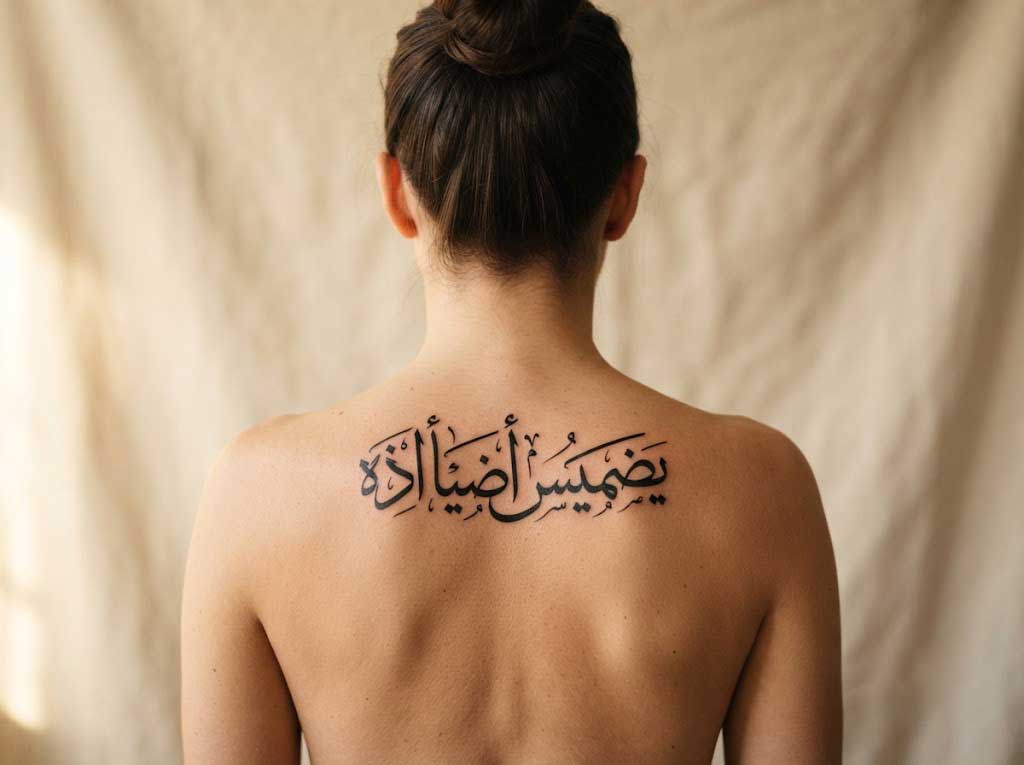
Arabic Hand Tattoo — Meaningful Words for the Hand & Fingers
Browse 20+ Arabic tattoos designed for the hand — short words that fit the back of the hand, palm, knuckles, and finger placements. Every design ships with translation, transliteration, and a calligraphy example. Use the free generator to preview any word and download a high-resolution PNG for your tattoo artist.
✓ 20+ hand & finger designs
✓ 5 calligraphy styles
✓ Preview on body
✓ Native-speaker verified
Arabic Hand Tattoo — Meaningful Words for the Hand
The hand is one of the smallest and most visible tattoo placements — the design will be seen every day, by you and by everyone you meet. The best Arabic words for a hand tattoo are two-to-four letters, chosen for a meaning that holds up under constant visibility. Below are eight short Arabic words that fit.
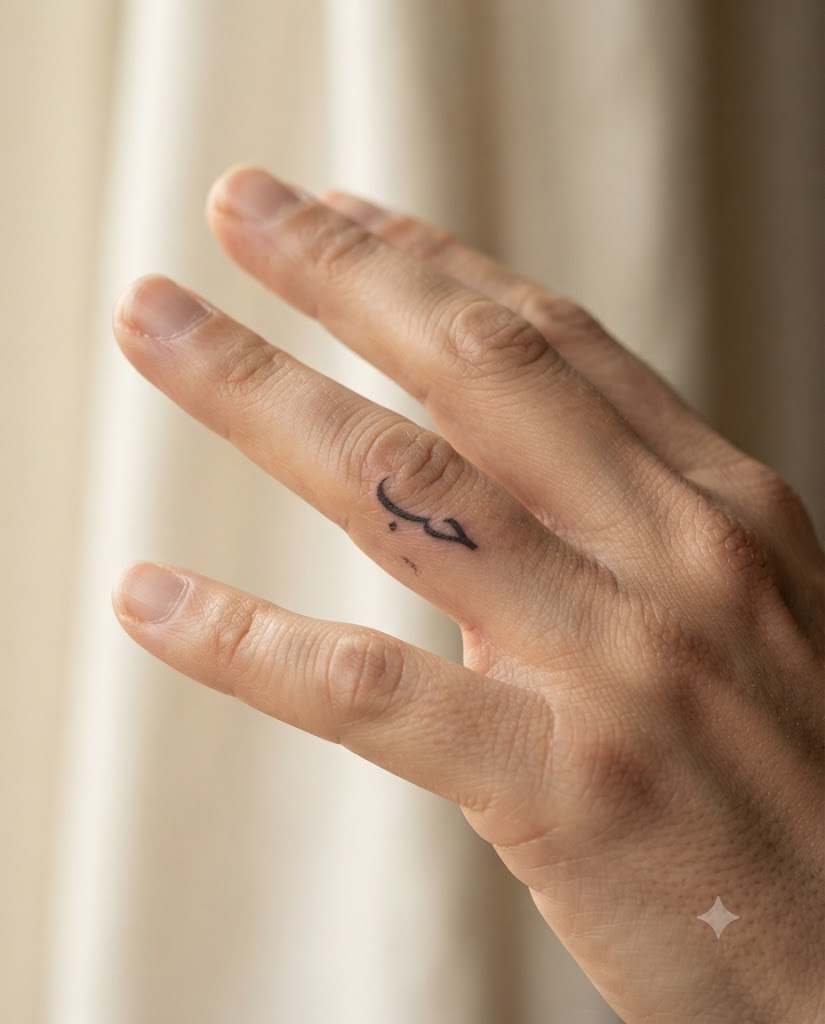
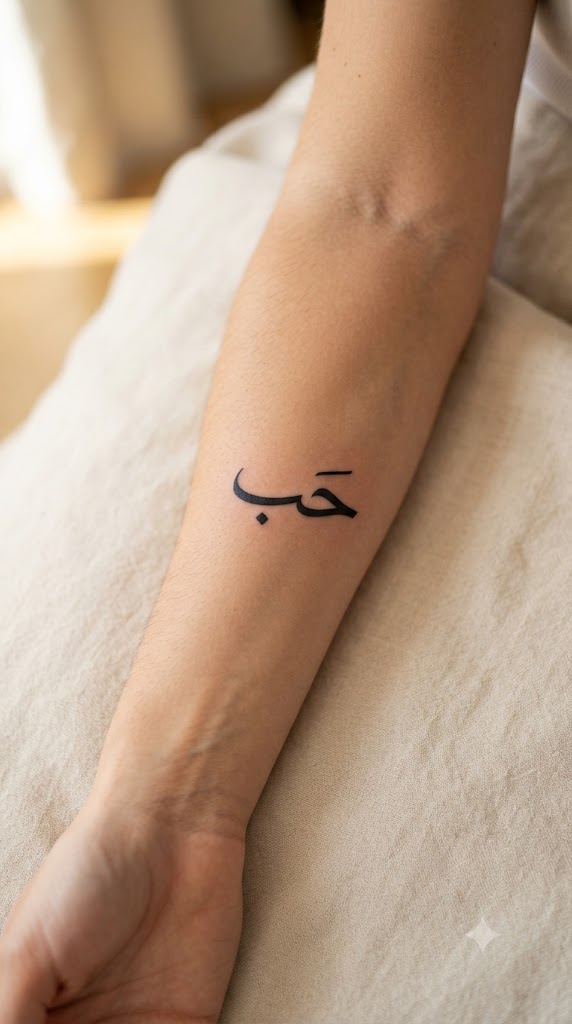
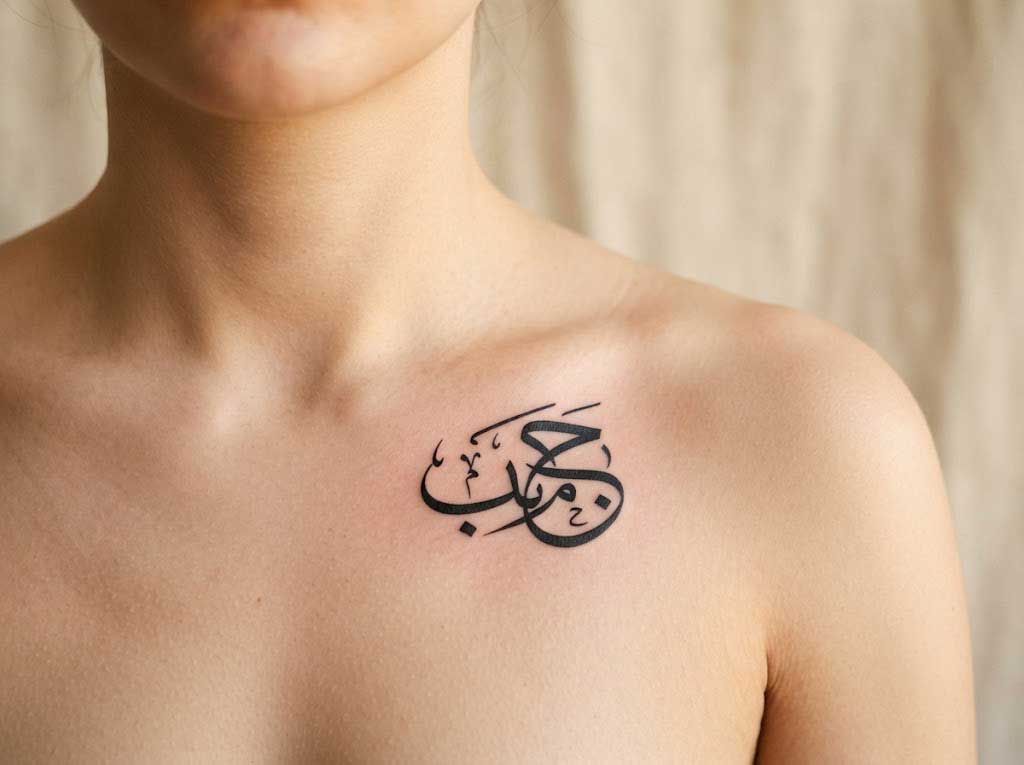
حب — Hubb — Love. Two letters. The single most-tattooed Arabic hand word — fits on the side of a finger, on the back of the hand, or between the thumb and forefinger.
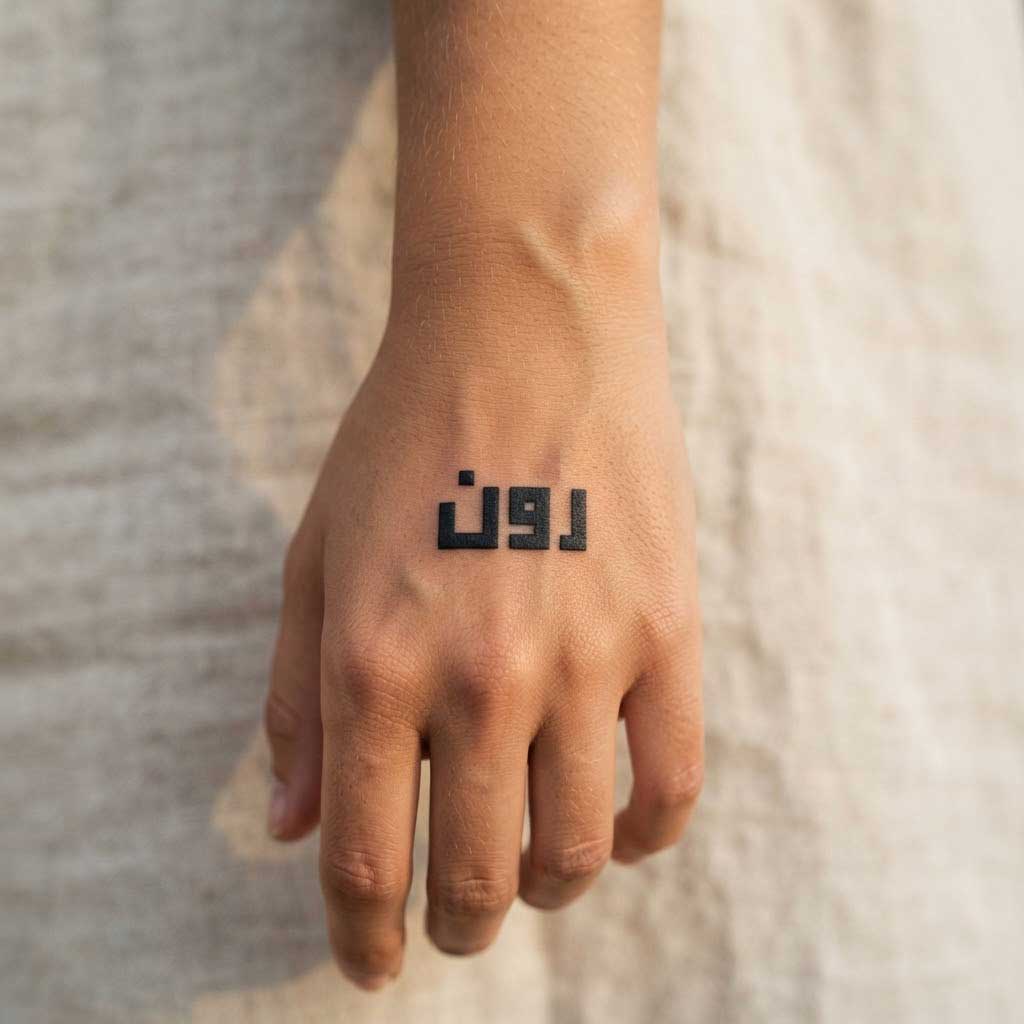
نور — Nur — Light. Three letters. Bold in Kufic on the back of the hand — one of the most iconic Arabic hand tattoo designs.
أمل — Amal — Hope. Three letters. Delicate and quietly personal — reads well as a small side-finger or palm piece.
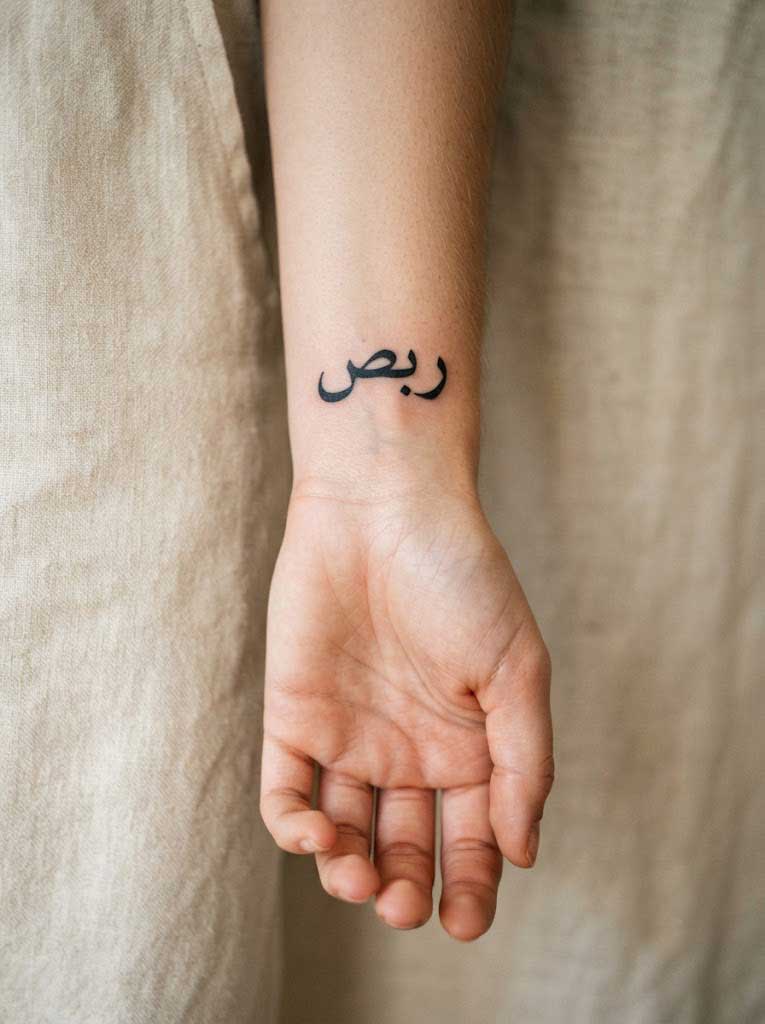
صبر — Sabr — Patience. Three letters. A daily reminder that stays in your line of sight all day — ideal for the back of the hand or the wrist edge.
إيمان — Iman — Faith. Five letters. A slightly longer hand piece — best across the outer edge of the hand or down the side of the little finger.
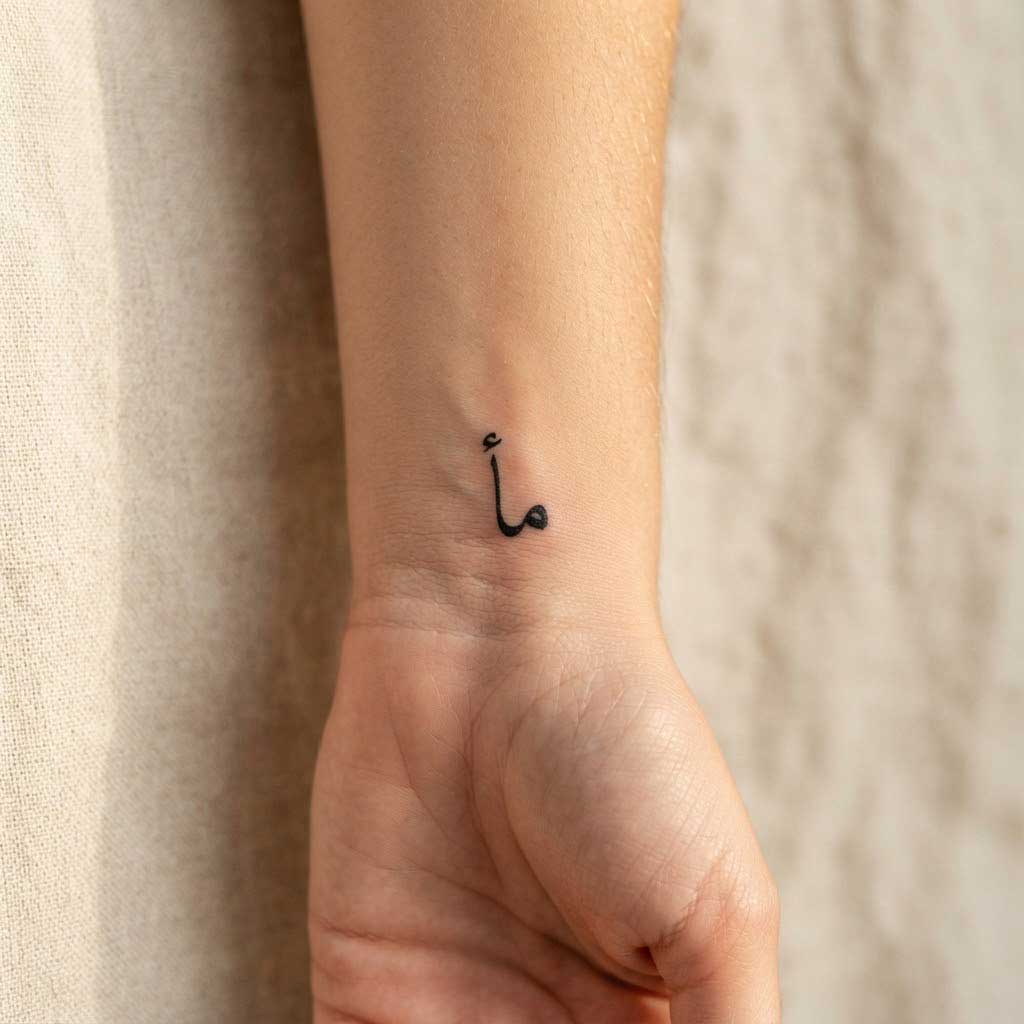
أم — Umm — Mother. Two letters. The smallest possible hand tribute — fits on a single finger side or between the thumb and forefinger.
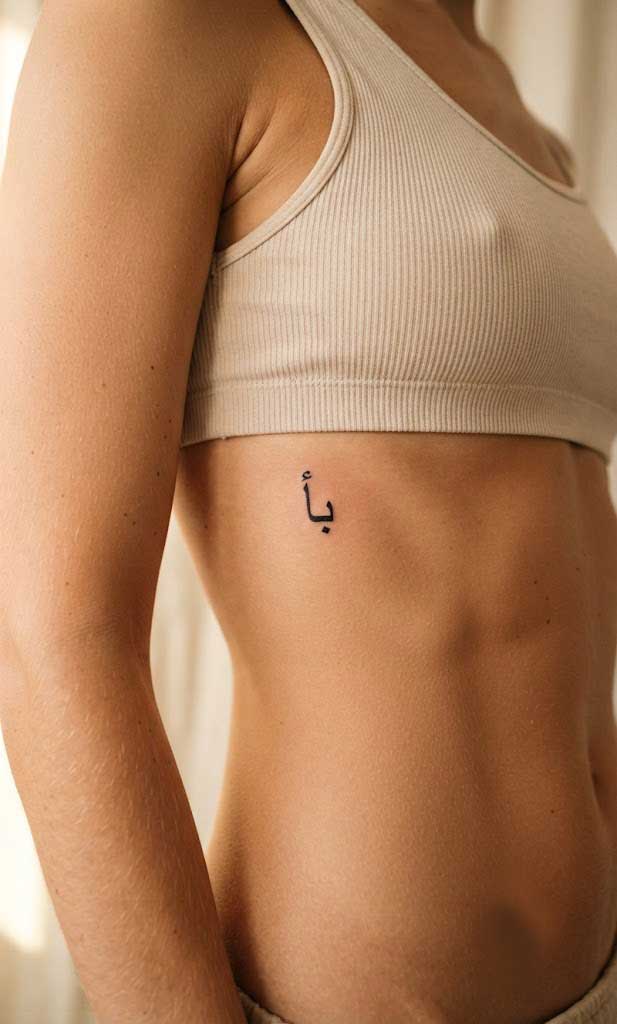
أب — Ab — Father. Two letters. Pairs symmetrically with أم across two hands or two fingers as a parents-tribute set.
قوة — Quwwa — Strength. Three letters. Bold on the knuckles or back of the hand — a confident visible-daily statement piece.
See all 20+ Arabic words for tattoos with meanings →
Arabic Tattoo on Hand — Placement Sub-Regions
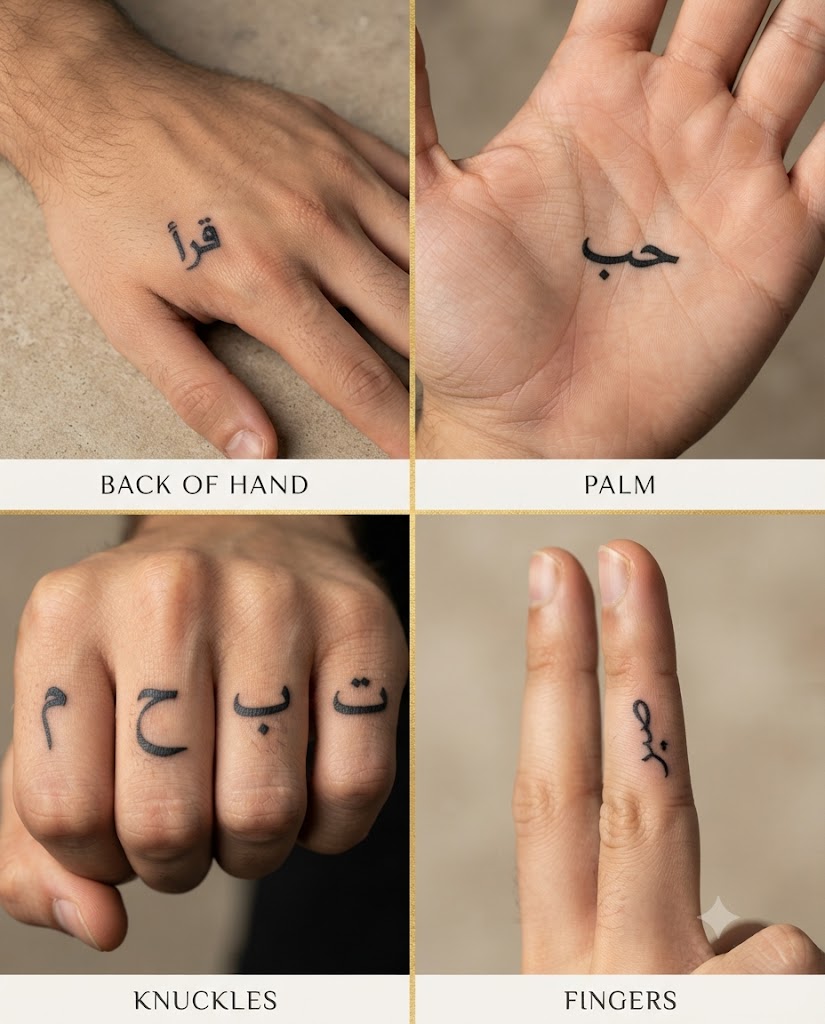
The hand breaks down into four distinct tattoo sub-regions, each with its own visibility, size limit, and design considerations. The choice matters more here than on almost any other placement — hand tattoos are seen constantly, and each sub-region ages differently. Below is what actually works in each spot.
Back of the Hand
The back of the hand is the most visible and most-tattooed Arabic hand placement. Fits a single three-to-five letter word (نور, إيمان, حياة) or a small two-line stacked design. Best rendered in bold Kufic or medium Thuluth — the skin here doesn't stretch as much as the palm, so strokes stay crisp for years.
Palm
The palm is a bold public statement placement — always visible unless the fist is closed. Fits a compact two-to-three letter Arabic word in the center of the palm. Palm tattoos fade faster than any other hand region because skin turnover is high; expect to need touch-ups every 3-5 years. Kufic or thicker Naskh survive best.
Knuckles
The four knuckles above the fingers can hold four single Arabic letters — or one Arabic word broken across the four knuckles. This is a bold, statement-tattoo placement often used for short powerful words like قوة (Quwwa — strength) or إيمان (Iman — faith). Very high pain zone due to thin skin over bone.
Side of the Hand / Outer Edge
The outer edge of the hand — from the base of the little finger down to the wrist edge — gives you a narrow linear canvas for a small vertical or horizontal Arabic word. Less visible than the back of the hand or the knuckles, but hidden when the hand is at your side. Best for four-to-five letter words in a fine stroke width.
Arabic Finger Tattoos — The Smallest Hand Placements
Arabic finger tattoos are the smallest of all hand placements — the canvas is 6-15 mm tall per finger and inherently narrow. Only certain Arabic words and design decisions survive at that scale. Below is what works, and what to avoid.
Words That Actually Fit a Finger
The two-letter Arabic family words are the only reliably-legible finger tattoos: حب (Hubb — love), أم (Umm — mother), أب (Ab — father), أخ (Akh — brother). Three-letter words like نور (Nur — light) or أمل (Amal — hope) fit if placed lengthwise along the finger side rather than across the finger top.
Finger Sub-Placements
Three finger placements work. Top of a finger (between two knuckles): fits a single Arabic letter or a two-letter word horizontally. Side of a finger (visible when the palm is open): fits a two-to-three letter word running lengthwise. Inside of the finger (visible only when the palm is up): hidden most of the time, best for a private personal-reminder tattoo.
What Not to Do on a Finger
Avoid Diwani and ornate Nastaliq on a finger — the flourishes disappear at this scale. Avoid stroke widths under 2 mm — they will bleed together within a year. Avoid trying to fit anything longer than three Arabic letters. And know that finger tattoos age poorly compared to any other hand placement — expect fading and touch-ups every 2-4 years.