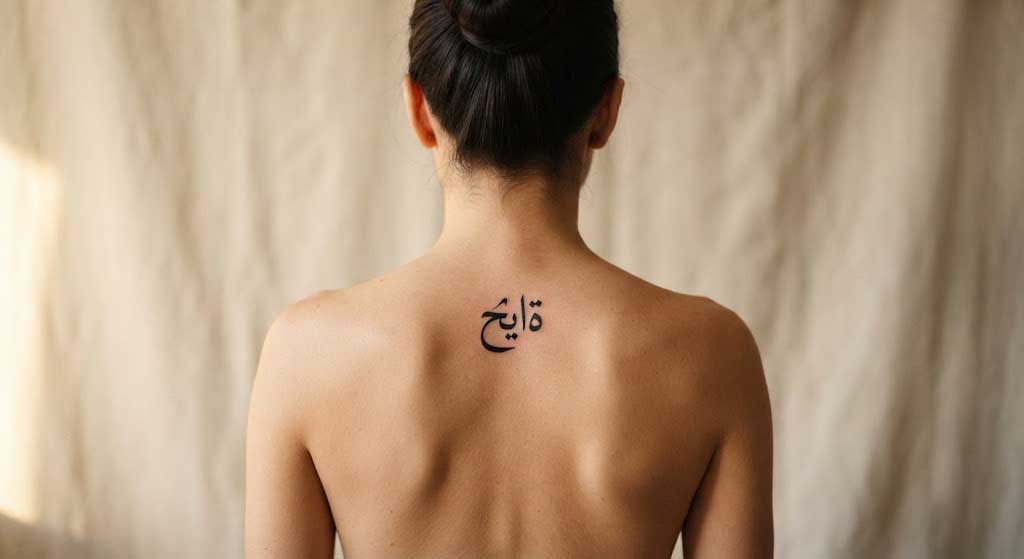
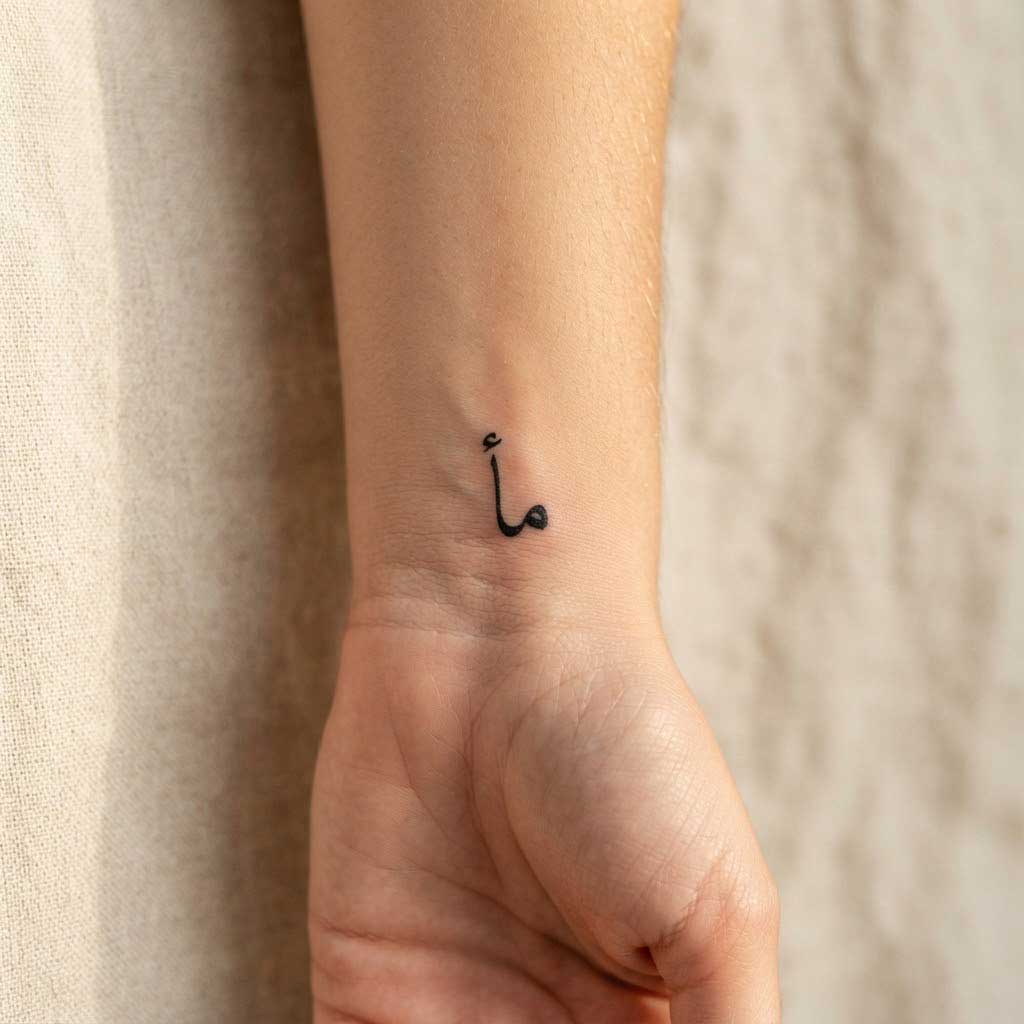
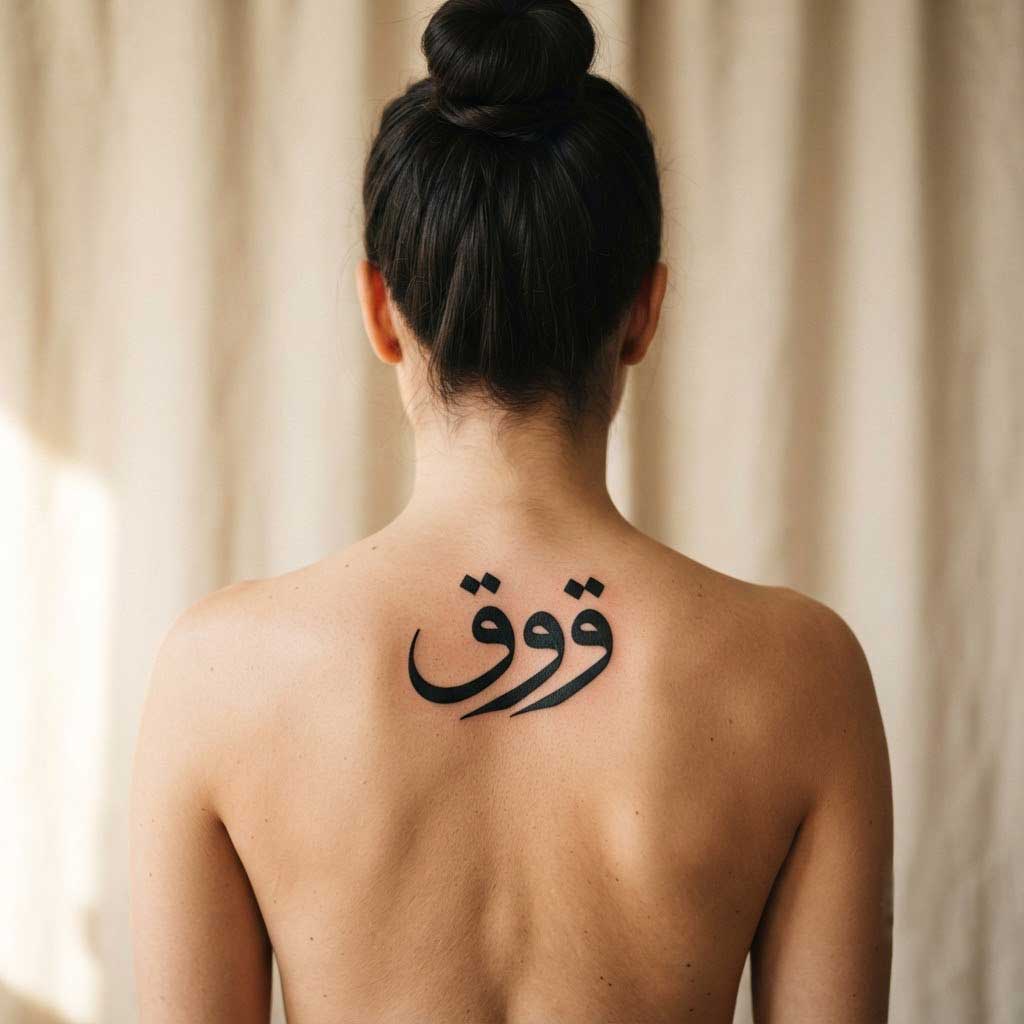
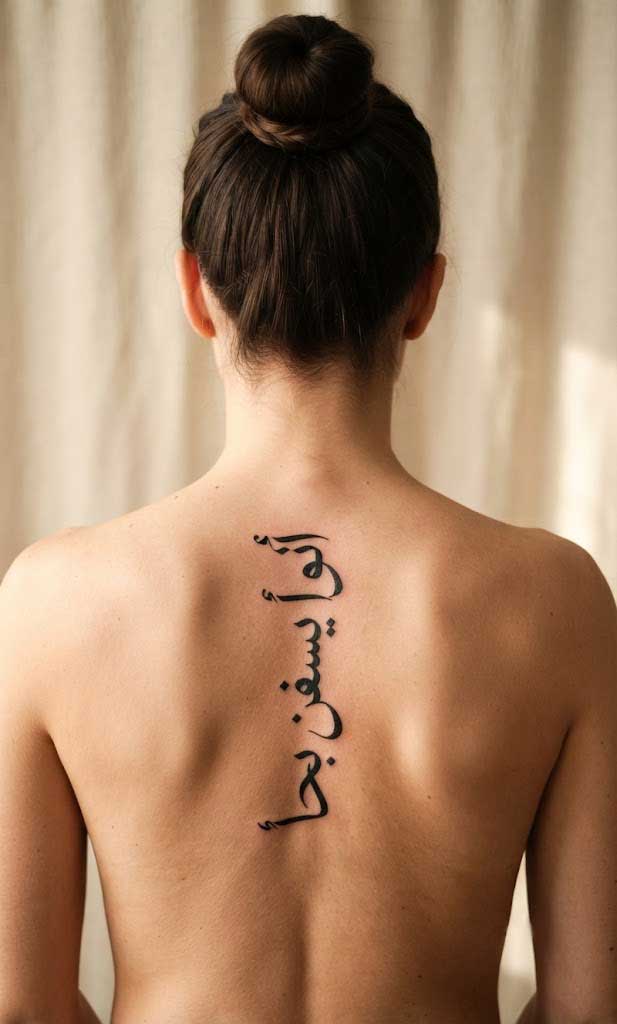
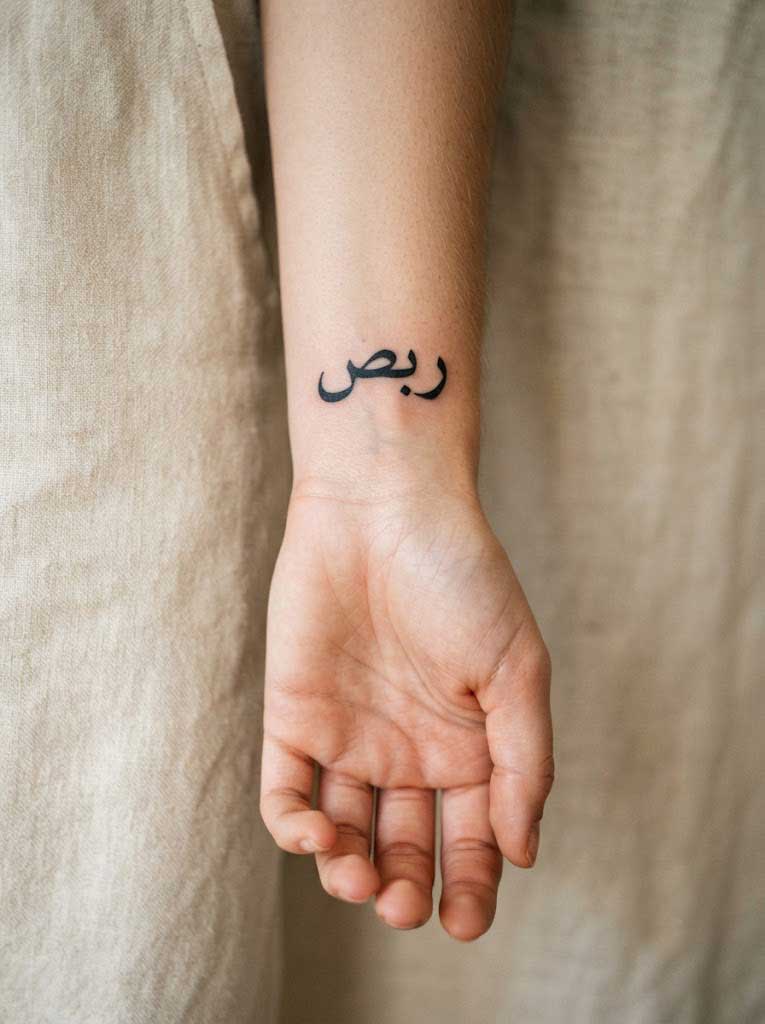
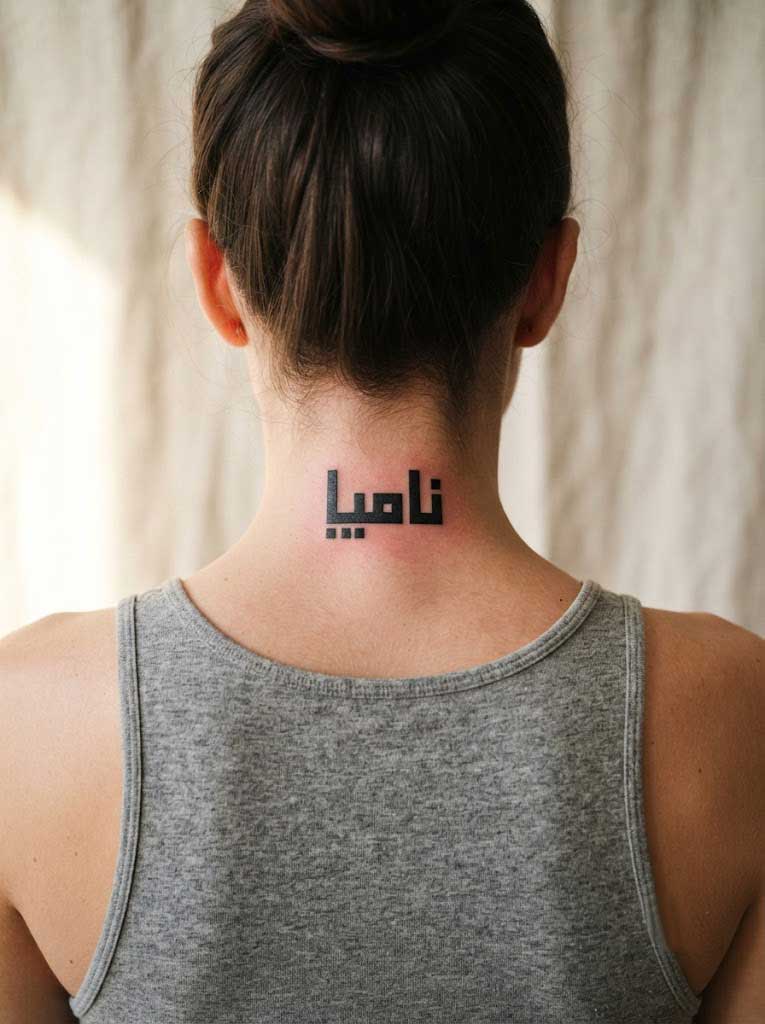
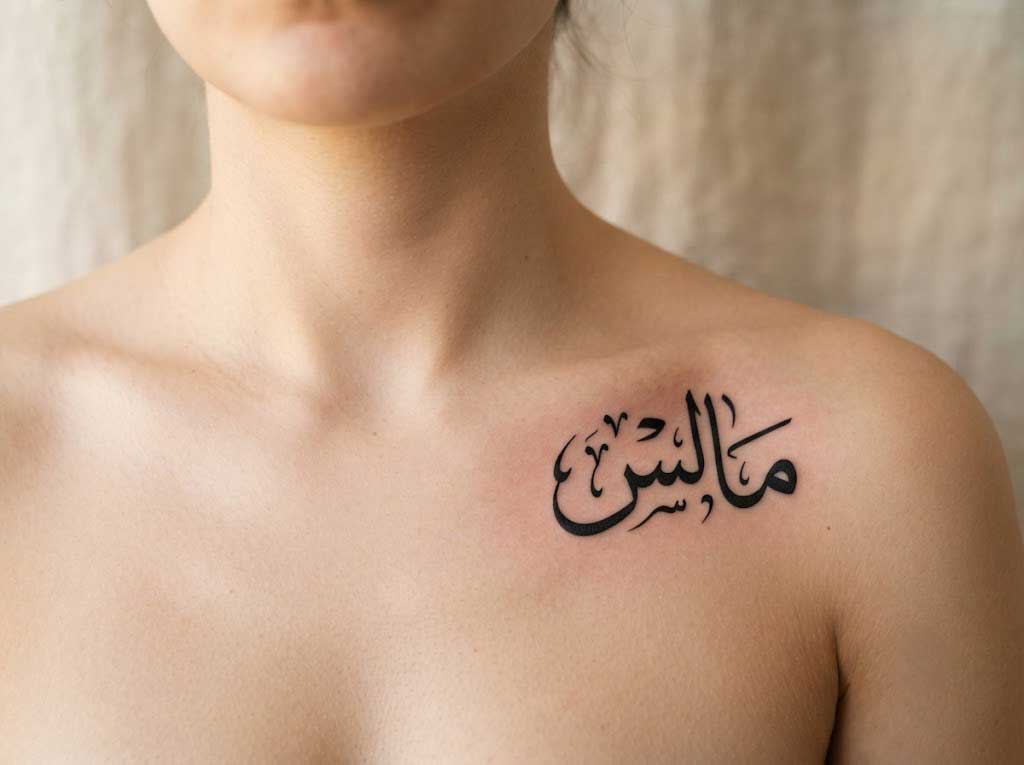
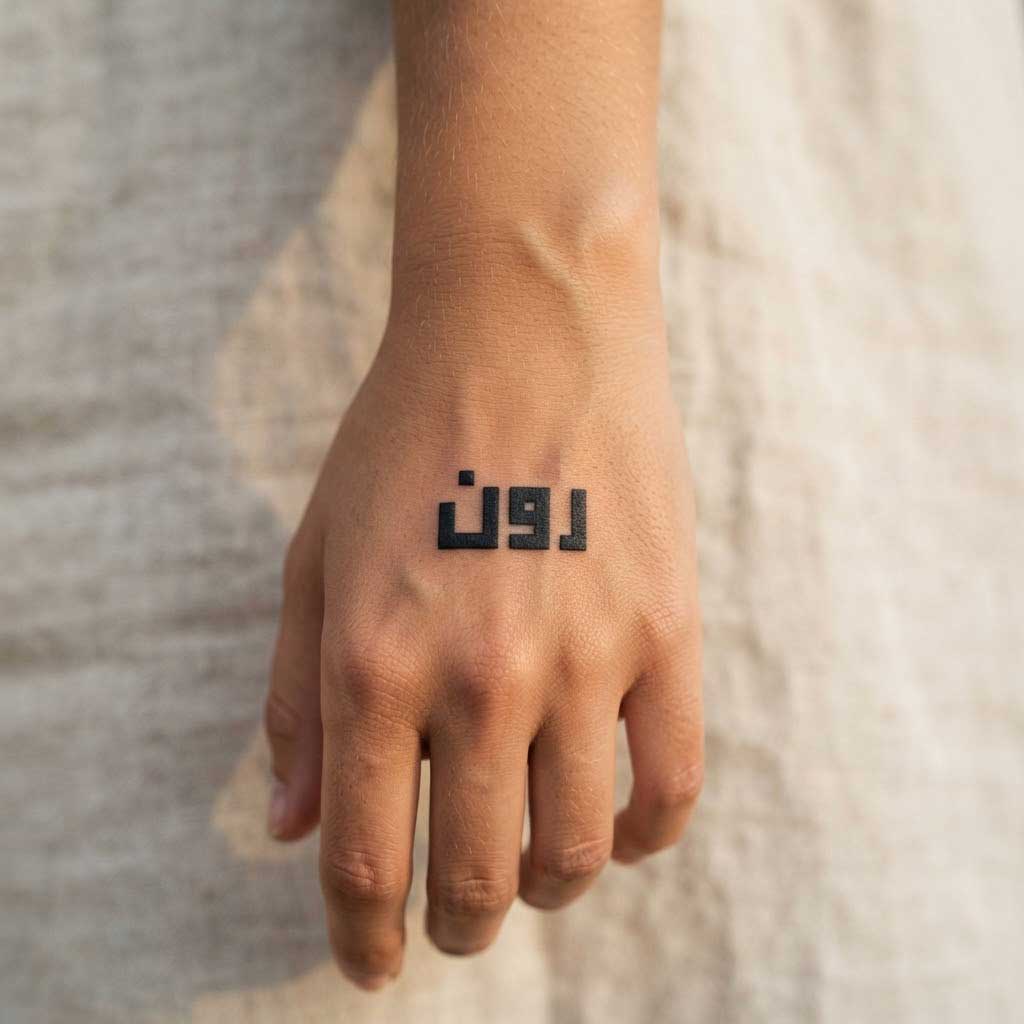
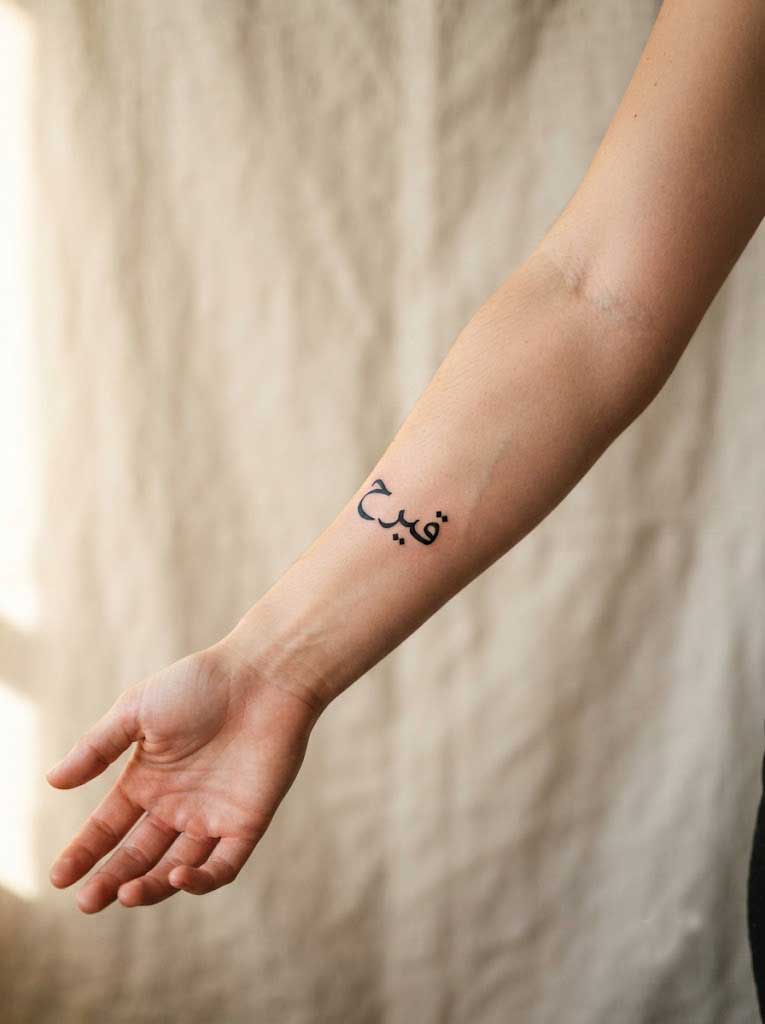
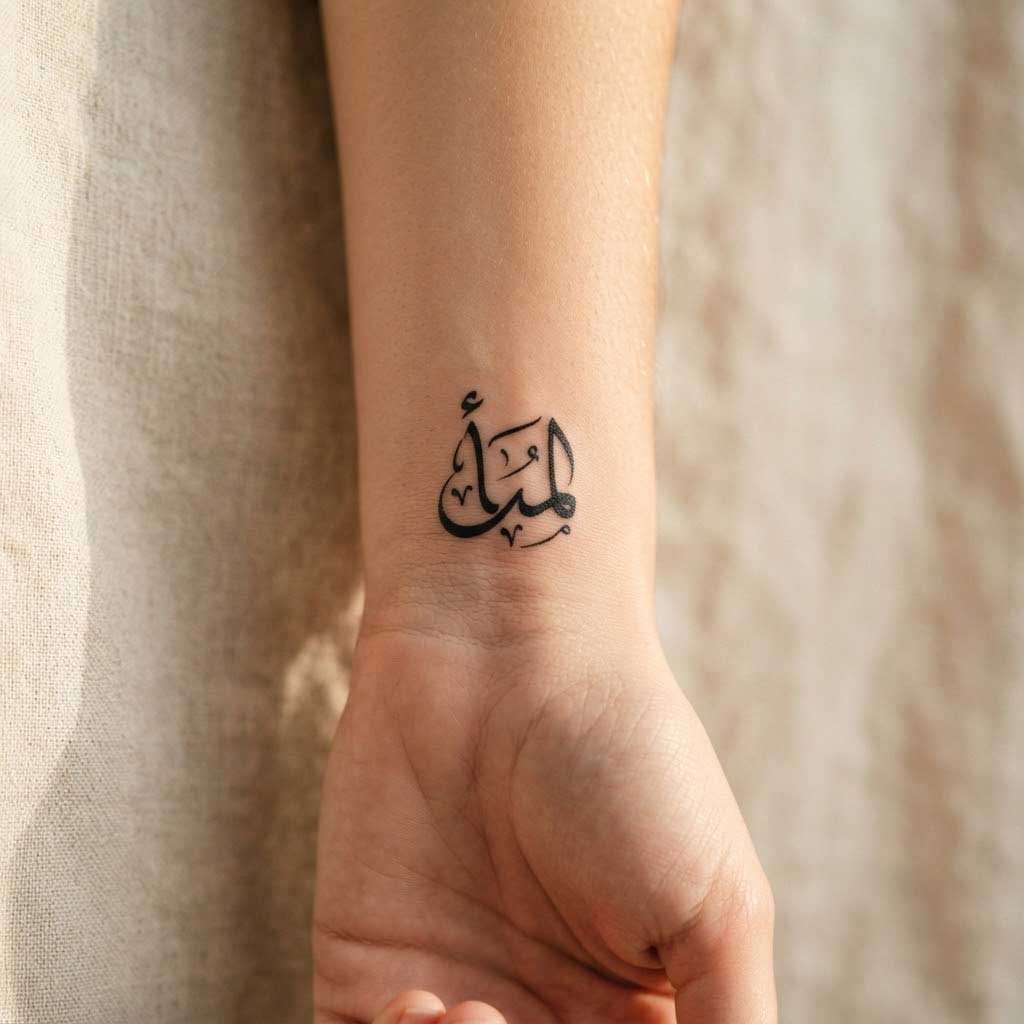
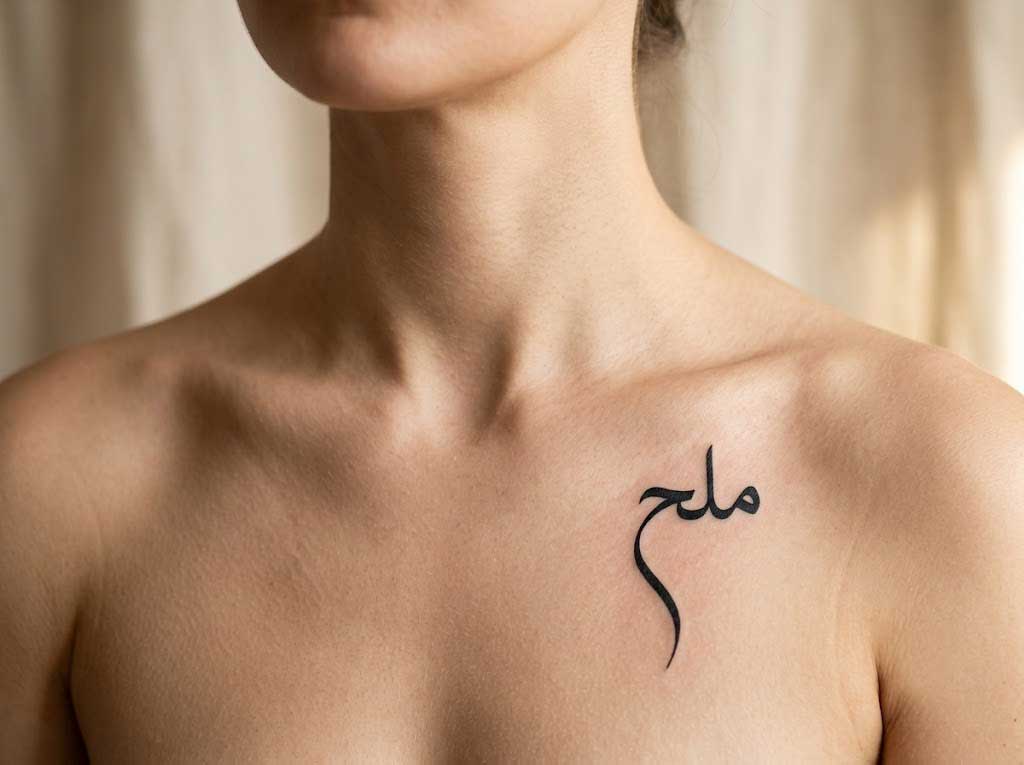
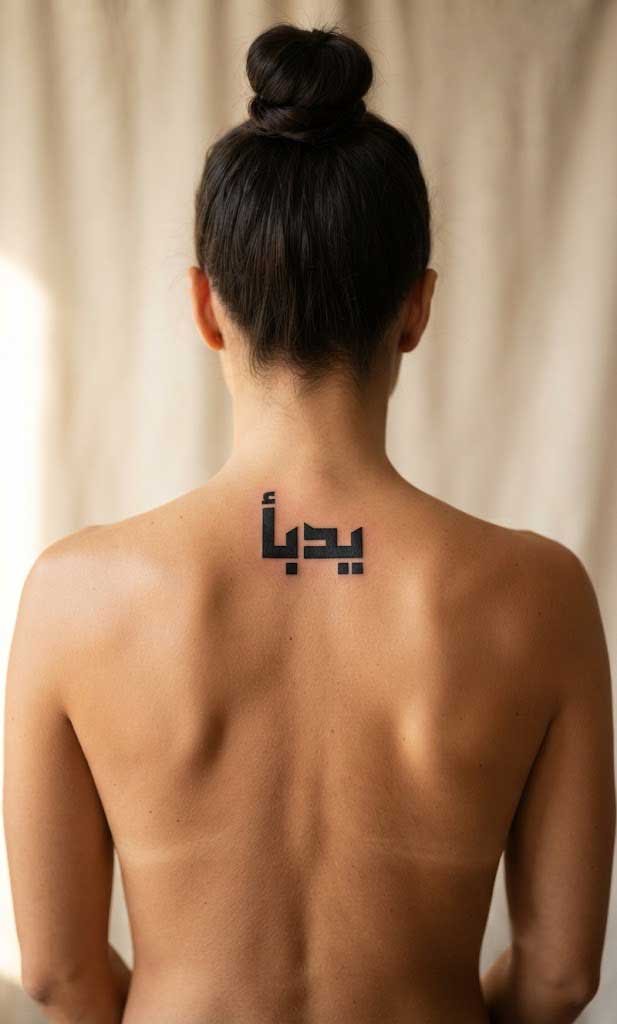
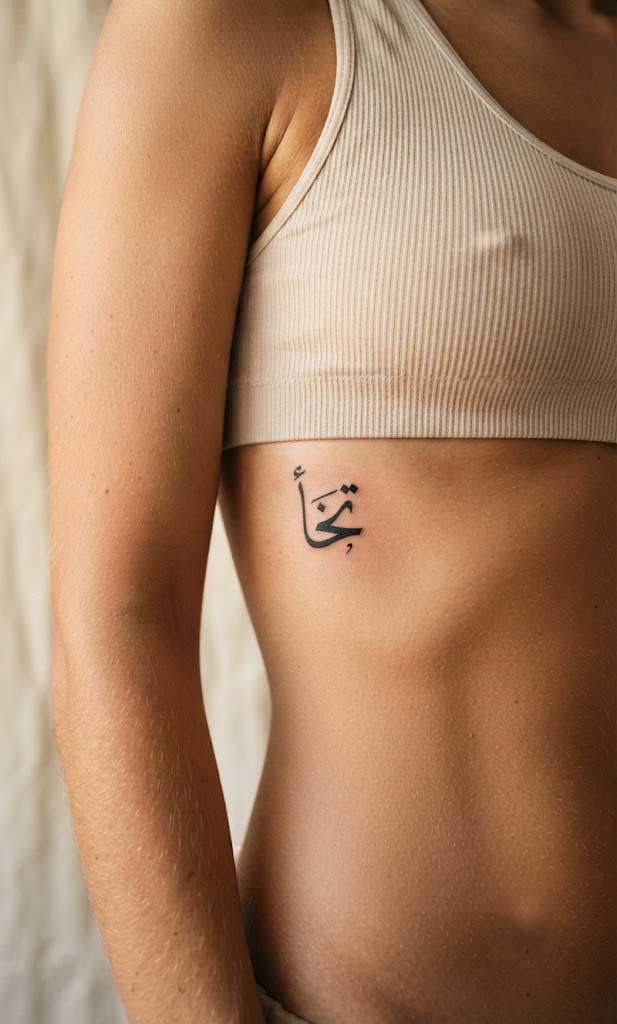
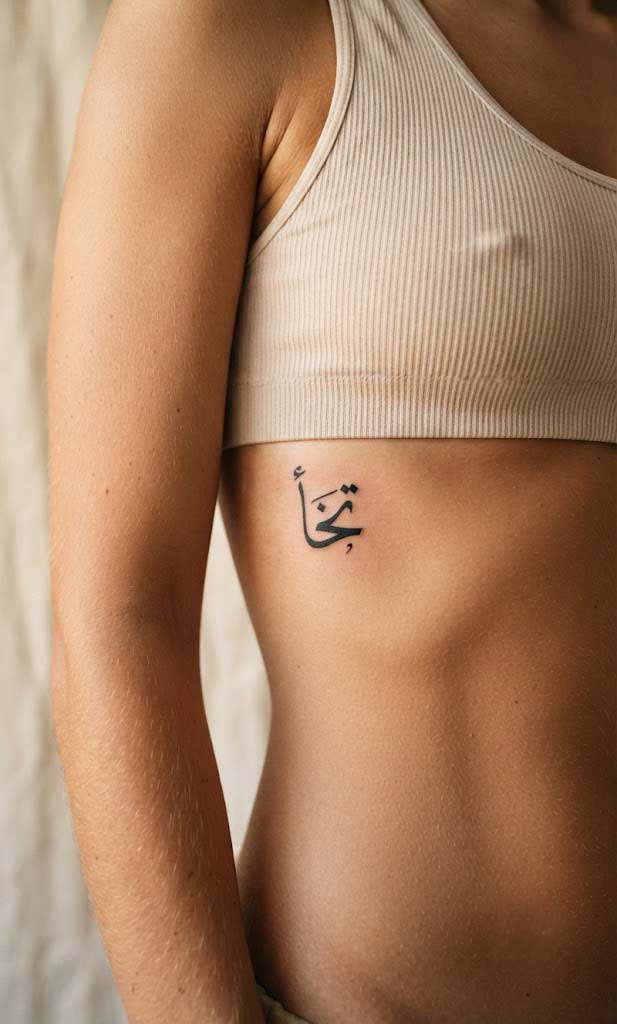
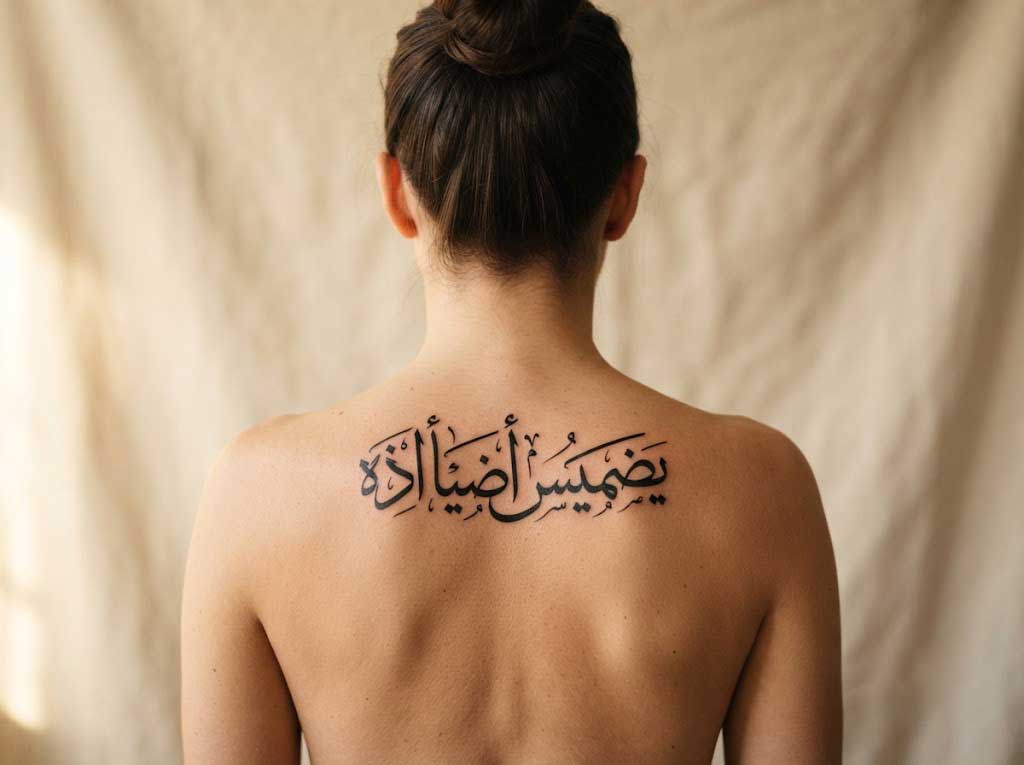
Design your Arabic calligraphy tattoo in seconds. Pick from 11 traditional and modern fonts, preview it on 8 body placements or your own photo, then download a high-resolution PNG your tattoo artist can use as a stencil reference. Every font uses native-speaker verified Arabic Unicode.
Send this file to your tattoo artist — they will use it as a stencil reference. Always double-check the Arabic spelling with a native speaker before getting inked.
Arabic calligraphy has been one of the most respected visual art forms in the world for over a thousand years. Its flowing curves, connected letters, and geometric proportions produce a tattoo that reads as intentional and considered — not decorative filler. Because the Arabic script itself is a living tradition, an Arabic tattoo carries cultural depth that abstract designs cannot match.
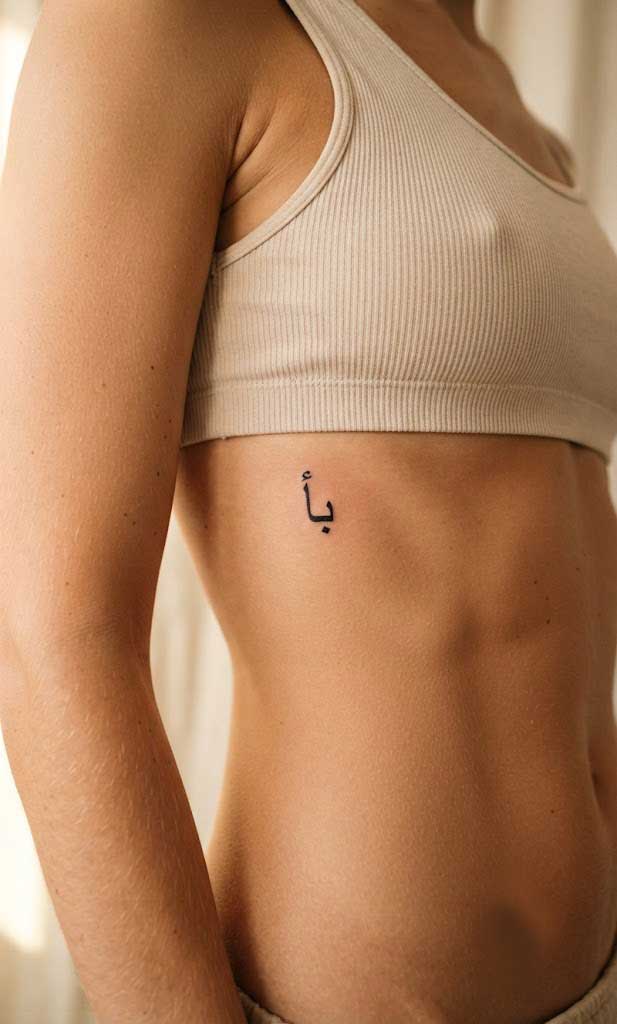
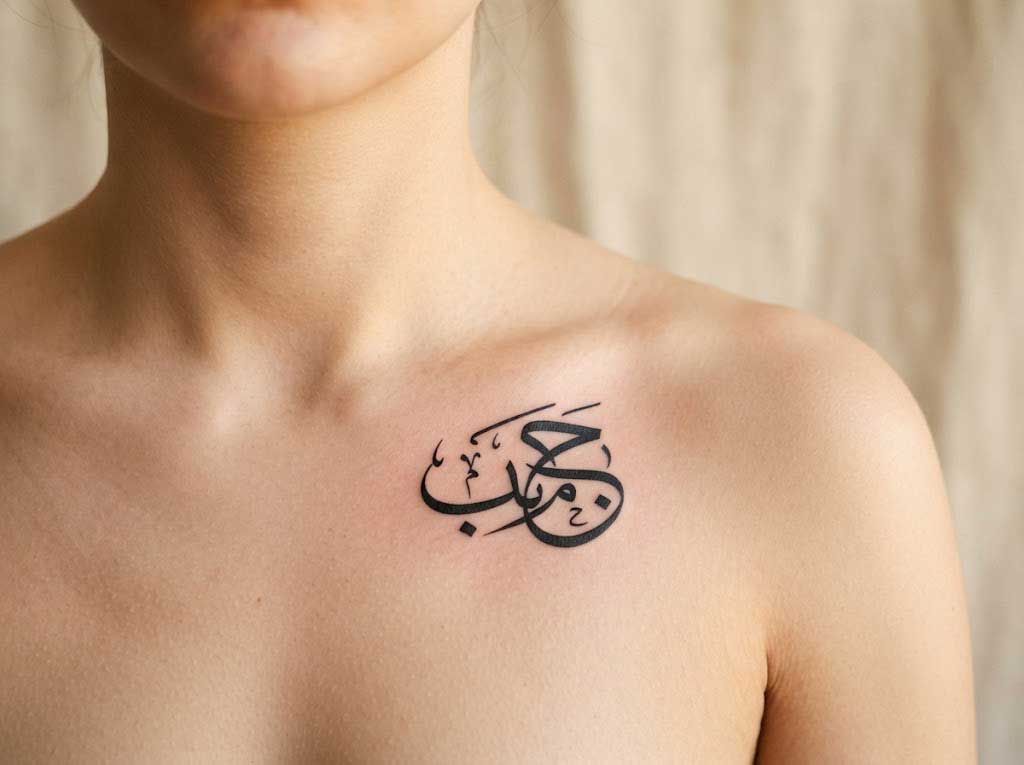
The visual character of Arabic script also suits the human body remarkably well. Long horizontal ligatures follow a spine or a forearm naturally. Compact isolated letters sit cleanly on a wrist, ankle, or behind the ear. A short word like حب (love) becomes a small, elegant mark; a full sentence traced along the ribs becomes a private statement only you can read. Whether you want a subtle single word or an ornate multi-line piece, Arabic calligraphy gives you a design vocabulary designed to be read — and to be admired.
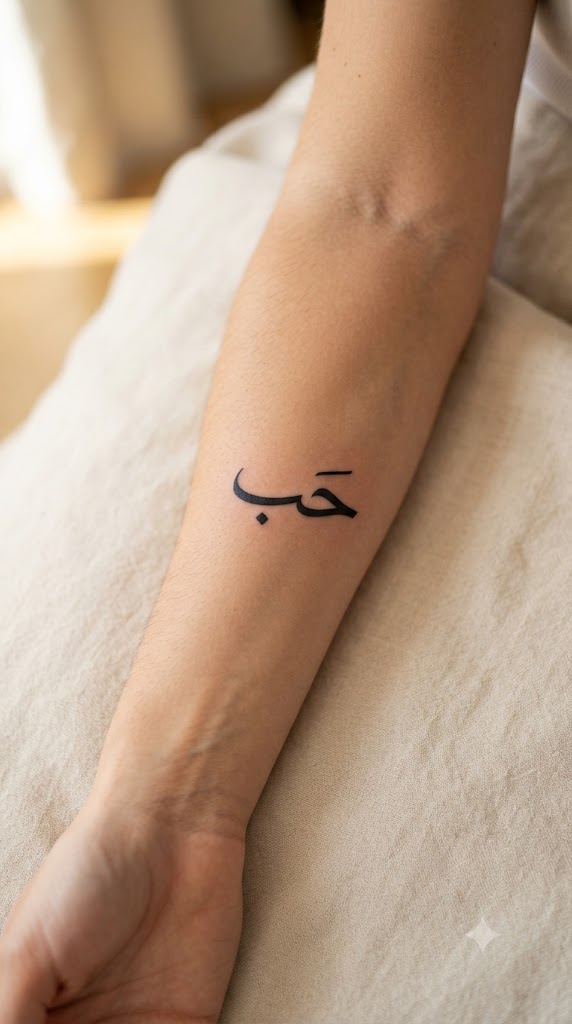
Every Arabic script tradition produces a different tattoo mood. The five styles below cover the range from most traditional to most modern — pick the one that matches the tone of your design, then preview it in the generator above.
Thuluth is the most historically revered Arabic script — used for Quranic manuscripts, mosque inscriptions, and formal Islamic decoration for over a millennium. Its long descending curves and elongated verticals give a tattoo weight and ceremony. Choose Thuluth for religious phrases, poetic lines, or any design where reverence matters more than legibility. Explore the Thuluth calligraphy guide →
Naskh is the most legible Arabic script — the same style used in printed Qurans and modern Arabic newspapers. If your tattoo is longer than a single word, Naskh gives your artist and every future reader a clean line to follow. This is the safest choice when meaning must be unambiguous. Explore the Naskh calligraphy guide →
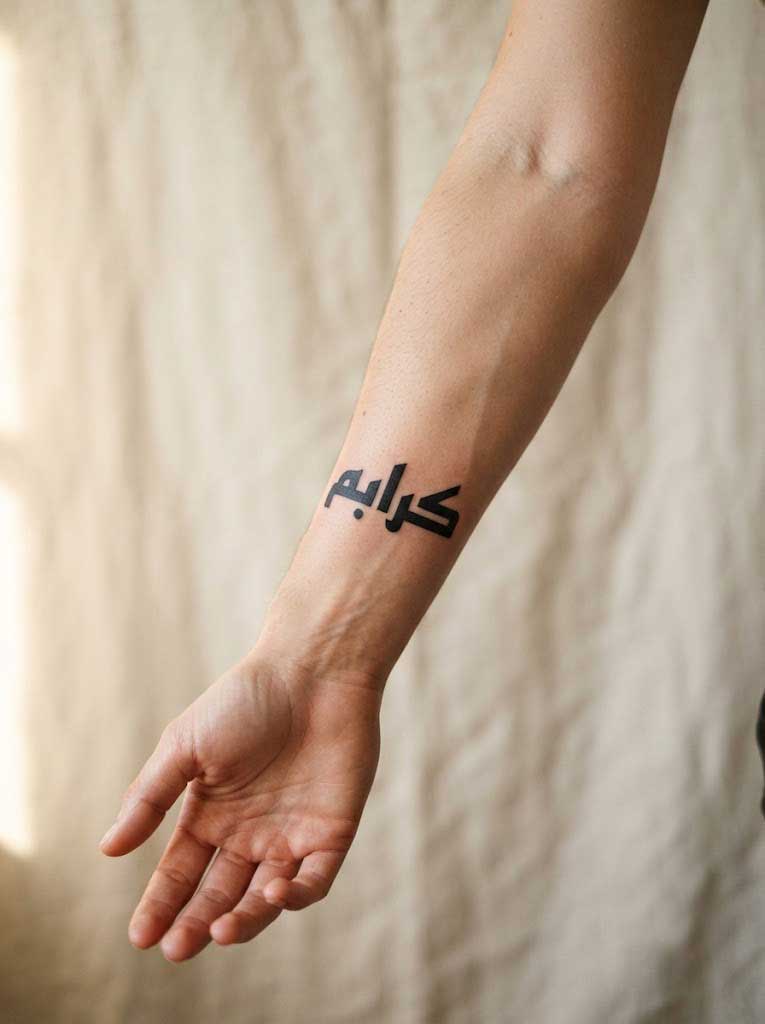
Kufic is the oldest Arabic script and — paradoxically — the most modern-looking. Its angular strokes and squared proportions read as architectural rather than handwritten. Kufic tattoos work beautifully as small blackwork pieces, monogram-style single words, or minimalist wrist and neck placements. Explore the Kufic calligraphy guide →
Diwani was developed by Ottoman court scribes for royal decrees, and it shows: elaborate loops, generous flourishes, and long connective strokes create a decorative, courtly tattoo. Best for names, single lyrical words, and pieces where the eye should linger. Explore the Diwani calligraphy guide →
Nastaliq is the calligraphy of Persian and Urdu poetry — sloping baselines, deep diagonal strokes, and a rhythmic sense of movement. If your tattoo is a quote from Rumi, Hafez, or a Sufi verse, Nastaliq is the tradition it was written in. Explore the Nastaliq calligraphy guide →
A short, meaningful Arabic word makes a stronger tattoo than a long phrase — it stays legible at small sizes, ages well as skin changes, and gives you one clean visual to build the rest of your design around. These are eight of the most requested words for Arabic tattoos.
See the full curated list of meaningful Arabic tattoo words →
Arabic script shape should match body geometry. Long horizontal strokes suit the forearm and collarbone. Vertical rhythmic scripts like Nastaliq drape naturally along the spine. Compact isolated words fit the wrist, ankle, and back of the neck. Preview each placement in the tool above by clicking the Preview on body tab.
The spine is the single most popular placement for Arabic script tattoos. The vertical column suits long phrases in Nastaliq or descending Thuluth, and the tattoo remains hidden or visible depending on your outfit — giving you full control over when it is seen. Spine-specific Arabic tattoo guide →
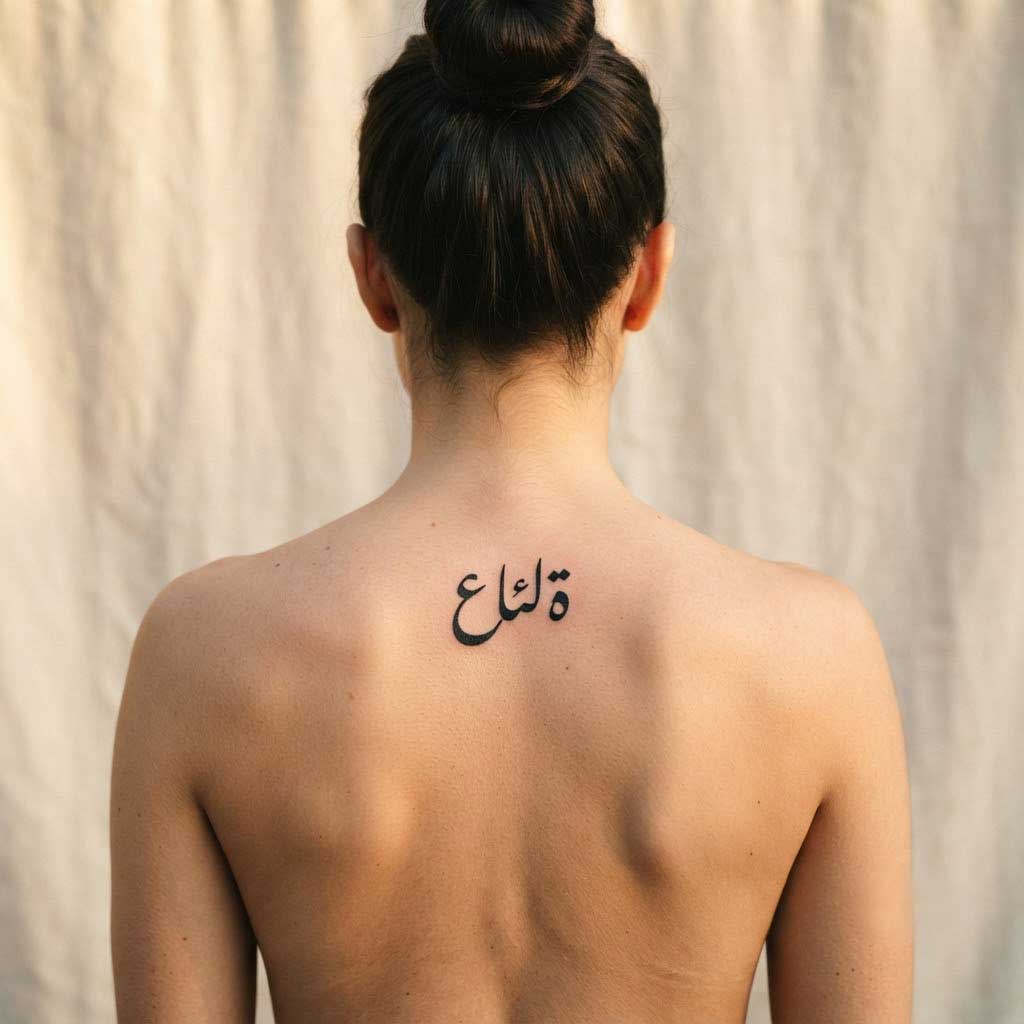
The nape (back of the neck) hides under long hair and reveals only when you choose to show it. Perfect for short words like حب or نور in Kufic or Naskh. Neck placement guide →
The inner wrist and back of the hand are the most personal Arabic tattoo placements — visible to you constantly, visible to others when you shake hands. Best for one to three characters. Hand placement guide →
The upper back gives you a canvas large enough for multi-line quotes, entire Bismillah phrases, or ornate Diwani compositions with flourishes. Back placement guide →
Beyond individual words, most Arabic tattoos cluster into three emotional themes. Each has its own visual vocabulary and typical placements.
Love is the largest single theme in Arabic tattoos worldwide. Beyond حب, popular phrases include أحبك (I love you) and the meaningful أحب نفسي أولاً (I love myself first). Full Love in Arabic tattoo guide →
Family tattoos in Arabic often center on عائلة (family), أهل (kin), or single-word tributes to a specific relative — أم (mother), أب (father). Full Family in Arabic tattoo guide →
Faith-based Arabic tattoos include إيمان (faith), مبارك (blessed), and short verses. Placement usually matches the tattoo's spiritual weight — a chest or back for larger pieces, the wrist for a personal daily reminder. Full Faith in Arabic tattoo guide →
Arabic tattoos are permanent, and unlike English text, a small spelling mistake or wrong-font choice can go completely unnoticed by you but be instantly obvious to any Arabic speaker. Do all four of these steps before you sit in the chair.
Hand-picked Arabic tattoo previews across 5 fonts and 5 themes. Every design was generated in the free tool above — click any placement in the Preview on body tab to try the same word on your own skin.